
The Perfect Weeknight Red Curry Thai Noodle Soup
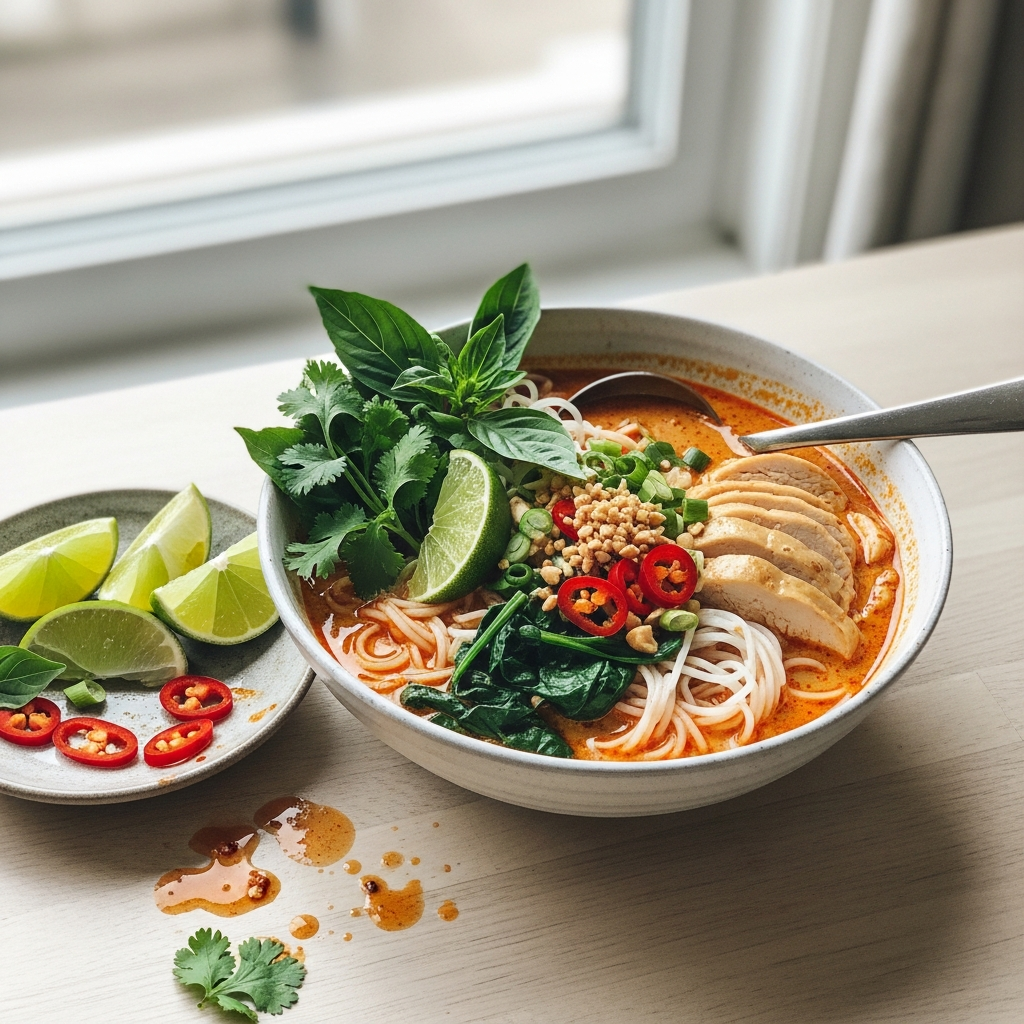
A few years back, my husband and I took a little anniversary trip to Charleston. One afternoon, a sudden downpour sent us scrambling for cover, and we ducked into the first place we saw, a tiny, unassuming Thai restaurant. The smell inside was just heavenly. We both ordered the house special, a creamy chicken noodle soup, and I swear, it warmed us from the inside out. It was rich, fragrant, and just what we needed on that dreary day.
Once we were back home, I couldn’t stop thinking about that soup. I tried for weeks to get it right, but my versions were always missing a certain something, a depth of flavor I just couldn’t put my finger on. Then one night, while making a completely different dish, it hit me. My secret weapon for so many savory recipes, white miso paste, might be the key.
I know it’s not exactly traditional, but adding that little bit of Japanese flair was the twist this classic needed. It gave my Thai noodle soup the rich, savory, umami background that made the coconut and curry flavors truly sing. It’s my little Southern gal’s secret, and it makes all the difference.
This is the recipe I perfected, the one that takes me right back to that rainy day in Charleston, but with my own special touch that makes it feel like home.
Why This Thai Noodle Soup Recipe Works
Thai cuisine is a beautiful balancing act of sweet, sour, salty, and spicy flavors. Noodle soups are a cornerstone of this tradition, with regional variations like the famous Chiang Mai Khao Soi or the hot and sour Tom Yum. These dishes are popular worldwide because they are incredibly comforting while also being vibrant and exciting to the palate. They are the kind of meal that engages all your senses.
My version of Thai noodle soup honors that tradition but gives it a little nudge in a new direction. The goal was to create a broth that was exceptionally creamy and deeply savory without being heavy. That’s where my secret ingredient, the white miso paste, comes into play. It’s a trick I picked up over the years that works wonders in soups and stews.
The miso paste, a fermented soybean paste common in Japanese cooking, dissolves into the coconut and chicken broth base to add an incredible layer of umami. This is that satisfying, savory flavor that makes you want to keep going back for another spoonful. It rounds out the spice from the red curry paste and complements the sweetness of the coconut milk in a way that is just magical. It creates a broth with a complexity that usually takes hours of simmering to achieve.
This little twist is what makes my recipe stand out. It delivers that restaurant-quality depth of flavor right in your own kitchen in under an hour. It’s familiar enough to be comforting but has a special touch that will make your family and friends ask for your secret.
Ingredients for Thai Noodle Soup
The magic of this soup comes from layering fresh, aromatic ingredients. While the list might look a little long, each component plays a vital role in building that incredible flavor. Don’t be tempted to take shortcuts with the fresh stuff, it really makes a difference!
My special ingredient here is the white miso paste. It adds a subtle, savory depth that you just can’t get from salt alone. It’s my secret to making the broth taste like it’s been simmering all day long. You can usually find it in the refrigerated section of most grocery stores, often near the tofu or other international foods.
Here’s everything you’ll need to make this incredible Thai noodle soup:
- 8 oz rice noodles
- 1 tbsp coconut oil
- 1 lb boneless, skinless chicken thighs, thinly sliced – I prefer thighs over breasts here as they stay more tender and juicy in the soup.
- 1 medium yellow onion, thinly sliced
- 2 carrots, julienned
- 1 red bell pepper, thinly sliced
- 4 cloves garlic, minced – Fresh is best! The jarred kind just doesn’t have the same punch.
- 1 tbsp fresh ginger, grated – Same as the garlic, use fresh ginger root for that zesty, warm spice.
- 2 tbsp red curry paste – The brand you use can affect the spice level, so start with two tablespoons and you can always add more if you like it hotter.
- 2 tbsp white miso paste – This is the twist! It adds a beautiful umami flavor that elevates the whole dish.
- 4 cups chicken or vegetable broth
- 1 (13.5 oz) can full-fat coconut milk – Be sure to use full-fat for the creamiest, richest broth. The light version will make your soup watery.
- 1 tbsp fish sauce – This adds a unique salty, savory flavor essential to Thai cooking.
- 1 tbsp brown sugar – Just a touch to balance the saltiness and spice.
- 2 cups fresh spinach
- 1 lime, juiced
- For Garnish:
- Fresh cilantro, chopped
- Fresh Thai basil leaves
- Lime wedges
- Sliced red chilies
- Chopped peanuts
The garnishes are not just for looks, they add fresh, bright flavors and a wonderful crunch that completes the soup. I highly recommend setting them all out in little bowls so everyone can customize their own bowl.
Step-by-Step Instructions For Making Thai Noodle Soup
Alright, let’s get cooking! This soup comes together surprisingly fast, which makes it perfect for a weeknight. The key is to have all your ingredients prepped and ready to go before you start, a technique cooks call ‘mise en place’. Get your veggies sliced, your garlic minced, and everything measured out. It makes the whole process smooth and enjoyable.
I love making this in my big Dutch oven. It holds heat so well and gives me plenty of room to work without splashing broth all over my stovetop. A large, heavy-bottomed pot will work just as well.
Step 1: Cook Your Noodles
Start by cooking your rice noodles according to the package directions. It’s really important to cook these separately and not directly in the soup pot. If you cook them in the broth, they’ll soak up too much liquid and can get gummy and overcooked. Once they’re done, drain them well, rinse with cool water to stop the cooking process, and set them aside. A little toss with sesame or coconut oil can keep them from sticking together.
Step 2: Brown The Chicken
Heat your coconut oil in the Dutch oven over medium-high heat. Once it’s shimmering, add your thinly sliced chicken thighs. Don’t overcrowd the pan, you may need to do this in two batches. Let the chicken get nicely browned on all sides. This step is all about building flavor. Those little browned bits on the bottom of the pot are pure gold. Once cooked, remove the chicken with a slotted spoon and set it aside.
Step 3: Sauté The Vegetables
In that same pot, add your sliced onion, carrots, and red bell pepper. There should be enough oil and chicken drippings left. Sauté them for about 5 to 7 minutes. You want them to soften up and get a little bit of color, which adds a lovely sweetness to the soup base.
Step 4: Add The Aromatics
Now, add your minced garlic and grated ginger. Stir them into the vegetables and cook for just about a minute more. You’ll know they’re ready when you can really smell them. Be careful not to let them burn, as burnt garlic can turn a dish bitter in a hurry.
Step 5: Bloom The Pastes
Turn the heat down just a touch and add the red curry paste and my secret ingredient, the white miso paste. Stir them constantly into the vegetables for about one minute. This step is called “blooming,” and it toasts the pastes slightly, which deeply enhances their flavor and aroma. It’s a small step that makes a huge impact.
Step 6: Create The Broth
Pour in the chicken broth and the full-fat coconut milk. Use a whisk to stir everything together, making sure to scrape up any of those flavorful browned bits from the bottom of the pot. Continue whisking until the curry and miso pastes are completely dissolved into the liquid, creating a smooth, uniform broth.
Step 7: Simmer And Season
Bring the soup to a gentle simmer, then reduce the heat to low. A rolling boil can cause the coconut milk to separate, so a light simmer is all you need. Stir in the fish sauce and brown sugar. Let it simmer gently for a few minutes to allow all those wonderful flavors to meld together.
Step 8: Return The Chicken
Add the cooked chicken back into the pot. Let it simmer in the broth for at least 10 minutes. This allows the chicken to become incredibly tender while absorbing all the delicious flavors of the soup it’s swimming in.
Step 9: Finish With Freshness
Right before you’re ready to serve, stir in the fresh spinach and the fresh lime juice. The heat from the broth will wilt the spinach in just a minute or two. Adding these ingredients at the very end keeps their flavors bright and fresh.
Step 10: Assemble And Serve
To serve, place a portion of your cooked rice noodles in each bowl. Ladle the hot, fragrant soup over the top, making sure to get a good amount of chicken and vegetables. Now comes the fun part, setting out all the garnishes and letting everyone build their perfect bowl!
How To Serve Thai Noodle Soup
Serving this Thai noodle soup is almost as much fun as making it. Because the garnishes add so much flavor and texture, I love to turn dinner into an interactive experience. It makes the meal feel special, even on a regular Tuesday night.
My favorite way to serve this is by setting up a little toppings bar on the counter or in the middle of the dining table. I place the garnishes in small, separate bowls so everyone can customize their soup just the way they like it. It’s a simple touch that really elevates the meal and gets everyone involved.
Here are some of my go-to garnishes and serving suggestions:
- A Toppings Bar: Set out bowls of chopped fresh cilantro, Thai basil leaves, extra lime wedges for squeezing, thinly sliced red chilies or jalapeños for the heat lovers, and crunchy chopped peanuts. Bean sprouts are also a wonderful addition for extra crunch.
- Presentation is Key: Serve the soup in wide, shallow bowls. This not only looks beautiful but also makes it easier to get a little bit of everything, from noodles to chicken to toppings, in each bite.
- Perfect Pairings: For a beverage pairing, a crisp, light beer like a lager or a pilsner cuts through the richness of the coconut milk beautifully. If you prefer wine, a dry Riesling or a zesty Sauvignon Blanc are excellent choices that complement the soup’s aromatic spices.
- A Non-Alcoholic Option: For those who don’t drink alcohol, a sparkling limeade or a simple iced green tea with a sprig of mint makes for a wonderfully refreshing accompaniment.
No matter how you serve it, the key is to enjoy the process. The vibrant colors of the soup and toppings make for a stunning presentation. It’s a feast for the eyes before it’s a feast for the stomach, and it’s a meal that’s meant to be savored and shared with people you love.
How To Store & Reuse Thai Noodle Soup Leftovers
One of the best things about making a big pot of soup is having leftovers for the next day. This Thai noodle soup is fantastic the next day, as the flavors in the broth have even more time to mingle and deepen. However, there’s a trick to storing it correctly to make sure it’s just as good as when you first made it.
The golden rule of storing noodle soup is to keep the components separate. If you store the noodles in the broth, they will continue to absorb the liquid and become soft and mushy. No one wants that! Taking a couple of extra minutes to store things properly makes all the difference for a perfect round two.
Here’s my method for storing and reheating:
- Store the Broth Separately: Let the soup base (the broth with the chicken and vegetables) cool down a bit, then transfer it to an airtight container. It will keep beautifully in the refrigerator for up to 4 days.
- Store the Noodles Separately: Store any leftover cooked rice noodles in a separate airtight container in the fridge. I like to toss them with just a teaspoon of a neutral oil, like canola or coconut, to prevent them from clumping together into a single noodle brick.
- Keep Garnishes Fresh: Store any leftover fresh garnishes like cilantro and basil in the fridge as well. You can wrap them in a slightly damp paper towel inside a zip-top bag to keep them from wilting.
- Reheating Instructions: When you’re ready for leftovers, gently reheat the soup base on the stovetop over medium-low heat until it’s warmed through. Avoid boiling it. While the soup heats, you can quickly refresh the noodles by pouring a little hot water over them in a colander for a few seconds, then draining them well. Assemble your bowl just as you did the first time, with noodles on the bottom and hot soup ladled over the top.
If you have leftover broth but no noodles, don’t let it go to waste! The broth is a flavor powerhouse on its own. You can use it as a fantastic base for cooking rice or quinoa, adding a wonderful aromatic flavor to your grains. It also works as a delicious poaching liquid for fish like cod or salmon for a quick and healthy meal.
Substitutions & Variations For Thai Noodle Soup
One of the things I truly love about this Thai noodle soup recipe is how adaptable it is. It’s a wonderful template that you can easily tweak to suit your taste, your dietary needs, or simply what you happen to have in your refrigerator. Don’t be afraid to play around and make it your own!
Whether you’re looking to change up the protein, make it vegetarian, or adjust the heat level, there are plenty of simple swaps you can make without sacrificing flavor. Think of this recipe as your starting point for culinary creativity.
Here are a few of my favorite substitutions and variations:
- Protein Swaps: Not in the mood for chicken? This soup is fantastic with shrimp. Just add the raw shrimp in the last few minutes of cooking, they’ll be perfectly pink and tender in no time. For a vegetarian or vegan option, try pan-frying some firm, pressed tofu cubes until golden brown and adding them to the soup.
- Make It Vegan: To make this recipe completely vegan, use vegetable broth instead of chicken broth, swap the fish sauce for an equal amount of tamari or soy sauce, and use tofu or extra vegetables as your main component.
- Vegetable Additions: This soup is a great way to clean out the crisper drawer. Sliced mushrooms, baby bok choy, snap peas, or broccoli florets would all be delicious additions. Just add them along with the peppers and carrots.
- Spice It Up (or Down): The heat in this soup comes from the red curry paste. If you love spicy food, feel free to add another tablespoon of curry paste or garnish with extra fresh chilies. If you’re sensitive to heat, you can reduce the amount of curry paste or look for a mild version at the store.
- Noodle Variations: While rice noodles are traditional, you could certainly use other noodles. Ramen noodles or even whole wheat spaghetti would work in a pinch. Just cook them separately according to their own package directions.
Experimenting with recipes is part of the joy of cooking. These simple changes can help you create a version of this Thai noodle soup that is perfectly suited for you and your family.
Julie’s Creamy Thai Noodle Soup with a Secret Twist
Description: A rich and creamy Thai-inspired noodle soup with tender chicken, fresh vegetables, and a secret ingredient, white miso paste, for an incredible depth of flavor. It’s a comforting, aromatic meal that comes together in under an hour!
Yield: 4-6 servings | Category: Soup | Cuisine: Thai-Inspired
Prep Time: 15 minutes | Cook Time: 30 minutes
Ingredients
- 8 oz rice noodles
- 1 tbsp coconut oil
- 1 lb boneless, skinless chicken thighs, thinly sliced
- 1 medium yellow onion, thinly sliced
- 2 carrots, julienned
- 1 red bell pepper, thinly sliced
- 4 cloves garlic, minced
- 1 tbsp fresh ginger, grated
- 2 tbsp red curry paste
- 2 tbsp white miso paste
- 4 cups chicken or vegetable broth
- 1 (13.5 oz) can full-fat coconut milk
- 1 tbsp fish sauce
- 1 tbsp brown sugar
- 2 cups fresh spinach
- 1 lime, juiced
- For Garnish: Fresh cilantro, Thai basil, lime wedges, sliced red chilies, chopped peanuts
Instructions
- Cook rice noodles according to package directions. Drain and set aside.
- In a large pot or Dutch oven, heat coconut oil over medium-high heat. Brown the sliced chicken on all sides. Remove from pot and set aside.
- Add onion, carrots, and bell pepper to the pot. Sauté for 5-7 minutes until softened.
- Stir in garlic and ginger and cook for 1 minute until fragrant.
- Add red curry paste and white miso paste, stirring constantly for 1 minute.
- Pour in broth and coconut milk, whisking until smooth. Bring to a simmer.
- Stir in fish sauce and brown sugar. Return chicken to the pot and simmer for 10 minutes.
- Just before serving, stir in fresh spinach and lime juice until the spinach wilts.
- Divide noodles among bowls, ladle soup over top, and serve with desired garnishes.
Notes
For best results, store leftover soup and noodles in separate airtight containers in the refrigerator. Do not boil the soup after adding the coconut milk, as it can cause it to separate. A gentle simmer is all that is needed.
Servings: 6 | Calories: 550 kcal | Fat: 30g | Carbohydrates: 40g | Protein: 35g
5 FAQs About Thai Noodle Soup
Here are some straightforward answers to the most common questions I receive about this Thai noodle soup recipe.
What makes this Thai noodle soup recipe unique?
What really sets this recipe apart is the addition of white miso paste. While it’s not a traditional ingredient in Thai cooking, it’s my special twist that adds an incredible layer of savory depth, or umami, to the broth. Traditional Thai soups masterfully balance sweet, sour, spicy, and salty flavors. The miso paste enhances the salty and savory elements in a really complex way that complements the creamy coconut milk and spicy red curry paste beautifully.
It essentially gives the broth a “long-simmered” taste in a fraction of the time. It creates a richer, more velvety soup base without making it heavy or overly salty. It’s a simple, single-ingredient addition that elevates the entire dish from a good homemade soup to something that tastes truly restaurant-quality. It’s my little secret for making this comforting classic truly pop.
Can I make this Thai noodle soup ahead of time?
Absolutely! This soup is a great candidate for meal prep or for making ahead of a dinner party, as long as you store the components correctly. The best way to do this is to fully prepare the soup base, the part with the broth, chicken, and vegetables. Let it cool completely, then store it in an airtight container in the refrigerator for up to 3 days. The flavors will actually meld and become even more delicious overnight.
Do not add the noodles or the final fresh ingredients (spinach and lime juice) until you are ready to serve. Cook the noodles fresh according to the package directions right before your meal. When you’re ready to eat, gently reheat the soup base on the stovetop until it’s hot. Once it’s simmering, stir in the fresh spinach and lime juice, then ladle it over your freshly cooked noodles. This ensures your noodles are perfectly cooked and your fresh ingredients stay bright and vibrant.
How can I adjust the spice level of my Thai noodle soup?
Controlling the heat in this recipe is very easy. The primary source of spice is the red curry paste. Different brands of curry paste have different heat levels, so what’s mild for one brand might be quite spicy for another. The 2 tablespoons called for in the recipe create what I would consider a medium heat level, warm and flavorful but not overwhelming.
If you prefer a milder soup, start with just 1 tablespoon of red curry paste. You can always taste the broth after it simmers and add more if you’d like. For those who love a lot of heat, feel free to increase the curry paste to 3 tablespoons, or even more. Another fantastic way to control the heat on an individual basis is through the garnishes. Setting out a bowl of thinly sliced red chilies or jalapeños allows each person to add as much extra fire to their own bowl as they desire.
What are the best noodles for Thai noodle soup?
The classic choice for a soup like this is flat rice noodles, often labeled as “pad thai” noodles. They come in various widths, and any of them will work well. They have a pleasant, slightly chewy texture that holds up nicely in the broth without becoming mushy, as long as you cook them separately and add them to the bowl just before serving. They absorb the flavor of the broth beautifully.
However, you don’t have to feel limited to just one type. Thin rice vermicelli noodles are another great option if you prefer a lighter, more delicate noodle. If you don’t have rice noodles on hand, you could easily substitute ramen noodles or even soba noodles for a different but equally delicious experience. The most important rule, regardless of the noodle you choose, is to cook it separately and assemble the soup in the bowl just before eating.
Is this Thai noodle soup recipe healthy?
This is a wonderfully balanced meal in a bowl, which I would certainly consider a healthy choice. You have lean protein from the chicken, a great variety of vitamins and fiber from the vegetables like carrots, bell peppers, and spinach, and healthy fats from the coconut milk. Using fresh aromatics like garlic and ginger also provides numerous health benefits.
The term “healthy” can mean different things to different people. This recipe does use full-fat coconut milk, which is higher in calories and saturated fat but is essential for the authentic, creamy texture. If you are monitoring your fat intake, you could substitute light coconut milk, but be aware that the soup will be thinner and less rich. Overall, because it’s homemade, you have full control over the ingredients. You can load it up with extra vegetables and control the amount of sugar and sodium, making it a much healthier option than many takeout versions.
Try These Recipes Next
If you loved the warm, aromatic flavors in this soup, I know you’ll enjoy some of my other Thai-inspired recipes.
- Crock Pot Thai Chicken Soup – A delicious, set-it-and-forget-it version that lets your slow cooker do all the work.
- Thai Coconut Curry Chicken – A rich and savory curry that’s perfect served over a bed of jasmine rice.
- Thai Peanut Sauce with Whole Wheat Noodles – A satisfying noodle dish with a creamy, addictive peanut sauce you’ll want to put on everything.
I hope you give them a try and they become new favorites in your home!