
Golden Miso Pumpkin Focaccia with Crispy Sage and Pepitas
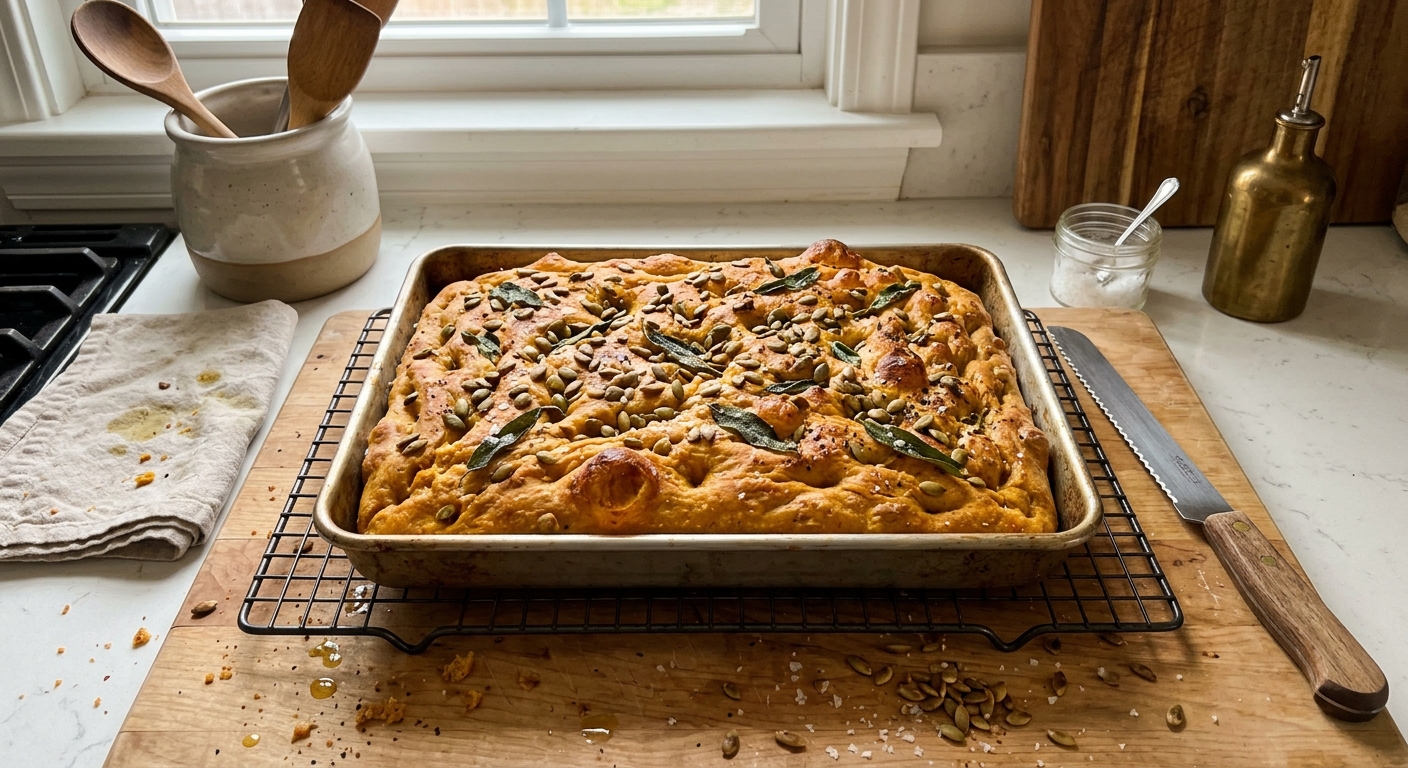
Every autumn, as soon as the morning air gets that crisp edge, my kitchen turns into an unofficial baking headquarters. A few years ago, a neighbor brought over a loaf of homemade pumpkin focaccia after our annual neighborhood harvest dinner. I fell in love with that golden orange hue, but the bread felt a little one-dimensional because the pumpkin made it taste slightly too sweet for dinner.
That evening got me thinking about how to balance that sweetness. As someone who loves putting an unexpected savory spin on classic baked goods, I reached into my fridge and pulled out a tub of white miso paste. Whisking mild miso directly into the pumpkin puree was a total game-changer for this dough.
The fermented paste lends an incredible depth of savory umami that grounds the natural sugar in the squash. Paired with fragrant garden sage and crunchy pepitas on top, this bread quickly became my most requested fall recipe. It looks like a masterpiece from a high-end bakery, yet it comes together right on your counter with very little effort.
Why This Pumpkin Focaccia Recipe Works
Focaccia is one of Italy’s oldest flatbreads, originating along the Ligurian coast where bakers relied on olive oil, water, and salt to create a crisp yet tender crumb. Over the years, home cooks around the world have embraced focaccia because the high hydration dough requires zero intense kneading. In recent seasons, pumpkin variations have exploded in popularity because the squash adds stunning seasonal color and keeps the crumb exceptionally soft for days.
However, pumpkin brings significant moisture and natural sugars to bread dough. If you are not careful, this can lead to a loaf that feels heavy or tastes more like dessert than bread. That is where our secret weapon, white miso paste, completely transforms the equation.
White miso is mild, slightly salty, and rich in amino acids. When mixed into the dough, it acts as a flavor anchor that contrasts the pumpkin and maple syrup. The amino acids also promote superior Maillard browning in the oven, giving your crust an enviable blistered texture and a savory, complex aroma that traditional recipes cannot match.
Ingredients for Pumpkin Focaccia
To make the best loaf possible, focus on quality pantry staples. The hydration level in this dough relies on exact measurements, so a digital kitchen scale will be your best friend here.
- 4 cups (500g) bread flour: Bread flour has a higher protein percentage than all-purpose flour, which gives the wet dough enough gluten strength to rise tall and bubbly.
- 2 ¼ tsp (7g) instant yeast: One standard packet of yeast ensures a steady rise and works seamlessly without proofing in water first.
- 1 ½ tsp fine sea salt: Fine salt dissolves evenly into the flour to strengthen the crumb and control fermentation.
- 1 ⅓ cups (320ml) lukewarm water: Aim for water around 100°F to activate the yeast gently without shocking it.
- ⅔ cup (150g) canned pure pumpkin puree: Be sure to grab pure pumpkin, not pre-spiced pumpkin pie filling, which contains unwanted spices and thickeners.
- 2 tbsp (35g) white miso paste: This is our star ingredient. It provides a savory umami boost that balances the pumpkin and promotes deep golden browning.
- 1 tbsp pure maple syrup: A touch of pure syrup complements the earthy squash notes and helps feed the yeast during the long cold ferment.
- ⅓ cup extra-virgin olive oil, divided: Use a rich, fruity olive oil you love tasting on its own, as it coats the crust and lines the pan.
- 20 fresh sage leaves: Fresh leaves crisp up in the olive oil as the bread bakes, creating aromatic herb chips across the surface.
- ¼ cup raw pepitas (pumpkin seeds): Raw seeds toast gently in the oven heat, adding a welcome nutty crunch to every slice.
- 1–2 tsp flaky sea salt (such as Maldon): Flaky salt adds that unmistakable savory crunch on the finished crust.
- Freshly cracked black pepper, to taste: A few turns of freshly cracked pepper cut through the richness of the olive oil.
Step-by-Step Instructions For Pumpkin Focaccia
Step 1: Whisk the Wet Ingredients
In a large mixing bowl, combine your lukewarm water, pumpkin puree, white miso paste, maple syrup, and instant yeast. Whisk the mixture thoroughly until the miso completely dissolves and you have a smooth, vibrant orange liquid with no clumps remaining.
Step 2: Mix the Dough
Pour your bread flour and fine sea salt into the bowl with the pumpkin mixture. Stir firmly using a wooden spoon or a sturdy silicone spatula until a shaggy, wet dough forms and all visible pockets of dry flour disappear completely.
Step 3: Rest the Dough
Drizzle 1 tablespoon of your extra-virgin olive oil directly over the top of the dough ball. Cover the bowl with a clean damp kitchen towel or plastic wrap, then let it rest quietly at room temperature for 30 minutes to jumpstart gluten formation.
Step 4: Perform Stretch-and-Folds
Over the next hour, complete three sets of stretch-and-folds spaced 20 minutes apart. With damp hands, slide your fingers under one side of the dough, gently lift it upward, and fold it over onto the middle. Turn the bowl ninety degrees and repeat until all four sides are folded.
Step 5: Cold Fermentation
Cover the bowl tightly with plastic wrap and transfer it to the refrigerator for 12 to 24 hours. This slow chill allows the yeast to create complex flavor compounds while developing an elastic gluten network that traps air bubbles easily.
Step 6: Prep the Pan
Pour 2 tablespoons of extra-virgin olive oil into a 9×13-inch metal baking pan, using your hands or a pastry brush to coat the bottom and sides thoroughly. Gently ease your chilled dough into the center of the pan, turn it over once so both sides are coated in oil, and gently guide the edges toward the corners without squeezing out air.
Step 7: Final Proof
Leave the dough uncovered in a warm, draft-free spot in your kitchen for 2 to 3 hours. The dough is ready when it fills the pan, looks pillowy, and wobbles like gelatin when you give the pan a gentle shake.
Step 8: Preheat the Oven
About thirty minutes before your dough finishes its rise, preheat your oven to 425°F (220°C). Position your oven rack in the center so the top and bottom of the bread bake evenly.
Step 9: Add Toppings
Drizzle the remaining olive oil evenly over the puffy surface of the dough. Scatter the fresh sage leaves and raw pepitas across the top, placing them naturally across the surface.
Step 10: Dimple the Dough
Dip your clean fingers into a little olive oil to prevent sticking. Press your fingertips straight down into the dough until you feel the metal pan beneath, wiggling your fingers slightly to form deep valleys that secure the toppings.
Step 11: Season the Top
Finish by sprinkling flaky sea salt and a generous grind of black pepper over every corner of the dough. Make sure the seasonings settle into the little oil pockets created by your dimples.
Step 12: Bake Until Golden
Bake the focaccia for 22 to 26 minutes. You will know it is done when the top displays a deep golden hue, the pepitas are toasted, and the crisp edges begin pulling away slightly from the sides of the pan.
Step 13: Cool and Slice
Let the bread sit in the metal pan for 10 minutes to set. After that, slide a thin spatula underneath and transfer the loaf to a wire cooling rack so the bottom crust stays delightfully crisp before you cut into it.
How To Serve Pumpkin Focaccia
Serving warm, homemade bread is one of the easiest ways to make any gathering feel like an occasion. The balance of earthy pumpkin, savory miso, and crisp sage allows this bread to work wonderfully with both simple weeknight dinners and elaborate holiday spreads.
Cut the loaf into generous squares, or slice it into long fingers that are perfect for dipping. Here are a few favorite ways to bring this bread to the table:
- Alongside hearty soups: Dip thick slices into a creamy roasted tomato soup, beef chili, or a rich bowl of butternut squash bisque.
- On a fall charcuterie board: Slice the bread into bite-sized strips and arrange them next to sharp white cheddar, aged gouda, prosciutto, and fig preserves.
- As elevated sandwich bread: Split a square in half horizontally and build a lunch sandwich stuffed with roasted turkey breast, crisp greens, and cranberry mayo.
- With whipped butter: Serve it warm alongside salted honey butter or roasted garlic compound butter for an irresistible dinner starter.
No matter how you choose to present it, make sure to serve it while it retains a hint of warmth from the oven. The contrast between the crunchy olive oil crust and the soft, cloud-like interior is at its peak right after baking.
How To Store & Reuse Pumpkin Focaccia Leftovers
Because the pumpkin puree and olive oil lock in plenty of natural moisture, this focaccia stays soft longer than standard lean doughs. Storing it properly will help you enjoy every single slice without losing that fantastic texture.
Let your bread cool completely on a wire rack before wrapping it up. Trapped steam inside a warm container will quickly make the crust rubbery and limp.
- Room temperature storage: Place leftover squares in a breathable bread bag or wrap them lightly in parchment paper for up to 2 days on the counter.
- Freezer storage: Slice the entire loaf into individual portions, wrap each piece tightly in plastic wrap, and freeze in a zip-top freezer bag for up to 2 months.
- Oven reheating: Revive day-old slices by placing them directly on a baking sheet in a 350°F oven for 5 to 8 minutes until hot and crackly.
- Crispy croutons: Cut stale cubes of focaccia, toss with a touch more olive oil, and bake at 375°F for 10 minutes to make the ultimate salad croutons.
Avoid storing your bread in the refrigerator, as the cold environment actually accelerates the staling process in wheat starches. When you are ready to eat, simply heat it in a toaster oven or standard oven to restore that fresh-baked crunch.
Substitutions & Variations For Pumpkin Focaccia
One of the best things about focaccia baking is how adaptable the canvas can be. You can tweak the flavor profile to match whatever you currently have stocked in your pantry or garden.
Feel free to experiment with different aromatic accents while keeping the base dough hydration consistent. Here are several simple swaps that work beautifully:
- Herb alternatives: If you do not have fresh sage on hand, fresh rosemary needles or sprigs of garden thyme make wonderful substitutes that pair naturally with pumpkin.
- Nut and seed swaps: Replace the pepitas with chopped raw pecans or walnuts to give the loaf a rich Southern flair and extra crunch.
- Sweetener adjustments: Swap the pure maple syrup for dark honey or light brown sugar if you want to alter the subtle background sweetness.
- Soy-free adaptation: If cooking for someone with a soy allergy, chickpea miso works as a direct replacement for traditional white soybean miso paste.
Whatever variations you choose, always make sure your dry toppings are lightly coated with olive oil so they toast evenly rather than scorching in the oven.
Savory Miso Pumpkin Focaccia
Description: A stunning, fluffy fall bread infused with pumpkin puree and a secret twist of white miso paste for deep umami balance, topped with fresh sage leaves and crunchy pepitas.
Yield: 12 servings | Category: Bread | Cuisine: Italian-American
Prep Time: 30 minutes (plus rising time) | Cook Time: 25 minutes
Ingredients
- 4 cups (500g) bread flour
- 2 ¼ tsp (7g) instant yeast
- 1 ½ tsp fine sea salt
- 1 ⅓ cups (320ml) lukewarm water
- ⅔ cup (150g) canned pure pumpkin puree
- 2 tbsp (35g) white miso paste
- 1 tbsp pure maple syrup
- ⅓ cup extra-virgin olive oil, divided
- 20 fresh sage leaves
- ¼ cup raw pepitas (pumpkin seeds)
- 1–2 tsp flaky sea salt
- Freshly cracked black pepper, to taste
Instructions
- Whisk lukewarm water, pumpkin puree, miso paste, maple syrup, and yeast in a large bowl until smooth.
- Stir in bread flour and fine salt until a sticky dough forms with no dry flour remaining.
- Drizzle with 1 tablespoon olive oil, cover, and let rest for 30 minutes.
- Perform three sets of stretch-and-folds, spaced 20 minutes apart.
- Cover tightly and chill in the refrigerator for 12 to 24 hours.
- Pour 2 tablespoons olive oil into a 9×13-inch metal pan, transfer dough to pan, turn to coat, and proof at room temperature for 2 to 3 hours until puffy and jiggly.
- Preheat oven to 425°F (220°C).
- Drizzle remaining olive oil over dough, scatter sage and pepitas, and dimple deeply with oiled fingers.
- Sprinkle with flaky sea salt and cracked black pepper.
- Bake for 22 to 26 minutes until deep golden brown, then rest 10 minutes before moving to a cooling rack.
Notes
Use a metal baking pan rather than glass or ceramic to ensure a crisp bottom crust. If you prefer to bake the same day, let the dough rise at room temperature for 2 hours in step 5 instead of refrigerating.
Servings: 12 | Calories: 215 | Fat: 8g | Carbohydrates: 31g | Protein: 5g
5 FAQs About Pumpkin Focaccia
Here are some straightforward answers to the most common questions I receive about this pumpkin focaccia recipe.
Can I make pumpkin focaccia without an overnight rise?
Yes, you can easily make this bread in a single afternoon if you are short on time. Instead of tucking the dough into the refrigerator for an overnight chill, simply leave the covered bowl on your kitchen counter at room temperature for about two hours after finishing your stretch-and-folds.
The dough will double in size relatively quickly in a warm kitchen. Once it looks puffy and airy, transfer it into your oiled baking pan and proceed with the second rise as written. Keep in mind that a long overnight chill develops the deepest flavor and gives you the bubbliest interior crumb, but the same-day method still produces an incredible loaf.
Why is my pumpkin focaccia dough so sticky?
Focaccia dough requires a high hydration level to achieve those signature pockets of air and a light, cloud-like crumb. The moisture from the water, combined with the pureed squash, makes the dough feel far wetter and stickier than traditional sandwich bread dough.
Do not be tempted to dump extra flour into the bowl to make it easier to handle. Extra flour will make your finished bread dense and gummy. Instead, keep a small bowl of water nearby and wet your hands thoroughly before touching or folding the dough, which prevents it from sticking to your fingers.
Can I use homemade pumpkin puree for pumpkin focaccia?
You can certainly use homemade pumpkin puree, but you must take an extra step to remove excess water. Canned pure pumpkin has a consistent, thick texture, whereas homemade puree often contains significant liquid that can throw off your bread hydration.
To use fresh puree, spoon it into a fine-mesh strainer lined with paper towels or cheesecloth and let it drain over a bowl for at least 30 minutes. Once the excess liquid has drained out, measure your puree by weight to make sure it matches the recipe requirements.
What does white miso paste do in pumpkin focaccia?
White miso paste is the secret ingredient that elevates this recipe from good to unforgettable. Because pumpkin is naturally sweet and mild, it often needs a strong savory partner so the bread tastes balanced on your dinner table.
Miso provides rich umami and a mellow salinity that anchors the sweetness of the squash and maple syrup. Furthermore, the fermented sugars and enzymes in the miso paste interact with the oven heat to create a deeply caramelized, golden-brown crust with incredible flavor.
How do I get large bubbles in my pumpkin focaccia?
Big, beautiful air bubbles come down to two crucial factors: gentle handling and a complete second proof. When you transfer the dough from your bowl into the baking pan, handle it with care so you do not knock out the gas pockets created during fermentation.
Give the dough plenty of time to rise in the pan until it looks extremely puffy, almost doubled in thickness, and jiggles easily when nudged. When dimpling, press your fingers straight down into the pan rather than dragging them through the dough, which keeps those fragile air bubbles intact.
Try These Recipes Next
If you loved baking this bread and want to explore more delicious seasonal favorites from my kitchen, here are three fantastic recipes to try next:
- Easy Pumpkin Focaccia Recipe: A simple, comforting take on seasonal flatbread that comes together quickly for busy weeknight dinners.
- Easy Focaccia Recipe: The classic, foolproof Italian olive oil bread that belongs in every home baker’s regular rotation.
- Sour Cream Pumpkin Bread: An incredibly moist, spiced quick bread topped with sweet streusel that pairs perfectly with your morning coffee.
Grab your apron, preheat your oven, and enjoy filling your home with the warm, cozy aromas of fresh-baked fall goodness!