
Creamy and Comforting Roasted Kabocha Thai Chicken Soup
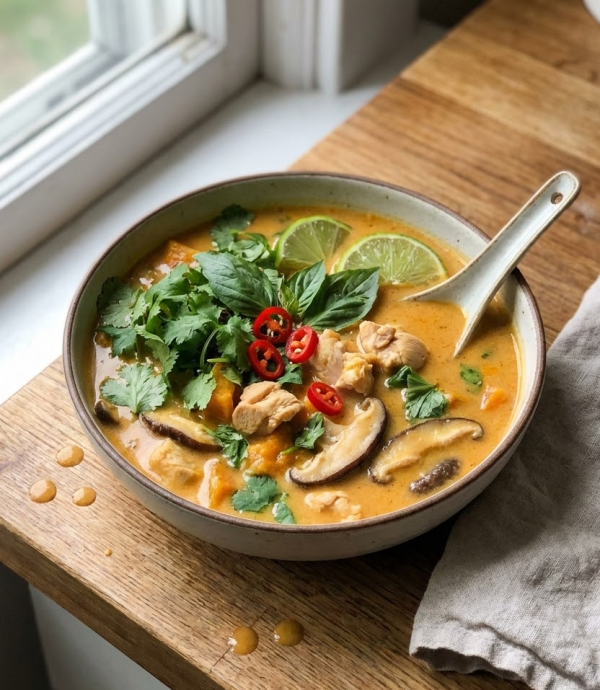
The first time I ever tasted authentic Thai chicken soup, I was on a rare date night with my husband, tucked away in a tiny, unassuming restaurant we’d driven past a hundred times. The moment that first spoonful hit my tongue, I was just captivated. The creamy coconut broth, the bright zing of lime and lemongrass, that gentle, warming heat. It was a complete flavor revelation.
I went home that night on a mission. I had to recreate that magic in my own kitchen. I spent weeks trying different recipes, but something was always missing. They were good, but they didn’t have that same velvety texture and subtle, earthy sweetness I remembered.
Then one fall afternoon, while planning our Thanksgiving menu, I had a little lightbulb moment. I was roasting a kabocha squash, one of my absolute favorite fall vegetables, and I loved its creamy, almost chestnut-like flavor. I wondered, what if I added a bit of that roasted squash puree to the soup? It was a Southern twist on a Thai classic, and y’all, it was the secret. It gave the broth an incredible body and a hint of sweetness that perfectly balanced the sour, salty, and spicy notes. This is that recipe, the one that finally tasted like that perfect memory, only better.
This isn’t just another Thai chicken soup. It’s my special version, perfected after many delicious trials, and I think you’re going to absolutely love it.
Why This Thai Chicken Soup Recipe Works
This soup is my take on a classic Thai dish called Tom Kha Gai, which translates to “chicken galangal soup.” It’s beloved around the world for its incredible harmony of flavors. Traditionally, it’s a delicate balance of spicy, sour, salty, and sweet, all swimming in a rich and fragrant coconut milk broth. It’s the kind of soup that comforts you from the inside out.
The core of any great Tom Kha Gai is the aromatics. Lemongrass, galangal, and makrut lime leaves are non-negotiable. They create a fragrant foundation that is simply intoxicating. When you simmer them in the broth, your entire kitchen starts to smell like the most amazing Thai restaurant. These ingredients work together to create a flavor that is layered, complex, and utterly delicious.
So, what makes my version stand out? It’s all about my secret ingredient: roasted kabocha squash puree. This might seem unconventional, but trust me on this one. Roasting the squash first brings out its natural sweetness and deepens its flavor. When you stir that velvety puree into the coconut broth, something magical happens.
The squash adds a beautiful, creamy thickness to the soup without having to use any starches or thickeners. It also lends a subtle, earthy sweetness that rounds out the sharp flavors of the lime juice and the saltiness of the fish sauce. The result is a Thai chicken soup with an unparalleled richness and a gorgeous, sunny color. It makes the soup feel more substantial and satisfying, turning a light soup into a truly hearty meal.
Ingredients for Thai Chicken Soup
Gathering the right ingredients is the first step to creating this incredible soup. While some items might require a trip to an Asian market or a well-stocked grocery store, I promise the effort is well worth the incredible flavor you’ll achieve. The magic is in the combination of these fresh, aromatic components.
My special twist, of course, is the roasted kabocha squash. This Japanese pumpkin has a sweet, nutty flavor and a wonderfully dense, creamy texture. Roasting it first is key, as this caramelizes its natural sugars and brings out a depth of flavor that you just don’t get from boiling. It’s the ingredient that gives this Thai chicken soup its signature creaminess and body.
For the aromatics, you’ll want to find fresh galangal, lemongrass, and makrut lime leaves if possible. Galangal looks similar to ginger but has a sharper, citrusy, and pine-like flavor that is essential to this soup. Using full-fat coconut milk is also crucial. It provides the richness and creaminess that is the hallmark of this dish. Light coconut milk just won’t give you the same luxurious result. Here’s everything you’ll need.
- 1 small kabocha squash (about 2 lbs)
- 1 tablespoon coconut oil
- 1 teaspoon kosher salt
- 1/2 teaspoon black pepper
- 2 tablespoons coconut oil
- 1 lb boneless, skinless chicken thighs, cut into 1-inch pieces
- 6 cups chicken broth
- 2 stalks lemongrass, tough outer layers removed, bruised and cut into 2-inch pieces
- 1 (2-inch) piece galangal, thinly sliced
- 6 makrut lime leaves, bruised
- 1 (13.5 oz) can full-fat coconut milk
- 8 oz shiitake mushrooms, stemmed and sliced
- 2 tablespoons fish sauce
- 1 tablespoon coconut sugar or brown sugar
- 2 Thai bird’s eye chilies, thinly sliced (optional, for heat)
- 1/4 cup fresh lime juice
- For Garnish:
- 1/2 cup fresh cilantro, roughly chopped
- 1/4 cup fresh Thai basil leaves
- Lime wedges
- Sliced red chili
Step-by-Step Instructions For Making Thai Chicken Soup
Making this soup is a wonderful sensory experience. The process of building the flavors, from roasting the squash to infusing the broth, will fill your home with the most incredible aromas. I like to use a heavy-bottomed pot or a Dutch oven for this, as it distributes heat evenly and prevents scorching.
1. Roast the Kabocha Squash
Start by preheating your oven to 400°F. Kabocha squash can be a little tough to cut, so use a large, sharp knife and be careful. Once you have it cut in half, scoop out the seeds, and cut it into wedges. Toss them on a baking sheet with coconut oil, salt, and pepper. Roasting for about 20 to 25 minutes will make them perfectly tender and slightly caramelized around the edges. Let them cool just enough to handle, then peel off the skin and puree the flesh until it’s completely smooth. This puree is the secret to the soup’s amazing texture.
2. Sauté the Chicken
Next, heat some coconut oil in your Dutch oven over medium-high heat. Add the chicken thigh pieces, making sure not to crowd the pan. You want to get a nice brown sear on all sides. This step builds a foundation of flavor right in the pot. Once the chicken is lightly browned, remove it and set it aside for later.
3. Infuse the Broth
This is where the magic really begins. To the same pot, add your chicken broth, lemongrass, sliced galangal, and makrut lime leaves. It’s important to bruise the lemongrass stalks and lime leaves before adding them. You can do this with the back of your knife. This helps release their fragrant oils. Bring this mixture to a boil, then lower the heat and let it simmer for a good 15 minutes. Your kitchen will smell absolutely heavenly.
4. Combine Ingredients
After simmering, you’ll need to strain out the aromatics. They’ve done their job of flavoring the broth, but they are too tough to eat. Use a fine-mesh sieve for this. Pour the beautifully infused broth back into your pot. Now, stir in the full-fat coconut milk and your gorgeous roasted kabocha squash puree. Whisk it all together until the soup is smooth and creamy.
5. Simmer the Soup
Bring the soup to a gentle simmer over medium heat. Be careful not to let it come to a rolling boil, as this can cause the coconut milk to separate. Add the browned chicken back into the pot along with the sliced shiitake mushrooms. Let everything cook together for about 5 to 7 minutes, just until the mushrooms are tender and the chicken is cooked all the way through.
6. Season the Soup
The final step is all about balancing the flavors. Turn off the heat before you do this. Stir in the fish sauce for saltiness, coconut sugar for a touch of sweetness, and the optional Thai chilies for heat. The very last thing to add is the fresh lime juice. Adding it off the heat keeps its flavor bright and fresh. Give it a taste. This is your chance to make it perfect for your palate. It might need another splash of lime juice, a bit more fish sauce, or a pinch more sugar.
7. Serve
Ladle your beautiful, creamy Thai chicken soup into bowls. Now comes the fun part, the garnishes. Be generous here. A big handful of fresh cilantro and Thai basil, an extra squeeze of lime from a fresh wedge, and a few more slices of red chili for color and heat will take this soup over the top.
How To Serve Thai Chicken Soup
Serving this Thai chicken soup is almost as much fun as making it. Because the soup itself is so fragrant and flavorful, it stands beautifully on its own as a complete meal. I love to ladle it into big, wide bowls to show off the vibrant color and all the delicious ingredients floating in that creamy broth.
The key to an amazing presentation is all in the garnishes. Fresh herbs are not just for looks; they add a final layer of bright, fresh flavor that cuts through the richness of the coconut milk. A generous scattering of chopped cilantro and whole Thai basil leaves is a must. I also always serve it with extra lime wedges on the side, so everyone can squeeze in a bit more acidity to their liking.
For a complete and satisfying meal, here are a few of my favorite ways to serve it:
- With Steamed Jasmine Rice: This is the classic pairing. Spooning the soup over a bed of fluffy jasmine rice helps soak up every last drop of that incredible broth. The subtle fragrance of the rice is the perfect complement to the soup’s bold flavors.
- With Rice Noodles: For a heartier, noodle-bowl experience, you can add cooked rice noodles directly to the bowls before ladling the soup over them. It turns the dish into something akin to a Thai laksa.
- With a Side of Fresh Spring Rolls: To make it a multi-course meal, serve smaller bowls of the soup as a starter followed by fresh spring rolls with a peanut dipping sauce. The contrast in textures is just wonderful.
- As a Dinner Party Main: Set up a little garnish bar on the table with small bowls of cilantro, Thai basil, sliced chilies, lime wedges, and maybe even some chopped peanuts or crispy fried shallots. It lets your guests customize their own bowl, which is always a fun and interactive way to eat.
No matter how you choose to serve it, this soup is a showstopper. It’s elegant enough for company but simple enough for a cozy weeknight dinner. The vibrant colors and intoxicating aroma make it a feast for all the senses.
How To Store & Reuse Thai Chicken Soup Leftovers
One of the best things about this Thai chicken soup is that the leftovers are just as delicious, if not more so. As the soup sits, the flavors have more time to meld together, deepening into something even more complex and wonderful. Storing it properly is key to enjoying it the next day.
The most important thing to remember is to let the soup cool down completely before you store it. Putting hot soup directly into the refrigerator can raise the internal temperature, which isn’t safe. I usually let it sit on the counter for about an hour before transferring it to an airtight container. Keep the garnishes separate and add them fresh when you reheat the soup for the best texture and flavor.
Here are my best tips for storing and reusing this delicious soup:
- Refrigerating: Store the cooled soup in an airtight container in the refrigerator for up to 3 to 4 days. The coconut milk may separate a little upon chilling, but don’t worry, it will come back together perfectly when you reheat it.
- Freezing: This soup freezes surprisingly well. Pour the cooled soup into freezer-safe containers or heavy-duty freezer bags, leaving a little bit of space at the top for expansion. It will keep well in the freezer for up to 3 months. To thaw, let it sit in the refrigerator overnight.
- Reheating: The best way to reheat this soup is gently on the stovetop over medium-low heat. Avoid boiling it, as high heat can cause the coconut milk to curdle or separate. Just heat it until it’s warmed through, stirring occasionally. If you’re in a hurry, you can use the microwave, but use a lower power setting and heat it in short intervals, stirring in between.
- Creative Reuse: If you have just a little bit of broth left over, don’t throw it away. You can use it as a fantastic base for cooking rice, giving it a wonderful coconut-lime flavor. You can also use it as a poaching liquid for fish or as a flavorful starter for a Thai-inspired curry.
Having a container of this soup in the fridge or freezer is like having a secret weapon for a busy week. It’s a quick, comforting, and incredibly flavorful meal that’s ready in minutes.
Substitutions & Variations For Thai Chicken Soup
While I absolutely adore this recipe just as it is, one of the joys of home cooking is making a dish your own. This Thai chicken soup is wonderfully versatile, and there are many ways you can adapt it to suit your tastes or what you have available in your pantry. Don’t be afraid to experiment a little.
The most important part is to maintain that classic balance of sweet, sour, salty, and spicy. As long as you keep those flavor profiles in mind, your substitutions should work out beautifully. Whether you need to accommodate a dietary restriction or just want to try a new flavor combination, here are some ideas to get you started.
Feel free to mix and match to create your perfect bowl of soup:
- Protein Swaps: While I prefer the rich flavor of chicken thighs, boneless, skinless chicken breast works well too. Just be careful not to overcook it. For a seafood version, add raw shrimp in the last few minutes of cooking. They’ll cook through in no time. To make it vegetarian or vegan, swap the chicken for firm tofu (cubed and pan-fried first is delicious) or add more mushrooms and other vegetables like bell peppers or broccoli. Use vegetable broth and a vegan fish sauce alternative.
- Aromatic Substitutions: If you absolutely cannot find galangal, you can use fresh ginger in a pinch. The flavor will be different, more peppery and less citrusy, but it will still be delicious. Dried makrut lime leaves can be used if you can’t find fresh ones, and lemongrass paste is a decent substitute for fresh stalks.
- Vegetable Additions: Feel free to add other vegetables to make the soup even heartier. Sliced carrots, baby corn, snow peas, or bok choy would all be wonderful additions. Add them in the last 5 to 7 minutes of simmering so they stay crisp-tender.
- Squash Alternatives: If kabocha squash isn’t in season, you can get a similar creamy effect by using roasted butternut squash or even roasted sweet potato puree. Each will lend a slightly different flavor, but both will add that lovely body and sweetness.
- Adjusting the Heat: You are in complete control of the spice level. For a milder soup, you can omit the Thai bird’s eye chilies entirely. For a spicier kick, add more chilies or a spoonful of sambal oelek or Thai chili paste when you are seasoning the soup.
No matter what changes you make, remember to taste as you go. Cooking is all about adjusting and finding the flavors that make you happy. This recipe is a fantastic starting point for your own culinary creativity.
Creamy Kabocha Squash Thai Chicken Soup
Description: A rich and aromatic Thai chicken soup with a unique Southern twist. Creamy roasted kabocha squash puree gives this classic dish an incredible velvety texture and a subtle sweetness that perfectly balances the spicy, sour, and salty flavors.
Yield: 6-8 servings | Category: Soup | Cuisine: Thai-Inspired
Prep Time: 20 minutes | Cook Time: 40 minutes
Ingredients
- 1 small kabocha squash (about 2 lbs)
- 1 tablespoon coconut oil
- 1 teaspoon kosher salt
- 1/2 teaspoon black pepper
- 2 tablespoons coconut oil
- 1 lb boneless, skinless chicken thighs, cut into 1-inch pieces
- 6 cups chicken broth
- 2 stalks lemongrass, bruised and cut into 2-inch pieces
- 1 (2-inch) piece galangal, thinly sliced
- 6 makrut lime leaves, bruised
- 1 (13.5 oz) can full-fat coconut milk
- 8 oz shiitake mushrooms, stemmed and sliced
- 2 tablespoons fish sauce
- 1 tablespoon coconut sugar or brown sugar
- 2 Thai bird’s eye chilies, thinly sliced (optional)
- 1/4 cup fresh lime juice
- For Garnish: Fresh cilantro, Thai basil, lime wedges, sliced red chili
Instructions
- Preheat oven to 400°F (200°C). Toss kabocha squash wedges with 1 tbsp coconut oil, salt, and pepper. Roast for 20-25 minutes until tender. Cool, remove skin, and puree the flesh until smooth.
- In a large pot, heat 2 tbsp coconut oil over medium-high heat. Brown the chicken pieces on all sides, then remove from the pot.
- Add chicken broth, lemongrass, galangal, and makrut lime leaves to the pot. Bring to a boil, then simmer for 15 minutes to infuse the broth.
- Strain the broth, discard the solids, and return the broth to the pot. Stir in coconut milk and the kabocha squash puree until smooth.
- Bring to a gentle simmer. Add the cooked chicken and shiitake mushrooms. Cook for 5-7 minutes until mushrooms are tender.
- Remove from heat. Stir in fish sauce, coconut sugar, chilies (if using), and fresh lime juice. Taste and adjust seasoning as needed.
- Serve hot, garnished generously with fresh herbs, lime wedges, and chili slices.
Notes
For the best flavor, use fresh lemongrass, galangal, and makrut lime leaves. Full-fat coconut milk is essential for a creamy, rich broth. Do not boil the soup after adding the coconut milk to prevent it from separating.
Servings: 6 | Calories: 450 kcal | Fat: 30g | Carbohydrates: 25g | Protein: 22g
5 FAQs About Thai Chicken Soup
Here are some straightforward answers to the most common questions I receive about this Thai chicken soup recipe.
What is the difference between Tom Yum and this Thai chicken soup?
That is a fantastic question, as the two are probably the most famous soups from Thailand and they do share some ingredients. The main difference comes down to the base of the broth and the overall flavor profile. My Thai chicken soup is a version of Tom Kha Gai. The “Kha” refers to galangal, and the defining characteristic of this soup is its creamy, coconut milk-based broth. This gives it a rich, slightly sweet, and milder flavor profile compared to its fiery cousin.
Tom Yum, on the other hand, typically has a clear, hot and sour broth. Its name literally means “to boil” and “mixed,” referring to a spicy and sour salad. Tom Yum gets its signature kick from a healthy dose of Thai chilies and often a chili paste called nam prik pao, which adds a savory, roasted chili flavor. While it also uses lemongrass, galangal, and lime, the focus is squarely on the spicy and sour notes without the moderating influence of coconut milk. Think of Tom Kha as the creamy, comforting soup and Tom Yum as the zesty, invigorating one.
Can I make this Thai chicken soup in a slow cooker?
You certainly can adapt this recipe for a slow cooker, which is a great option for a hands-off meal. However, you’ll need to adjust the steps slightly for the best results. I would not recommend adding everything at once. Start by placing the chicken broth, bruised lemongrass, sliced galangal, and makrut lime leaves into the slow cooker. Let this infuse on low for 2-3 hours to build that aromatic base.
After the infusion period, strain the broth and return it to the slow cooker. Then, you can stir in the chicken pieces, sliced mushrooms, and the roasted kabocha squash puree. Cook on low for another 2-3 hours, or until the chicken is cooked through and tender. The key is to add the coconut milk, fish sauce, sugar, and fresh lime juice only during the last 30 minutes of cooking. Adding coconut milk too early in a slow cooker can sometimes cause it to separate. This method ensures you get a beautifully infused broth and a perfectly creamy finish.
Where can I find ingredients like galangal and makrut lime leaves for my Thai chicken soup?
Finding these specialty ingredients is often the biggest hurdle for folks new to making Thai food at home, but it’s getting easier all the time. Your best bet is to visit a local Asian market or grocery store. They will almost always have fresh galangal, lemongrass, and makrut lime leaves in the produce section. They often have frozen versions as well, which are an excellent substitute for fresh and can be stored in your freezer for months.
If you don’t have an Asian market nearby, many larger, well-stocked supermarkets are now carrying these items in their international or specialty produce sections. I’ve had good luck finding lemongrass and sometimes even galangal at places like Whole Foods. For makrut lime leaves, you might have to look online. Several retailers sell them dried or frozen. While fresh is always best, the frozen leaves retain their flavor remarkably well, and dried ones will work in a pinch if you rehydrate them in warm water first.
Is this Thai chicken soup recipe healthy?
I would absolutely consider this a healthy and nourishing dish. It’s packed with wholesome, real-food ingredients. The broth is infused with powerful aromatics like galangal and lemongrass, both of which are known for their anti-inflammatory properties in traditional medicine. The chicken thighs provide a great source of protein, and the shiitake mushrooms offer vitamins and minerals.
The addition of kabocha squash is a huge nutritional bonus. It’s rich in vitamins A and C, fiber, and antioxidants. Using full-fat coconut milk is key for flavor and texture, and while it is high in saturated fat, it’s a plant-based fat from medium-chain triglycerides (MCTs), which are metabolized differently by the body. As with anything, moderation is key, but a warm bowl of this soup is full of nutrients and makes for a very satisfying and balanced meal. It’s a wonderful way to get a variety of vegetables and lean protein in one delicious bowl.
Why did my coconut milk curdle in my Thai chicken soup?
This is a common concern when cooking with coconut milk, but it’s easily preventable. The main reason coconut milk curdles or separates is high heat. If you bring the soup to a rapid, rolling boil after adding the coconut milk, the fats and proteins can separate from the water, resulting in a grainy or curdled texture. This is why the instructions specify bringing the soup to a “gentle simmer.”
To avoid this, always add the coconut milk over medium or medium-low heat and stir it in gently. Once it’s incorporated, keep the heat low and do not let it boil vigorously. Also, using a good quality, full-fat coconut milk helps. Brands that contain stabilizers like guar gum are less likely to separate, but even pure coconut milk will stay smooth if you are careful with the heat. If it does happen to separate a little, don’t panic. Sometimes a vigorous whisking off the heat can help bring it back together, but the best strategy is prevention through gentle heating.
Try These Recipes Next
If you loved the warm and comforting flavors of this Thai chicken soup, I have a few other recipes I know you’ll enjoy.
- Crock Pot Thai Chicken Soup: For those busy weeknights, this is a simplified, set-it-and-forget-it version that delivers amazing flavor with minimal effort.
- Recipe for Thai Coconut Curry Chicken: If you loved the coconut curry aspect, this dish takes it to the next level with tender chicken simmered in a rich and fragrant red curry sauce.
- Coconut Curry Chicken Thighs: This recipe focuses on bone-in, skin-on chicken thighs, which are braised until they are fall-off-the-bone tender in a delicious coconut curry broth.
I hope you have fun exploring these other Thai-inspired dishes from my kitchen.