
Brown Butter and Sweet Miso Homemade Cornbread
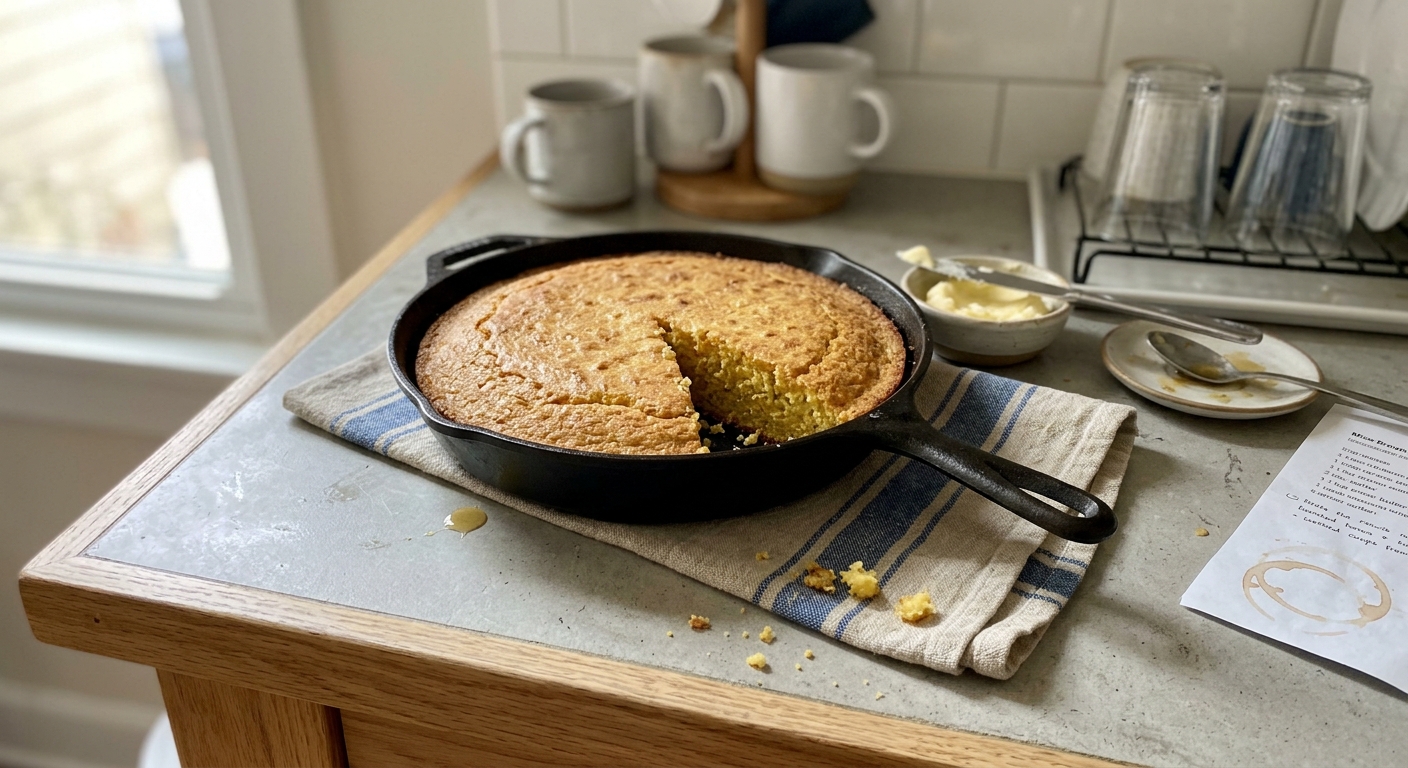
Growing up in the South, cornbread was on the dinner table at least three nights a week. My grandmother baked hers in a smoking-hot cast-iron skillet, using nothing more than cornmeal, bacon drippings, and buttermilk. It was crisp, savory, and pure tradition. When I set out to master my own homemade cornbread, I wanted to honor that classic golden crust while giving the crumb a rich, modern upgrade.
My kitchen experiments led me somewhere unexpected yet completely magical. I started playing with nutty browned butter, sweet wildflower honey, and a spoonful of sweet white miso paste. That quiet umami note from the miso took this quick bread from standard comfort food to the most requested recipe at my family gatherings.
Every bite delivers a crisp, buttery edge with a tender, moist interior that hits every sweet and savory note on your palate. It is foolproof, delightfully fast to whip together, and guaranteed to impress your dinner guests.
Why This Homemade Cornbread Recipe Works
Cornbread has deep roots in American culinary history. Native American tribes originally ground dried maize into meal for hearth cakes, a technique that early settlers adopted across the Southern colonies. Over the decades, regional preferences split into two passionate camps: sugar-free, rustic Southern skillet bread and cake-like, sweeter Northern versions.
This recipe bridges that divide beautifully. It honors the classic Southern cast-iron baking technique while delivering a tender crumb that balances sweet and savory profiles effortlessly.
The secret lies in the combination of browned butter and sweet white miso paste. Browning the butter toasts the milk solids, creating deep hazelnut aromas that make standard melted butter taste flat by comparison.
Whisking sweet white miso into that hot browned butter transforms the batter entirely. Miso provides natural glutamates and a mild, fermented salinity that amplifies the sweet corn flavor. It rounds out the sharp tang of the buttermilk and the floral sweetness of honey without making the bread taste like soup. The result is a richer, more complex crumb that stays remarkably moist for days.
Ingredients for Homemade Cornbread
Every single ingredient in this recipe plays an essential role in building moisture, rise, and that unbeatable savory-sweet profile. Choosing good-quality staples will make your finished bread truly shine.
- 1 cup (140g) medium-grind yellow cornmeal: A medium grind provides the classic toothsome texture without tasting gritty. Stone-ground varieties offer the best natural corn aroma.
- 1 cup (125g) all-purpose flour: Standard unbleached flour balances the cornmeal to keep the crumb soft and tender.
- 1/3 cup (65g) granulated sugar: Adds just enough sweetness to lift the corn flavor without turning the bread into dessert.
- 1 tablespoon baking powder: Gives the batter its primary rise and creates a light, fluffy interior.
- 1/2 teaspoon baking soda: Reacts with the acidic buttermilk to ensure an even lift and a beautifully browned top.
- 1/2 teaspoon fine sea salt: Balances the sweetness and enhances all the buttery notes.
- 1/2 cup (1 stick / 115g) unsalted butter, plus 1 tablespoon for the skillet: High-fat European-style butter browns exceptionally well and yields a richer flavor.
- 2 tablespoons sweet white (shiro) miso paste: The secret twist ingredient that delivers an incredible layer of savory umami and moisture.
- 2 tablespoons honey: Adds floral undertones and helps achieve a golden, caramelized crust.
- 1 1/4 cups (300ml) whole buttermilk, room temperature: Real whole-milk buttermilk provides essential acidity and tenderness.
- 2 large eggs, room temperature: Binds the ingredients together and builds a light, cake-like structure.
Room temperature dairy and eggs are critical here. Cold buttermilk will cause the melted brown butter to seize, resulting in an uneven batter.
Step-by-Step Instructions For Making Homemade Cornbread
Making this cornbread is straightforward, but paying attention to heat and mixing technique ensures perfection every time.
Step 1: Preheat the Oven and Skillet
Place a 10-inch cast-iron skillet on the middle rack of your oven and preheat the oven to 400°F (200°C). Heating the skillet while the oven warms up is the golden rule for achieving an ultra-crisp, crunchy bottom crust that does not stick.
Step 2: Brown the Butter
Melt 1/2 cup of unsalted butter in a small saucepan over medium heat. Swirl the pan occasionally as the butter melts, foams, and crackles. Watch it closely for 4 to 5 minutes until the foam subsides and tiny milk solids at the bottom turn amber and smell toasted and nutty.
Step 3: Whisk in Miso and Honey
Immediately pour the hot browned butter into a heatproof measuring cup or bowl to stop the cooking process. Add the sweet white miso paste and honey right away. Whisk vigorously until the miso paste dissolves completely into a smooth, glossy emulsion, then let it cool for 5 minutes.
Step 4: Combine the Dry Ingredients
In a large mixing bowl, whisk together the medium-grind yellow cornmeal, all-purpose flour, granulated sugar, baking powder, baking soda, and fine sea salt. Whisking aerates the dry ingredients and distributes the leavening evenly throughout the flour.
Step 5: Mix the Wet Ingredients
In a separate medium bowl, whisk together the room temperature buttermilk and eggs until smooth. Slowly pour in the warm miso-brown butter mixture, whisking constantly until the wet ingredients form a unified, fragrant liquid.
Step 6: Combine Wet and Dry
Pour the wet mixture into the dry ingredients. Using a rubber spatula, stir gently just until the flour streaks disappear. A few small lumps are completely fine. Overmixing activates the gluten in the flour and results in a tough, rubbery texture.
Step 7: Butter the Hot Skillet
Carefully pull the hot skillet out of the oven using a heavy-duty oven mitt and set it on a heatproof surface. Drop the remaining 1 tablespoon of butter directly into the pan. Swirl the skillet quickly so the melting butter coats the bottom and rides up the sides.
Step 8: Pour and Smooth
Immediately pour your batter into the sizzling skillet. You should hear a satisfying sizzle the second the batter hits the hot iron. Use your spatula to quickly smooth out the top into an even layer.
Step 9: Bake to Golden Perfection
Bake at 400°F (200°C) for 22 to 25 minutes. The cornbread is done when the top is deep golden brown, the edges pull slightly away from the skillet walls, and a toothpick inserted into the center comes out clean.
Step 10: Rest and Serve
Set the skillet on a wire rack and let it cool for at least 10 minutes. This short rest allows the crumb to set properly so your slices stay neat and intact when cut.
How To Serve Homemade Cornbread
A warm wedge of this bread is phenomenal on its own, but it also elevates almost any meal you put beside it. Here are several fun ways to bring this skillet bread to the table:
- The Chili Companion: Slice into generous wedges and serve alongside a hearty bowl of slow-cooker beef or three-bean chili.
- Southern Barbecue Feast: Pair it with smoked pulled pork, braised collard greens, and tangy coleslaw for a classic Sunday supper.
- Morning Griddle Toast: Split leftover slices in half, toast them in a hot buttered skillet, and drizzle with warm honey or maple syrup.
- Savory Cheese Board Addition: Cut the bread into bite-sized cubes and serve alongside sharp pimento cheese spread and pickled jalapeños.
I love bringing the entire cast-iron skillet straight to the dining table on a trivet. Slicing it warm right in front of your family creates an inviting, home-cooked atmosphere that sets the tone for a wonderful dinner.
How To Store & Reuse Homemade Cornbread Leftovers
Because this recipe includes miso and buttermilk, it retains moisture far better than standard quick breads. Proper storage ensures you can enjoy every single crumb over the course of the week.
- Countertop Storage: Let the bread cool completely, wrap it tightly in aluminum foil or plastic wrap, and store at room temperature for up to 3 days.
- Refrigerator Storage: If your kitchen runs warm, place wrapped slices into an airtight container and refrigerate for up to 5 days.
- Freezer Method: Wrap individual slices tightly in plastic wrap, then place them in a zip-top freezer bag for up to 3 months. Thaw at room temperature for an hour before reheating.
- Skillet Reheating: Reheat slices in a lightly buttered skillet over medium-low heat for 2 minutes per side to revive that crisp exterior.
- Oven Warming: Place slices on a baking sheet, tent loosely with foil, and warm at 350°F (175°C) for 8 to 10 minutes.
If you have pieces that have dried out, do not throw them away. Stale cornbread makes incredible skillet croutons for salads, or you can crumble it to make a base for traditional Southern holiday dressing.
Substitutions & Variations For Homemade Cornbread
You can easily tailor this recipe to suit different pantry staples, dietary preferences, or regional tastes without sacrificing that signature tender texture.
- Gluten-Free Option: Swap the all-purpose flour for an equal amount of a high-quality 1-to-1 gluten-free baking blend that contains xanthan gum.
- Sweetener Swaps: Replace the granulated sugar and honey with pure maple syrup or light brown sugar for a deeper molasses undertone.
- Spicy Jalapeño Twist: Fold 1/4 cup of finely diced, seeded fresh jalapeños into the batter right before pouring it into the skillet.
- White Cornmeal Variation: Use medium-grind white cornmeal instead of yellow for a slightly more delicate, traditional Appalachian style flavor.
- Buttermilk Alternative: If you run out of buttermilk, whisk 1 tablespoon of fresh lemon juice into 1 1/4 cups of whole milk and let it sit for 5 minutes before using.
Feel free to experiment with these options based on what you have in your pantry. Just keep your wet-to-dry ratios balanced so the batter bakes evenly.
Brown Butter Miso Homemade Cornbread
Description: A modern spin on classic Southern skillet cornbread featuring nutty brown butter, sweet white miso paste, and honey for the ultimate moist, sweet-and-savory crumb.
Yield: 8 servings | Category: Side Dish / Bread | Cuisine: Southern American
Prep Time: 15 minutes | Cook Time: 25 minutes
Ingredients
- 1 cup (140g) medium-grind yellow cornmeal
- 1 cup (125g) all-purpose flour
- 1/3 cup (65g) granulated sugar
- 1 tablespoon baking powder
- 1/2 teaspoon baking soda
- 1/2 teaspoon fine sea salt
- 1/2 cup (1 stick / 115g) unsalted butter, plus 1 tablespoon for the skillet
- 2 tablespoons sweet white (shiro) miso paste
- 2 tablespoons honey
- 1 1/4 cups (300ml) whole buttermilk, room temperature
- 2 large eggs, room temperature
Instructions
- Preheat the oven to 400°F (200°C) with a 10-inch cast-iron skillet placed on the middle rack.
- Melt 1/2 cup butter in a saucepan over medium heat for 4 to 5 minutes until browned and nutty.
- Pour brown butter into a heatproof bowl, whisk in the miso paste and honey until dissolved, and let cool 5 minutes.
- In a large bowl, whisk together the cornmeal, flour, sugar, baking powder, baking soda, and salt.
- In a separate bowl, whisk together buttermilk, eggs, and the cooled brown butter mixture.
- Gently fold wet ingredients into dry ingredients with a spatula just until combined.
- Carefully remove hot skillet from oven, add remaining 1 tablespoon butter, and swirl to coat.
- Pour batter into sizzling skillet and smooth top.
- Bake for 22 to 25 minutes until golden brown and a toothpick inserted in the center comes out clean.
- Cool in the skillet for 10 minutes before slicing.
Notes
Make sure your buttermilk and eggs are at room temperature so the warm browned butter does not solidify upon contact. Use sweet white (shiro) miso paste rather than dark or red miso for a balanced, mild flavor.
Servings: 8 | Calories: 295 kcal | Fat: 14g | Carbohydrates: 37g | Protein: 5g
5 FAQs About Homemade Cornbread
Here are some straightforward answers to the most common questions I receive about this homemade cornbread recipe.
Why did my homemade cornbread turn out dry and crumbly?
The most common culprit behind dry homemade cornbread is overbaking. Cornmeal absorbs liquid quickly, and even two extra minutes in a hot oven can pull all the moisture out of the center. Check your skillet at the 20-minute mark with a toothpick so you can pull it out the moment it tests clean.
Another frequent issue is overmixing the batter. When you vigorously beat flour, gluten proteins develop and create a dense, dry crumb. Always fold the wet and dry ingredients together with a gentle hand just until the dry pockets disappear.
Can I make homemade cornbread without a cast-iron skillet?
You can certainly bake delicious homemade cornbread in an 8-inch or 9-inch square metal baking pan or a ceramic baking dish. If you choose this route, you will miss out on the ultra-crispy edge that cast iron delivers, but the center crumb will stay soft and moist.
To mimic the cast-iron technique, place your metal baking dish in the oven for about 5 minutes before adding the melted butter and batter. Watch your bake time closely, as dark metal pans cook faster than glass or ceramic dishes.
Why do you add white miso paste to homemade cornbread?
White miso paste is a secret weapon that elevates standard homemade cornbread to bakery-level quality. It provides a subtle fermented salinity that cuts through the sugar and honey, creating a rounded sweet-and-savory flavor profile.
It also enhances moisture retention in the crumb. Your guests will not taste soy or miso soup at all. Instead, they will simply notice that your bread tastes richer and more complex than any version they have tried before.
Can I prepare homemade cornbread batter in advance?
It is best to bake homemade cornbread batter immediately after mixing. The chemical leaveners, baking powder and baking soda, activate as soon as they encounter the acidic buttermilk. Letting the mixed batter sit on the counter causes those carbon dioxide bubbles to deflate, which leads to a flat, dense bake.
If you need to save time, measure out your dry ingredients in one container and prepare your miso-brown butter blend ahead of time. When you are ready to bake, simply combine the components and slide the skillet right into the oven.
How do I get a super crispy bottom crust on homemade cornbread?
The secret to a crackling, crispy bottom crust on homemade cornbread is thoroughly preheating your skillet. Letting the cast-iron skillet sit in a 400°F oven for at least 15 minutes ensures the metal stores plenty of intense thermal energy.
When you drop that extra tablespoon of butter into the scorching pan, it melts instantly and sizzles. Pouring your batter directly into that sizzling pool fries the outer layer immediately, sealing in moisture and creating an unbeatable golden crust.
Try These Recipes Next
If you love baking comforting, rustic breads in your cast-iron cookware, you will adore these reader-favorite recipes from the site.
- Cast Iron Buttermilk Corn Bread: A traditional, sugar-free Southern skillet bread with a crackling golden crust and an airy crumb.
- Blueberry Cornbread: A delightfully sweet breakfast bread bursting with juicy fresh berries and rich vanilla notes.
- Homemade Cornbread Dressing: The ultimate holiday side dish made with crumbled skillet bread, aromatic herbs, and savory broth.
Fire up your favorite skillet, give this twist a spin, and bring a delicious new classic to your family dinner table tonight!