
Creamy Coconut and Ginger Bok Choy Soup
The first time I ever had a truly memorable bok choy soup was on a chilly, rainy afternoon in a tiny little noodle shop I stumbled upon during a weekend trip. I was just looking for something warm and comforting, and what I got was a revelation. The broth was simple, clear, and savory, with these perfectly tender-crisp stalks of bok choy and delicate noodles. It was delicious, but my mind immediately started spinning. You know how I am, I can never leave well enough alone!
I went home with that soup on my mind. I loved the freshness and the clean flavors, but I wanted something more. I wanted a broth with depth, something creamy and fragrant that would hug you from the inside out. I started experimenting in my own kitchen, determined to recreate that comforting feeling with my own signature twist.
After a few tries, I landed on the perfect combination. The secret? Full-fat coconut milk and a stalk of bruised lemongrass. This pairing transforms a simple broth into a luxurious, aromatic base that is absolutely heavenly. This creamy coconut bok choy soup is now a staple in our house. It’s the perfect one-pot meal that feels both wholesome and a little bit fancy, and it comes together so quickly on a busy weeknight.
Why This Bok Choy Soup Recipe Works
Bok choy soup, in its most basic form, is a classic for a reason. It’s light, healthy, and a wonderful way to enjoy this delightful vegetable. The bok choy itself has a mild, sweet flavor and a fantastic texture contrast between its crisp stems and tender leaves. It’s a canvas that just begs for a little creative flair.
What makes my version so special is the move away from a simple, clear broth into something richer and more complex. We’re building layers of flavor here, starting with a fragrant base of garlic and ginger. But the real magic happens with the addition of lemongrass and full-fat coconut milk. This is my Southern gal twist on a classic Asian-inspired dish. The lemongrass infuses the broth with a bright, citrusy, and slightly floral aroma that is just intoxicating. You bruise the stalk to release all those essential oils, and it perfumes the entire soup.
Then comes the coconut milk. It adds a beautiful creaminess and a subtle sweetness that balances the savory notes of the soy sauce and broth. It creates a velvety texture that coats the noodles and vegetables, making every bite feel luxurious. This isn’t just a simple vegetable soup, it’s a complete, satisfying meal that hits all the right notes. It’s creamy, savory, fragrant, and fresh, all in one bowl. The combination of these ingredients elevates the humble bok choy into the star of a truly memorable soup.
Ingredients for Bok Choy Soup
The beauty of this soup is how it uses simple, fresh ingredients to create such a deep and satisfying flavor. The key is using quality ingredients, especially when it comes to the aromatics and the coconut milk. Here is everything you will need to make this incredible bok choy soup.
- 1 tbsp coconut oil or neutral oil: Coconut oil adds a subtle flavor that complements the broth, but any neutral oil like avocado or canola will work.
- 2 cloves garlic, minced: Freshly minced garlic is always best for the most pungent, aromatic flavor.
- 1 tbsp fresh ginger, grated: Use a microplane or the fine side of a box grater to get a nice paste. The flavor of fresh ginger is so much brighter than dried.
- 1 stalk lemongrass, tough outer layers removed and bruised: This is one of our star ingredients! Look for firm stalks. You’ll just use the bottom four inches or so. Bashing it with the back of a knife helps release its amazing citrusy oils.
- 4 cups vegetable or chicken broth: A good quality broth is the foundation of your soup, so use one you love the taste of.
- 1 (13.5 oz) can full-fat coconut milk: This is the other key to the recipe’s magic! Do not use light coconut milk. Full-fat is essential for that rich, creamy texture and to prevent the soup from being watery. The creaminess is what makes this bok choy soup recipe so special.
- 1 tbsp soy sauce or tamari: For that essential salty, umami flavor. Use tamari for a gluten-free option.
- 1 tsp fish sauce (optional, for non-vegans): This adds a wonderful, complex depth of flavor. If you’ve never used it, a little goes a long way! Omit it to keep the soup vegan.
- 4 heads baby bok choy, halved lengthwise: Make sure to rinse them well, as dirt can get trapped between the leaves at the base.
- 8 oz shiitake mushrooms, sliced: Shiitakes have a wonderful meaty texture and earthy flavor that pairs perfectly with the creamy broth.
- 200g rice noodles, cooked according to package directions: I prefer the flat, pad Thai style noodles, but vermicelli works great too.
- 1 lime, cut into wedges: A fresh squeeze of lime at the end brightens everything up. Don’t skip it!
- Fresh cilantro or Thai basil, for garnish: These fresh herbs add a final layer of freshness and aroma.
- Sliced red chili, for garnish (optional): For those who like a little kick of heat.
Step-by-Step Instructions For Making Bok Choy Soup
This soup comes together in one pot in about 30 minutes, which makes it perfect for a weeknight. The process is all about building layers of flavor, starting with the aromatics and finishing with the fresh vegetables and herbs. Grab a large pot or a Dutch oven, and let’s get cooking!
Step 1: Sauté the Aromatics
Start by heating your coconut oil in a large pot or Dutch oven over medium heat. Once the oil is shimmering slightly, add your minced garlic and grated ginger. Sauté them for just a minute or two until they become wonderfully fragrant. You’ll know they’re ready when your whole kitchen starts to smell amazing. Be careful not to let the garlic brown or it can become bitter.
Step 2: Add the Lemongrass
Now, take your prepared lemongrass stalk. You should have already removed the tough outer layers and trimmed the top and bottom. Give the stalk a good whack with the back of your knife or a meat mallet to bruise it. This helps release all those incredible fragrant oils. Add the bruised stalk to the pot and stir it around with the garlic and ginger for another minute.
Step 3: Create the Broth
Pour in your vegetable or chicken broth and the full can of coconut milk. Whisk everything together gently to combine. Bring the liquid to a gentle simmer. It is very important that you do not let the soup come to a rolling boil, especially after adding the coconut milk. Boiling can sometimes cause the coconut milk to separate or curdle, and we want a smooth, creamy broth.
Step 4: Season the Soup
Once the broth is simmering gently, stir in the soy sauce (or tamari) and the fish sauce, if you’re using it. This is where the deep, savory umami flavors are added. Give it a taste here and see if you want to adjust any seasonings, though remember the flavor will concentrate a little as it cooks.
Step 5: Cook the Mushrooms
Add the sliced shiitake mushrooms to the simmering broth. Let them cook for about 5 to 7 minutes. They will soften, absorb all that delicious broth, and release their own earthy flavor into the soup.
Step 6: Wilt the Bok Choy
Gently place the halved baby bok choy into the pot. You might need to submerge them a bit with your spoon. They cook very quickly! It only takes about 2 to 3 minutes for the leaves to wilt and the white stems to become tender-crisp. We don’t want to overcook them, as that lovely crunch in the stem is part of the experience.
Step 7: Final Touches and Assembly
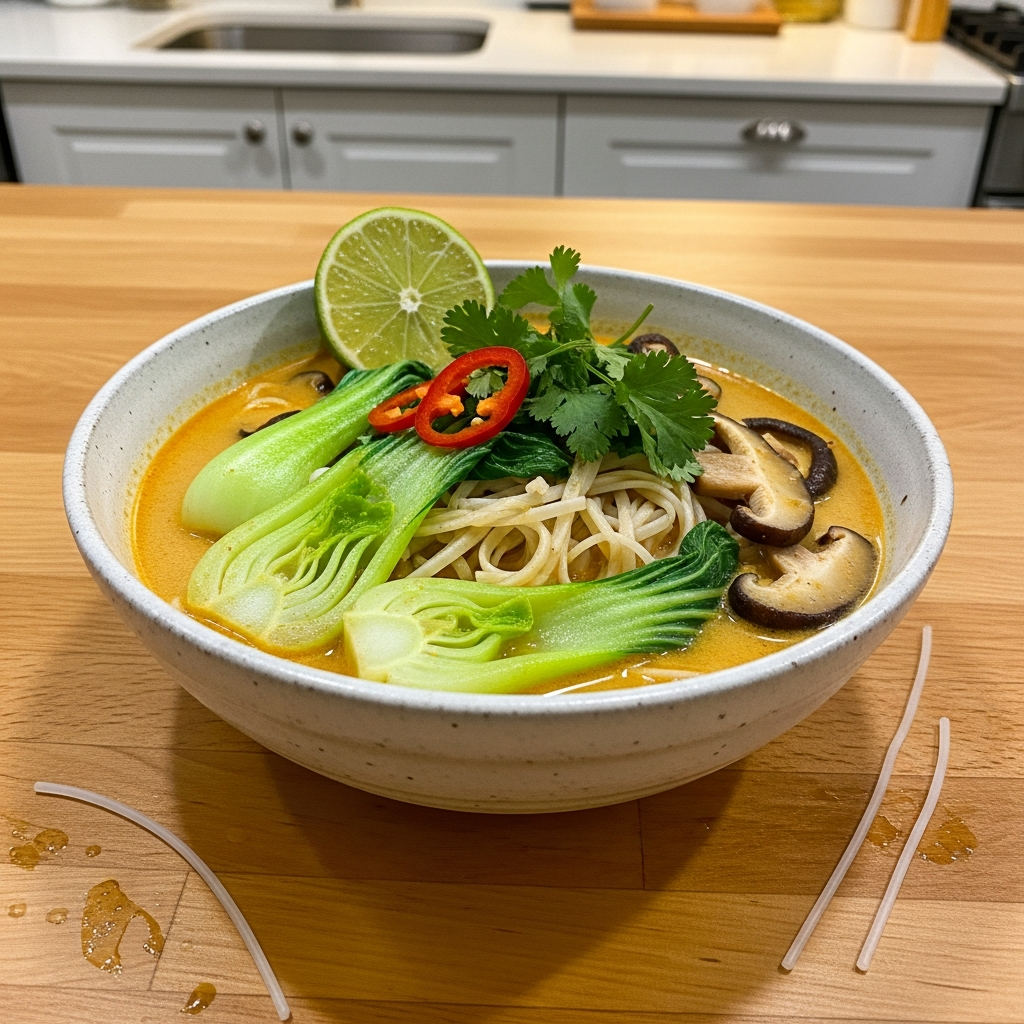
Before serving, use a pair of tongs to find and remove the lemongrass stalk. To serve, divide your cooked rice noodles among your serving bowls. Ladle the hot, creamy bok choy soup over the noodles, making sure each bowl gets a good amount of bok choy and mushrooms. Garnish generously and serve immediately!
How To Serve Bok Choy Soup
Serving this bok choy soup is all about the finishing touches. A beautiful presentation makes the meal feel extra special, even on a regular Tuesday night. I love to serve it in big, wide bowls so you can see all the lovely ingredients floating in that creamy coconut broth. The vibrant green of the bok choy and fresh herbs against the pale broth is just beautiful.
The key is to load up on the garnishes. They add texture, freshness, and allow everyone to customize their own bowl. I always set out a little “garnish bar” on the counter with small bowls of different toppings. This way, my husband can add all the spicy chili he wants, and I can go heavy on the fresh cilantro.
Here are some of my favorite ways to serve and garnish this soup:
- A Squeeze of Lime: This is non-negotiable in my book! A generous squeeze of fresh lime juice right before eating cuts through the richness of the coconut milk and brightens up all the flavors. Always serve with extra lime wedges on the side.
- Fresh Herbs: Chopped fresh cilantro is my go-to, but fresh Thai basil is also an incredible option. Its slightly anise-like flavor pairs beautifully with the coconut and lemongrass.
- Add Some Heat: Thinly sliced red chili, like a Fresno or Thai chili, adds a wonderful kick of heat and a pop of color. You could also offer a drizzle of chili oil or sriracha on the side.
- Extra Protein: To make this a heartier meal, you can easily add some protein. Shredded rotisserie chicken, pan-fried tofu cubes, or some plump cooked shrimp are all fantastic additions. Just add them to the soup in the last couple of minutes of cooking to heat through.
- Crunchy Toppings: For a little textural contrast, consider adding some chopped peanuts, toasted sesame seeds, or crispy fried shallots or garlic on top right before serving.
No matter how you top it, the most important thing is to serve it piping hot, right after you ladle it over the noodles. It’s the ultimate bowl of comfort that’s as pretty to look at as it is delicious to eat.
How To Store & Reuse Bok Choy Soup Leftovers
One of the best things about making a big pot of soup is having leftovers for the next day. This bok choy soup reheats beautifully, but there is one very important trick to making sure it’s just as good the second time around: store the components separately!
If you store the soup with the noodles in it, they will continue to soak up that gorgeous broth overnight, becoming mushy and leaving you with less liquid. Nobody wants that! The bok choy can also become a bit too soft if it sits in the hot broth for too long. For the best results, I always follow a simple storage plan.
Here’s how I recommend storing and reheating your leftovers:
- Store the Broth Separately: Allow the soup base, with the mushrooms and bok choy, to cool down slightly. Then, transfer it to an airtight container and store it in the refrigerator for up to 3 days. The flavors will actually meld and become even more delicious overnight.
- Store Noodles Separately: If you have leftover cooked noodles, toss them with a tiny bit of oil to prevent them from sticking together. Store them in a separate airtight container in the fridge.
- Freezing the Broth: The soup base (without the bok choy or noodles) freezes quite well! The coconut milk may separate a little upon thawing, but a good whisk while reheating usually brings it back together. Let it cool completely and freeze in a freezer-safe container or bag for up to 3 months. I don’t recommend freezing the bok choy, as its texture will suffer.
- Reheating: To reheat, simply pour the soup base into a pot and gently warm it over medium-low heat until hot, stirring occasionally. Again, avoid boiling it. While the soup is heating, you can quickly reheat the noodles by pouring some hot water over them for a minute and then draining. Assemble your bowl with the fresh noodles and hot soup, just like you did the first time.
Reusing the broth is another great option. If you run out of bok choy and mushrooms, the leftover broth is a fantastic base. You can add fresh vegetables like sliced bell peppers or snap peas, toss in some leftover chicken, and pour it over rice for a whole new meal.
Substitutions & Variations For Bok Choy Soup
While I absolutely adore this recipe just the way it is, it’s also incredibly versatile. Think of this as a template that you can easily adapt based on what you have in your fridge or your personal taste preferences. Don’t be afraid to play around and make it your own! Here are a few of my favorite substitutions and variations for this bok choy soup.
Making dietary tweaks is simple. For a completely vegan version, be sure to use vegetable broth and omit the optional fish sauce. You can add a splash of vegan fish sauce or a tiny bit more soy sauce to compensate for the saltiness. For a gluten-free soup, simply use tamari instead of soy sauce and ensure your rice noodles are certified gluten-free.
Here are some other fun ways to switch things up:
- Change the Greens: If you can’t find baby bok choy, you can use regular bok choy. Just separate the leaves from the stems, chop the stems into bite-sized pieces, and add them with the mushrooms. Add the leaves in the last minute of cooking, as they wilt very quickly. Other greens like spinach, kale, or Swiss chard would also work well.
- Try Different Mushrooms: I love the meaty texture of shiitakes, but cremini, oyster, or even simple white button mushrooms would be delicious in this soup. A mix of mushrooms would be even better!
- Spice It Up: If you want more heat infused throughout the broth, you can add a teaspoon of red curry paste along with the garlic and ginger. You could also add a few slices of fresh jalapeño to the simmering broth.
- Add More Protein: To make it a more substantial meal, add some protein. Cubed firm tofu is a great vegan option, just pan-fry it first for the best texture. For meat-eaters, thinly sliced chicken breast, pork, or some shrimp would be fantastic. Add them to the broth and simmer until cooked through.
- Noodle Swaps: While I love rice noodles here, you could easily substitute them with soba noodles, udon noodles, or even ramen noodles for a different texture.
The core of this recipe is the creamy, aromatic coconut and lemongrass broth. As long as you keep that amazing base, you can customize the add-ins to your heart’s content. Have fun with it and enjoy your unique creation!
Creamy Coconut Bok Choy Soup
Description: A rich and aromatic soup featuring tender-crisp baby bok choy and earthy shiitake mushrooms in a creamy coconut-lemongrass broth. This quick, one-pot meal is both comforting and refreshingly light, perfect for any night of the week.
Yield: 4 servings | Category: Soup | Cuisine: Asian-Inspired
Prep Time: 10 minutes | Cook Time: 20 minutes
Ingredients
- 1 tbsp coconut oil or neutral oil
- 2 cloves garlic, minced
- 1 tbsp fresh ginger, grated
- 1 stalk lemongrass, tough outer layers removed and bruised
- 4 cups vegetable or chicken broth
- 1 (13.5 oz) can full-fat coconut milk
- 1 tbsp soy sauce or tamari
- 1 tsp fish sauce (optional, for non-vegans)
- 4 heads baby bok choy, halved lengthwise
- 8 oz shiitake mushrooms, sliced
- 200g rice noodles, cooked according to package directions
- 1 lime, cut into wedges
- Fresh cilantro or Thai basil, for garnish
- Sliced red chili, for garnish (optional)
Instructions
- Heat oil in a large pot over medium heat. Sauté garlic and ginger until fragrant, about 1-2 minutes.
- Add bruised lemongrass and cook for another minute.
- Pour in broth and coconut milk, and bring to a gentle simmer. Do not boil.
- Stir in soy sauce and fish sauce (if using).
- Add shiitake mushrooms and cook for 5-7 minutes until tender.
- Add baby bok choy and cook for 2-3 minutes until stems are tender-crisp.
- Remove the lemongrass stalk.
- Divide cooked noodles among bowls and ladle the soup over top. Garnish with fresh herbs, chili, and serve with lime wedges.
Notes
For best results, use full-fat coconut milk. Storing the noodles and soup broth separately is recommended for leftovers to prevent soggy noodles.
Servings: 4 | Calories: 450 kcal | Fat: 25g | Carbohydrates: 45g | Protein: 10g
5 FAQs About Bok Choy Soup
Here are some straightforward answers to the most common questions I receive about this creamy bok choy soup recipe.
What is the best way to prepare bok choy for soup?
Properly preparing your bok choy is key to a great soup. I recommend using baby bok choy for this recipe because it’s more tender and has a milder, sweeter flavor than its mature counterpart. The first and most important step is washing it thoroughly. Dirt and grit love to hide in the base of the leaves, so you’ll want to give it a good rinse. You can either swish the halved heads in a large bowl of cold water or hold them under running water, gently separating the leaves to rinse in between.
For this bok choy soup, I like to simply slice the heads in half lengthwise. This keeps them mostly intact, which looks beautiful in the bowl and provides a wonderful combination of textures in each bite, from the crisp stalk to the tender leaf. If your baby bok choy heads are on the larger side, you can quarter them instead. If you’re using mature bok choy, I recommend separating the white stems from the green leaves. Chop the stems into bite-sized pieces and add them to the soup with the mushrooms, as they take longer to cook. Then, roughly chop the leaves and stir them in during the final minute of cooking so they just wilt without becoming overcooked.
Can I make this bok choy soup ahead of time?
Yes, you can absolutely make parts of this soup ahead of time, which is a lifesaver for meal prep or if you’re planning to serve it for guests. The best component to make in advance is the broth. You can prepare the entire soup base, including the aromatics, coconut milk, broth, seasonings, and cooked mushrooms, and then let it cool and store it in an airtight container in the refrigerator for up to three days. In fact, the flavors often meld and become even more delicious after a day.
When you are ready to serve, simply reheat the soup base gently on the stovetop until it’s hot. While it’s heating, you can cook your rice noodles so they are fresh. Once the broth is hot, add your freshly washed and halved baby bok choy and cook for just 2-3 minutes until it’s perfectly tender-crisp. Then you can assemble your bowls with the fresh noodles, hot broth, and crisp bok choy. Preparing it this way ensures that the bok choy doesn’t get mushy and the noodles have the perfect texture. It’s a great way to have a nearly-complete, homemade meal ready to go in under 10 minutes.
How do I keep the bok choy from getting mushy in the soup?
This is the most common concern when making any kind of bok choy soup, and the answer is simple: timing is everything! Bok choy cooks incredibly fast. The green, leafy parts wilt almost instantly in hot broth, and the white stems only need a few minutes to become tender while still retaining a pleasant, crisp bite. The biggest mistake you can make is adding it to the soup too early or letting it simmer for too long.
In this recipe, the bok choy is the very last ingredient to go into the pot before serving. After the mushrooms are fully cooked and the broth is perfectly seasoned and hot, you gently submerge the bok choy halves. Let them cook for just 2 to 3 minutes, tops. You’re looking for the leaves to turn a vibrant green and wilt, and for the base of the stems to be just tender enough that a fork can pierce them with a little resistance. The goal is “tender-crisp,” not soft. Once it hits that point, serve the soup immediately. If you let it continue to sit in the hot broth off the heat, the residual heat will continue to cook it, so prompt serving is key to perfect texture.
What are the health benefits of this bok choy soup?
This soup isn’t just delicious, it’s also packed with wonderful nutrients, making it a meal you can feel great about eating. The star ingredient, bok choy, is a cruciferous vegetable that is low in calories but high in vitamins and minerals. It’s an excellent source of vitamins C, K, and A, as well as folate and calcium. These nutrients are important for everything from immune support and bone health to healthy skin.
Beyond the bok choy, other ingredients add to the health profile. Ginger and garlic are renowned for their anti-inflammatory and immune-boosting properties. Shiitake mushrooms are a good source of B vitamins and have compounds that may support heart health. By using a quality vegetable or chicken broth and creamy coconut milk, which contains healthy fats called MCTs, you get a well-rounded and nourishing meal. The addition of fresh lime juice and cilantro not only adds flavor but also an extra dose of vitamin C and antioxidants. It’s a wonderfully balanced soup that is both comforting and truly good for you.
Can I add protein to this creamy bok choy soup?
Of course! This bok choy soup is a fantastic base for adding extra protein to make it an even heartier and more filling meal. Its versatile flavor profile pairs well with a variety of proteins, so you have plenty of options. If you want to keep it plant-based, cubed firm or extra-firm tofu is an excellent choice. For the best texture, I recommend pressing the tofu to remove excess water, cubing it, and then pan-frying or baking it until golden brown before adding it to the finished soup. You could also add edamame or chickpeas.
For those who eat meat, shredded rotisserie chicken is an incredibly easy and delicious shortcut. Just stir it in during the last few minutes to heat it through. You could also use thinly sliced raw chicken breast or thigh meat, adding it to the simmering broth a few minutes before the mushrooms to ensure it cooks completely. Plump shrimp are another fantastic option. They cook very quickly, so toss them in with the bok choy and cook for 2-3 minutes until they are pink and opaque. Even thinly sliced pork loin or a soft-boiled egg dropped on top would be wonderful additions.
Try These Recipes Next
If you loved the fresh and comforting flavors in this soup, I know you’ll enjoy some of my other favorite recipes.
- Easy Brown Butter Miso Bok Choy: A fantastic side dish where bok choy is pan-seared and drizzled with a nutty, savory brown butter and miso glaze.
- Crock Pot Thai Chicken Soup: If you loved the coconut broth in this recipe, you’ll adore this slow cooker version with chicken that is packed with Thai-inspired flavors.
- Simple Egg Drop Soup: A classic, comforting soup that comes together in just 15 minutes. It’s the perfect quick and easy meal.
Happy cooking, y’all!