
How a Spoonful of Miso Creates the Ultimate Silky Egg Drop Soup
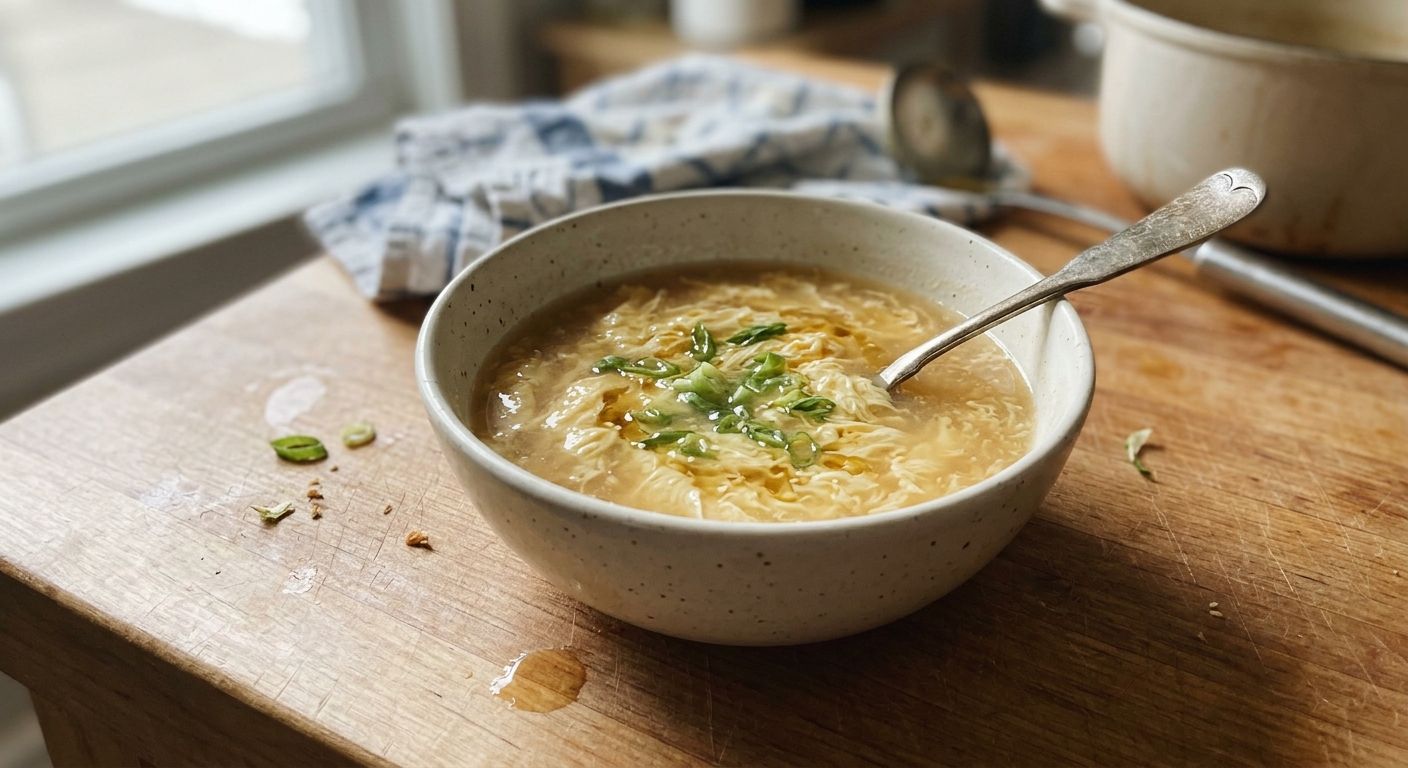
Growing up down South, soup season was usually defined by huge pots of simmering chicken and dumplings or rich vegetable stews. The very first time I tasted authentic egg drop soup was during a rainy evening at a tiny family-run Chinese restaurant downtown. Watching those delicate, silky ribbons unfurl in a steaming, fragrant golden broth felt like pure culinary magic.
I immediately became obsessed with mastering the dish at home. While standard takeout is undeniably comforting, typical home recipes often rely on plain chicken stock and end up tasting a bit flat or thin.
That is where my Southern cook’s intuition came into play. I decided to introduce a secret weapon: mellow white miso paste. It creates an incredible depth of savory umami that elevates humble pantry staples into a restaurant-worthy masterpiece in under fifteen minutes.
Why This Egg Drop Soup Recipe Works
Egg drop soup, traditionally known as dan huatong or egg flower soup, has graced Chinese dinner tables for centuries. Its enduring popularity comes down to simplicity and speed. It provides light, nourishing comfort without demanding hours at the stove.
Traditional versions rely heavily on the natural quality of supreme chicken stock, which takes hours to prepare from scratch. When home cooks use standard boxed broths, the soup can easily fall flat and taste thin or one-dimensional.
That is precisely why this recipe works so well. The addition of mellow white miso paste acts as an incredible flavor foundation. It instantly provides the rich, fermented depth of an all-day bone broth while keeping the soup light and clear.
The extra egg yolk is another game changer. Adding one rich yolk to the three whole eggs gives the broth that coveted, sunny restaurant color naturally without a drop of yellow food dye.
Finally, balancing the starch thickness before swirling ensures the beaten eggs float gracefully into wide, tender ribbons instead of sinking into dense, rubbery clumps.
Ingredients for Egg Drop Soup
Every single component in this recipe plays a deliberate role in balancing savory flavors, pleasant heat, and luxurious texture. Starting with quality basics will guarantee success.
- 4 cups low-sodium chicken broth (or rich homemade stock): Low-sodium broth is essential because it allows you to control the seasoning, especially since miso brings its own natural saltiness to the pot.
- 1 tablespoon mellow white miso paste: This is our star twist ingredient. White miso adds deep savory umami, body, and a subtle richness that makes standard store-bought chicken broth taste gourmet.
- 1 teaspoon finely grated fresh ginger: Freshly grated ginger cuts through the savory elements and gives the soup a warm, clean, aromatic finish.
- 1 tablespoon Shaoxing wine (or dry sherry): A classic Chinese cooking wine that adds complexity and authentic restaurant aroma to the liquid base.
- 2 scallions, thinly sliced, whites and dark greens separated: The whites gently infuse the broth with mild onion flavor, while the raw greens provide crisp, fresh contrast at the very end.
- 1/4 teaspoon ground white pepper: Ground white pepper offers an earthy, lingering warmth that blends invisibly into the golden soup.
- 1/2 teaspoon kosher salt (or to taste): Pure kosher salt sharpens every flavor note without adding harshness.
- 2 1/2 tablespoons cornstarch: The thickening agent that provides necessary body, allowing the beaten eggs to float smoothly into ribbons.
- 3 tablespoons cold water: Used to dissolve the cornstarch completely before it hits the hot pot.
- 3 large eggs plus 1 egg yolk, lightly beaten together: Fresh, high-quality eggs make a visible difference here. The extra yolk adds gorgeous natural color and velvety softness to the cooked ribbons.
- 1 teaspoon toasted sesame oil: Stirred in off the heat to preserve its deep, nutty fragrance as a finishing touch.
Always inspect your eggs and produce for maximum freshness. Bright yellow farm-fresh yolks yield the prettiest soup, and fresh ginger provides a punch that powdered spice simply cannot duplicate.
Step-by-Step Instructions For Making Egg Drop Soup
Making this dish takes mere minutes, so I strongly advise having all ingredients measured and resting near your stove before you turn on the burner. A heavy-bottomed medium saucepan works best because it holds heat evenly and gives your whirlpool plenty of room to spin.
Step 1: Simmer the Aromatics
Place your medium saucepan over medium heat and pour in the four cups of low-sodium chicken broth. Drop in your sliced scallion whites, freshly grated ginger, and Shaoxing wine.
Allow the liquid to come to a gentle simmer. This initial simmer draws the natural oils and bright aromatics out of the ginger and scallions, infusing the entire liquid foundation.
Step 2: Dissolve the Miso Twist
Never toss whole miso paste straight into a bubbling pot, or it will turn into stubborn little clumps. Instead, carefully ladle roughly a quarter-cup of the warm broth into a separate small prep bowl containing your white miso paste.
Whisk thoroughly with a small fork or whisk until the mixture is silky smooth and fully emulsified. Pour this rich, savory blend right back into your simmering pot.
Step 3: Season and Infuse
Stir the ground white pepper and kosher salt directly into the simmering broth. Reduce the heat slightly so the liquid remains at a steady, low simmer rather than a rolling boil.
Let everything infuse quietly for three minutes. Take a quick taste test right now to check the salt balance, keeping in mind that the beaten eggs will mellow the seasoning slightly.
Step 4: Thicken with the Slurry
In a small cup, stir the cornstarch and cold water together until completely smooth with no settled powder on the bottom. While stirring the soup with your free hand, slowly pour the slurry into the pot.
Keep stirring continuously for one to two minutes as the liquid simmers. The broth will transform from cloudy to clear and glossy, thickening just enough to hold the weight of the raw eggs.
Step 5: Create the Gentle Whirlpool
Turn the heat down to low to stop any vigorous bubbling. Using a ladle or sturdy wooden spoon, stir the broth in a smooth, continuous circular motion to create a slow-moving whirlpool in the center of the pot.
A gentle motion is vital here. If you stir too fast, the eggs will shred into tiny clouds instead of staying in gorgeous, wide ribbons.
Step 6: Stream in the Beaten Eggs
Hold the bowl of beaten eggs about six inches above the saucepan. Slowly drizzle the eggs in a very thin, steady stream into the circulating broth, aiming slightly off-center.
Keep that trickle slow and steady so the eggs do not hit the hot liquid all at once, which could rapidly drop the broth temperature.
Step 7: Let the Ribbons Set
Once all the egg is poured in, set your bowl down and leave the pot completely untouched for ten to fifteen seconds. This brief pause allows the egg strands to cook gently and hold their structure.
Gently guide a spoon through the soup once or twice to separate the layers into broad, velvety ribbons of egg flower.
Step 8: Finish and Garnish
Remove your saucepan from the hot burner immediately. Leaving it on the heat will overcook the delicate egg strands and make them rubbery.
Gently stir in the fragrant toasted sesame oil, scatter the reserved dark scallion greens across the surface, and ladle directly into warm bowls.
How To Serve Egg Drop Soup
Serving this dish is all about celebrating the balance between rich, savory broth and delicate textures. I love ladling it into deep ceramic bowls that trap the heat and keep the soup warm down to the last spoonful.
To turn this quick soup into a memorable meal, consider adding texture and pairing it with complimentary dishes:
- Crispy Wonton Strips: Fry up small strips of wonton wrappers or buy crunchy soup noodles to scatter right over the surface for an irresistible crunch.
- Steamed Dim Sum: Serve alongside homemade pork dumplings, steamed bao buns, or crispy vegetable egg rolls.
- Savory Fried Rice: Pair this light soup with a hearty bowl of wok-fried rice to balance the meal with comforting carbs and proteins.
- A Touch of Spice: Drizzle a few drops of roasted chili crisp or sriracha oil over the top for family members who crave an extra kick of heat.
Presenting this soup as a starter before an Asian-inspired dinner party always sets a comforting, cozy tone. It also works wonders as a soothing lunch on busy weekdays when you need something nourishing in a hurry.
How To Store & Reuse Egg Drop Soup Leftovers
Egg drop soup is undeniably at its absolute best when enjoyed freshly poured from the saucepan. However, if you find yourself with extra servings, you can certainly preserve them with proper technique.
Follow these practical steps to safely store your soup and revive its original texture the next day:
- Cooling Quickly: Let the soup cool to room temperature for no more than thirty minutes before transferring it into an airtight glass storage container.
- Refrigeration: Seal tightly and store in the refrigerator for up to three days. Do not freeze this soup, as the cornstarch and cooked eggs will separate into a watery mess upon thawing.
- Gentle Reheating: Pour the chilled soup into a small saucepan over low heat. Warm it slowly, stirring very gently so you do not break apart the tender ribbons.
- Restoring the Thickness: The cornstarch often thins out after refrigeration. If your soup seems watery, simply stir in a tiny fresh splash of cornstarch slurry and warm until thickened.
You can also repurpose leftover soup into a fast lunch base. Drop in a nest of quick-cooking ramen noodles or add leftover shredded rotisserie chicken to create a satisfying, full-bodied noodle bowl.
Substitutions & Variations For Egg Drop Soup
One of my favorite things about cooking is adapting recipes to match whatever ingredients happen to be in your pantry. This soup handles adaptations effortlessly while maintaining its cozy character.
Here are several creative ways to tailor this recipe to your preferences or dietary needs:
- Vegetarian Swap: Replace the chicken broth with a rich, roasted vegetable stock or a savory shiitake mushroom broth without losing that hearty foundation.
- Wine Substitute: If you do not keep Shaoxing cooking wine on hand, dry sherry or Japanese mirin make wonderful alternatives. If using mirin, omit any added pinches of sugar.
- Garden Vegetables: Stir in a handful of fresh baby spinach leaves or a cup of sweet canned corn kernels right before thickening the broth for added sweetness and color.
- Protein Boost: Add cubed silken tofu, shredded chicken, or small peeled shrimp into the seasoned broth just before you create the whirlpool.
Do not hesitate to experiment with the garnishes as well. A pinch of toasted white sesame seeds or a tiny dash of garlic powder can add another lovely layer of home-cooked flavor.
Silky Miso Egg Drop Soup
Description: A quick, restaurant-quality egg drop soup featuring silky egg ribbons in a savory broth elevated with mellow white miso paste.
Yield: 4 servings | Category: Soup | Cuisine: Chinese-American
Prep Time: 5 minutes | Cook Time: 10 minutes
Ingredients
- 4 cups low-sodium chicken broth (or rich homemade stock)
- 1 tablespoon mellow white miso paste
- 1 teaspoon finely grated fresh ginger
- 1 tablespoon Shaoxing wine (or dry sherry)
- 2 scallions, thinly sliced, whites and dark greens separated
- 1/4 teaspoon ground white pepper
- 1/2 teaspoon kosher salt (or to taste)
- 2 1/2 tablespoons cornstarch
- 3 tablespoons cold water
- 3 large eggs plus 1 egg yolk, lightly beaten together
- 1 teaspoon toasted sesame oil
Instructions
- Combine chicken broth, scallion whites, grated ginger, and Shaoxing wine in a pot and bring to a simmer over medium heat.
- Whisk miso paste with 1/4 cup warm broth until smooth, then stir back into the pot alongside white pepper and kosher salt; simmer gently for 3 minutes.
- Mix cornstarch and cold water into a smooth slurry, then stir into the simmering broth until clear, glossy, and lightly thickened.
- Reduce heat to low and stir the broth in a circular motion to create a gentle whirlpool.
- Slowly drizzle the beaten eggs into the whirlpool in a thin stream; rest untouched for 10 to 15 seconds, then stir once to release the ribbons.
- Remove from heat immediately, stir in toasted sesame oil, and serve garnished with scallion greens.
Notes
Always mix your miso with a splash of warm broth before adding it to avoid lumps. Adding the extra egg yolk gives the soup a gorgeous golden glow naturally without food dye.
Servings: 4 | Calories: 125 | Fat: 6g | Carbohydrates: 8g | Protein: 8g
5 FAQs About Egg Drop Soup
Here are some straightforward answers to the most common questions I receive about this egg drop soup recipe.
Why did my egg drop soup turn out cloudy instead of having distinct ribbons?
A cloudy soup usually happens for two specific reasons: the broth was boiling too hard, or the liquid was stirred too vigorously when the eggs were added. High heat and violent stirring break the delicate egg proteins apart into tiny fragments instead of wide ribbons.
To avoid this, make sure your pot is turned down to low and the whirlpool is moving at a gentle, leisurely pace. Pour the eggs slowly and let the soup rest completely for ten to fifteen seconds before touching it with your spoon.
Can I make egg drop soup without cornstarch?
Cornstarch is an essential functional ingredient in traditional egg drop soup because it changes the viscosity of the broth. Without that silky thickness, the beaten raw egg will sink straight to the bottom of the pot and scramble into dense clumps instead of floating.
If you have an allergy or intolerance to corn, you can substitute an equal amount of potato starch or arrowroot powder. Whisk it with cold water into a smooth slurry just as you would with cornstarch.
Why does my leftover egg drop soup become watery after sitting in the fridge?
It can be surprising to see thick soup turn thin overnight, but this is a natural chemical reaction. Human saliva contains an enzyme called amylase, which rapidly breaks down cooked starches like cornstarch. If you taste the soup directly with a spoon and place it back in the pot, the broth will thin out.
Even without direct spoon contact, cornstarch gel naturally weeps moisture over time as it chills. You can easily fix this when reheating by whisking in a fresh teaspoon of cornstarch slurry over low heat until the glossy body returns.
What gives restaurant egg drop soup that bright yellow color?
Many traditional takeout restaurants add a few drops of yellow food coloring to their large stockpots to create that vibrant sunshine glow. It has become an iconic visual trademark of American Chinese takeout.
In this homemade recipe, we achieve that gorgeous rich color naturally by whisking an extra egg yolk in with the whole eggs. Quality pasture-raised eggs will also provide deeply pigmented orange yolks that make the broth naturally beautiful.
Is egg drop soup naturally gluten-free?
This particular egg drop soup recipe can be completely gluten-free with one minor adjustment. Traditional Shaoxing cooking wine often contains wheat, so you should check the label carefully or substitute a certified gluten-free dry sherry.
Additionally, verify that your chicken stock and white miso paste are certified gluten-free, as some miso varieties are made with barley grains. Cornstarch itself is naturally gluten-free and safe to use.
Try These Recipes Next
If you loved creating this easy and comforting bowl, there are plenty more delicious and satisfying soups waiting for you on the site!
- Simple Egg Drop Soup Recipe: A stripped-back, classic version of this beloved broth that is ready in under ten minutes.
- Easy Chicken Soup Recipe: A traditional, soul-warming chicken soup packed with tender vegetables and cozy homemade flavor.
- Crock Pot Thai Chicken Soup: A slow-simmered, fragrant coconut curry soup loaded with tender chicken and bright lime.
Grab your favorite soup spoon, give these cozy bowls a try, and let me know which one becomes your new family favorite!