
Foolproof Herb-Crusted Prime Rib with a Savory Garlic-Miso Crust
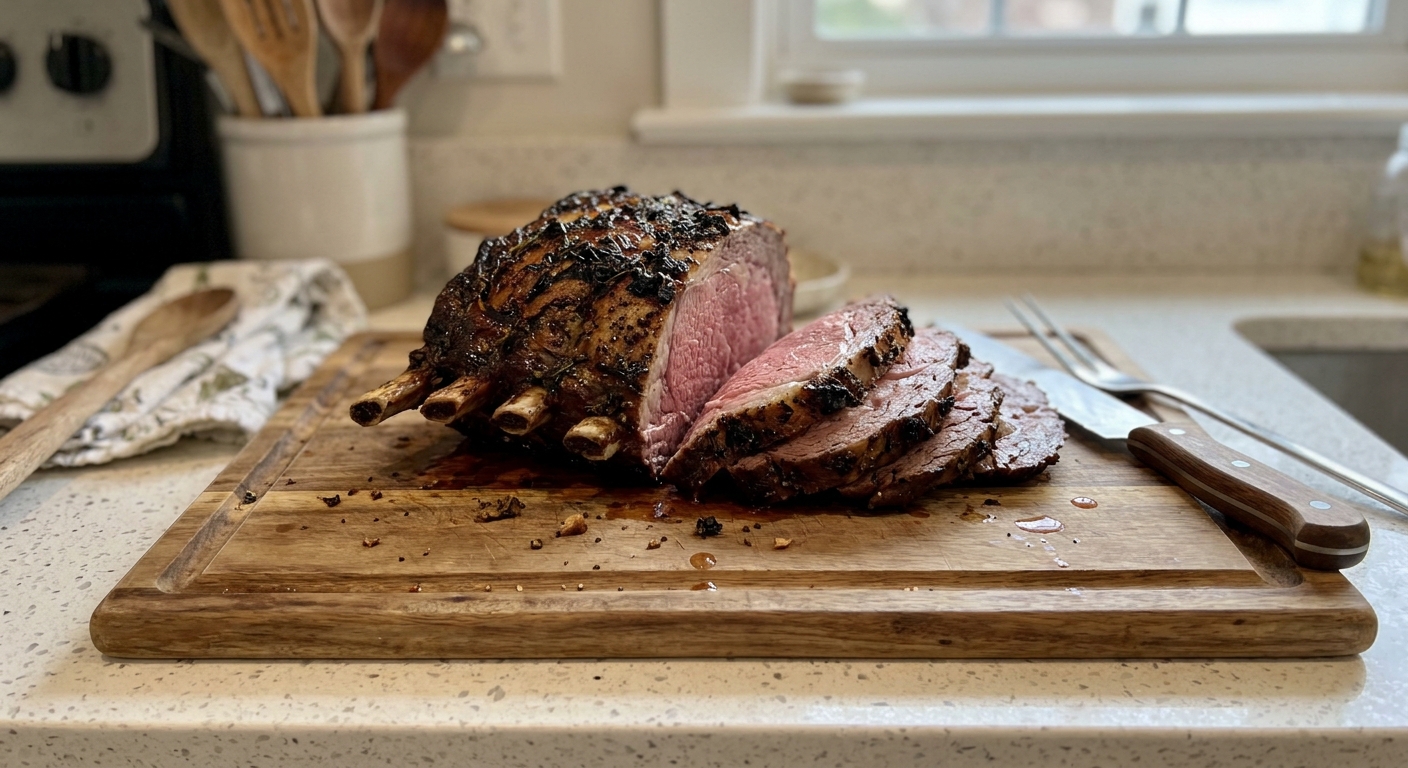
Growing up, holiday suppers at my grandmother’s house always featured a gorgeous roast resting right in the middle of the table. When I first attempted making an Herb-Crusted Prime Rib for my own family, I was terrified of ruining such an expensive cut of meat. Classic salt, pepper, and garlic rub tasted nice, but I really wanted a savory crust that made everyone pause mid-bite.
That was when I started experimenting in my kitchen with traditional compound butter rubs. A little dab of white miso paste turned out to be the secret weapon I was looking for. Blended into rich butter alongside rosemary, thyme, and sage, it melts into the beef and leaves behind an unbelievable depth of flavor.
The first time I served this version, my husband asked if we could skip turkey entirely for Thanksgiving and stick with beef every single year. The house smelled like fresh herbs and sizzling garlic for hours. It has since become our go-to main dish for birthdays, holidays, and celebrations when we want something truly memorable.
You do not need culinary school training to pull this off with absolute confidence. With a trusty meat thermometer and this rich herb paste, you will have a tender, rosy roast with a deep, caramelized crust every single time.
Why This Herb-Crusted Prime Rib Recipe Works
Prime rib, often called the standing rib roast, holds a storied place on British banquet tables and Southern celebratory menus alike. Traditionally, cooks coated the exterior in sea salt or a basic garlic butter before roasting it hot and fast. While classic, high-heat methods often leave you with an uneven gray band of overcooked meat around a small pink center.
This recipe uses the reverse sear method, which changes the game completely. By roasting the meat low and slow at 225°F, the fat gently renders and the beef cooks evenly from edge to center. Resting the meat before blasting it with extreme heat at the end gives you edge-to-edge medium-rare perfection without losing moisture.
The true magic lies in the addition of white miso paste to the herb crust. White miso is mild, slightly sweet, and packed with fermented umami. It does not make the beef taste like miso soup at all.
Instead, the natural enzymes and amino acids in the miso work alongside the butter and garlic to caramelize into a deep, savory bark under high heat. Paired with aromatic rosemary, sage, and pungent Dijon mustard, this paste creates a crackling shell that locks in flavor and elevates the beef to restaurant quality.
Ingredients for Herb-Crusted Prime Rib
Quality ingredients are essential when preparing a showstopper cut like prime rib. Starting with a well-marbled piece of meat and fragrant, fresh herbs ensures the finished roast turns out tender, juicy, and rich in every bite.
- 1 bone-in prime rib roast (3 to 4 ribs, about 7 to 8 lbs), trimmed and tied
- 2 tablespoons kosher salt (plus more to taste)
- 1/2 cup (1 stick) unsalted butter, softened to room temperature
- 2 tablespoons white miso paste (twist ingredient for deep umami and crust caramelization)
- 1 tablespoon Dijon mustard
- 6 cloves garlic, finely minced
- 2 tablespoons fresh rosemary, finely chopped
- 2 tablespoons fresh thyme leaves, finely chopped
- 1 tablespoon fresh sage, finely chopped
- 1 tablespoon coarsely cracked black pepper
- 1 teaspoon Worcestershire sauce
When selecting your beef, look for a bone-in roast graded USDA Choice or USDA Prime. The bones act as a natural roasting rack and help insulate the meat, keeping it exceptionally tender as it roasts.
White miso paste is the star twist ingredient here. Choose a mild, sweet white miso (often labeled shiro miso), which blends seamlessly into softened dairy butter without overpowering the fresh herbs.
Always opt for fresh rosemary, thyme, and sage rather than dried jars from the spice rack. Fresh herbs release essential oils as they cook into the butter, creating an aromatic crust that dried herbs simply cannot duplicate.
Step-by-Step Instructions For Herb-Crusted Prime Rib
Step 1: Dry-Brine the Roast
Pat the prime rib thoroughly dry with paper towels to remove all surface moisture. Season every side generously with the kosher salt, pressing it into the fat cap and cut sides. Place the seasoned meat on a wire rack set inside a rimmed baking sheet, then refrigerate uncovered for 12 to 24 hours.
This dry-brining step draws surface water out, dissolves the salt, and pulls savory seasoning deep into the muscle fibers. Keeping it uncovered in the fridge dries out the exterior skin, which is crucial for building a crisp crust later.
Step 2: Bring to Room Temperature
Remove the roast from your refrigerator about 1.5 to 2 hours before you plan to cook it. Set it on your kitchen counter to take the cold chill off the meat. Putting a refrigerator-cold roast straight into a low-temperature oven can cause uneven cooking, leaving the center cold while the outer layers cook too quickly.
Step 3: Prepare the Herb-Miso Crust
In a medium mixing bowl, combine the softened butter, white miso paste, Dijon mustard, minced garlic, chopped rosemary, thyme, sage, cracked black pepper, and Worcestershire sauce. Use a sturdy fork to mash and stir the ingredients together until completely smooth and creamy. The paste should have a soft, spreadable consistency that clings easily to your fingers.
Step 4: Apply the Crust
Using a silicone spatula or your clean hands, smear the herb-miso butter mixture evenly over the top, sides, and all exposed meat of the roast. Ensure the fat cap receives a generous, uniform coating. Do not worry about coating the bottom bones, as they will rest against the rack during cooking.
Step 5: Slow Roast
Position your oven rack in the lower-middle position and preheat the oven to 225°F (107°C). Insert an oven-safe digital probe thermometer into the thickest part of the meat, making sure the metal tip does not touch any bone. Roast slowly until the internal temperature registers 118°F to 120°F (48°C to 49°C) for medium-rare, which usually takes between 3 to 4 hours.
Step 6: Rest Before the Sear
Remove the roasting pan from the oven and carefully transfer the beef to a clean cutting board. Tent the roast loosely with a sheet of aluminum foil and let it rest on the counter for 30 minutes. The internal juices will redistribute through the meat, and carryover cooking will gently nudge the temperature upward.
Step 7: Sear the Crust
While your roast rests on the board, turn your oven temperature up to 500°F (260°C). Once the oven is fully preheated, remove the foil tent and return the roast to the oven on the rimmed baking sheet. Roast uncovered for 6 to 10 minutes, keeping a close eye through the oven window until the herb-miso crust turns deeply golden brown, crackling, and fragrant.
Step 8: Carve and Serve
Transfer the finished roast directly onto a large carving board with a juice groove. Snip and discard the butcher’s twine. Run your knife right along the curve of the rib bones to separate the meat rack, then carve the boneless roast into thick, juicy slices and serve immediately with the warm board juices spooned on top.
How To Serve Herb-Crusted Prime Rib
Plating a gorgeous prime rib roast is all about highlighting the contrast between the dark, aromatic crust and the rosy, tender center. Carve the roast at the dinner table so your family and guests can enjoy the aroma of roasted garlic, rosemary, and caramelized miso butter. Thick slices cut to roughly one-half inch provide the best dining experience.
Pairing this rich cut of beef with balanced side dishes ensures a complete holiday or Sunday supper menu:
- Creamy garlic mashed potatoes to soak up the savory drippings from your cutting board.
- Roasted asparagus or green beans tossed in lemon juice to cut through the richness of the beef fat.
- Fluffy Southern skillet yeast rolls or popovers served piping hot with salted butter.
- A crisp Caesar or winter green salad dressed with a sharp vinaigrette.
- Freshly grated horseradish mixed with sour cream for an easy, zesty accompaniment.
Remember to collect every drop of juice that collects on your cutting board during carving. Pour those juices into a small pitcher and drizzle them directly over each plated slice before handing plates across the table.
How To Store & Reuse Herb-Crusted Prime Rib Leftovers
Leftover prime rib is an absolute treasure if handled properly. Let any remaining meat cool down to room temperature before packing it away. Wrap the beef tightly in plastic wrap, then place it inside an airtight container or heavy-duty zip-top bag to keep the refrigerator air from drying it out.
Store your cooked beef in the refrigerator for up to four days. If you plan to freeze portions, wrap individual thick slices tightly in butcher paper and freezer foil, storing them for up to two months.
Reheating prime rib requires gentle care so you do not cook out the pink center and turn your tender beef tough. Here are my favorite ways to reheat and repurpose leftover roast:
- Place slices in a baking dish with a splash of beef broth, cover with foil, and warm at 250°F for 10 to 15 minutes.
- Shave cold leftover beef thinly and pile it onto toasted hoagie rolls with melted provolone cheese for French dip sandwiches.
- Dice the leftover meat into small cubes and toss it into a morning skillet with crispy potatoes, peppers, and fried eggs.
- Fold thin strips into warm flour tortillas with diced onions, fresh cilantro, and salsa verde for incredible steak tacos.
Avoid using the microwave to reheat whole slices of prime rib. Microwaving heats meat unevenly and will turn your luxurious, tender cut into rubbery, gray beef in seconds.
Substitutions & Variations For Herb-Crusted Prime Rib
While this recipe delivers a classic holiday profile with a savory twist, you can adapt the rub to suit your kitchen pantry or personal preferences. Feel free to tweak the herbs and seasonings depending on what you have growing in your garden or stocked in your spice drawer.
Here are several simple ingredient adjustments and flavor twists that work wonderfully with this roasting technique:
- Dairy-Free Twist: Swap the unsalted dairy butter for high-heat ghee or your favorite plant-based block butter to accommodate dairy sensitivities.
- Miso Varieties: If you cannot find mild white miso, light yellow miso works nicely without altering the salty balance too much.
- Alternative Fresh Herbs: Replace the fresh sage with equal parts fresh French tarragon or flat-leaf parsley for a lighter, brighter flavor profile.
- Southern Heat: Add one-half teaspoon of cayenne pepper or smoked paprika to the butter paste for a smoky, warm finish across the crust.
- Boneless Roast: You can use a boneless ribeye roast instead of bone-in. Reduce total cooking time by roughly 20 to 30 minutes, checking internal temperature early.
Whenever you make substitutions, keep the base proportions of fat, salt, and herbs consistent. This balance ensures the crust adheres firmly to the meat and browns evenly in the final high-heat sear.
Herb-Crusted Prime Rib
Description: A showstopping bone-in prime rib roast slow-cooked using the reverse sear method and slathered in a savory crust made with garlic, fresh herbs, butter, and umami-rich white miso paste.
Yield: 8 servings | Category: Main Dish | Cuisine: American
Prep Time: 25 minutes (plus chilling time) | Cook Time: 3 hours 30 minutes
Ingredients
- 1 bone-in prime rib roast (3 to 4 ribs, about 7 to 8 lbs), trimmed and tied
- 2 tablespoons kosher salt (plus more to taste)
- 1/2 cup (1 stick) unsalted butter, softened to room temperature
- 2 tablespoons white miso paste
- 1 tablespoon Dijon mustard
- 6 cloves garlic, finely minced
- 2 tablespoons fresh rosemary, finely chopped
- 2 tablespoons fresh thyme leaves, finely chopped
- 1 tablespoon fresh sage, finely chopped
- 1 tablespoon coarsely cracked black pepper
- 1 teaspoon Worcestershire sauce
Instructions
- Pat roast dry with paper towels, season thoroughly with kosher salt, and refrigerate uncovered on a wire rack inside a baking sheet for 12 to 24 hours.
- Remove the roast from the refrigerator 1.5 to 2 hours before cooking to bring it closer to room temperature.
- In a bowl, mix softened butter, white miso paste, Dijon mustard, minced garlic, rosemary, thyme, sage, black pepper, and Worcestershire sauce until smooth.
- Spread the herb-miso butter mixture evenly over the top, sides, and meat of the roast.
- Preheat oven to 225°F (107°C), insert a probe thermometer into the center of the roast, and cook until the internal temperature reaches 118°F to 120°F (3 to 4 hours).
- Remove roast from the oven, tent loosely with foil on a carving board, and let rest for 30 minutes.
- Increase oven heat to 500°F (260°C), return roast to the oven, and sear uncovered for 6 to 10 minutes until deep brown and sizzling.
- Carve meat away from the bones, slice into thick portions, and serve with pan juices.
Notes
Always rely on an accurate meat thermometer rather than cooking time alone. The resting period before the high-heat sear is essential for redistributing juices and preventing overcooking during the crust formation.
Servings: 8 | Calories: 745 kcal | Fat: 58g | Carbohydrates: 3g | Protein: 52g
5 FAQs About Herb-Crusted Prime Rib
Here are some straightforward answers to the most common questions I receive about this herb-crusted prime rib recipe.
How do I know when my herb-crusted prime rib is cooked to medium-rare?
The only reliable way to know when your herb-crusted prime rib is finished is by using a digital meat thermometer. Never rely strictly on clock time because oven temperatures, bone density, and meat shape vary significantly from kitchen to kitchen.
For a true medium-rare roast, pull the meat from the oven during the slow-roasting phase when the internal temperature registers between 118°F and 120°F. During the 30-minute rest, carryover cooking will naturally lift the internal reading to roughly 125°F to 128°F. The quick, final blast in a 500°F oven creates the crust without raising the core temperature, landing your final carve right at a rosy 130°F to 135°F.
Can I make the herb-crusted prime rib paste ahead of time?
Yes, you can easily prepare the compound herb-miso butter paste up to three days in advance. Mix the softened butter, white miso paste, Dijon mustard, garlic, and fresh herbs together in a bowl, then cover it tightly with plastic wrap and store it in your refrigerator.
When you are ready to use it, pull the compound butter out of the fridge about an hour before slathering it onto the meat. If the butter paste is too cold and stiff, it will tear into chunks rather than spreading into a smooth, even protective blanket across the roast.
Why should I leave the herb-crusted prime rib uncovered in the fridge overnight?
Leaving the seasoned roast uncovered on a wire rack inside your refrigerator is a culinary technique known as dry-brining. The refrigerator fan circulates cool, dry air around all surfaces of the beef, evaporating excess moisture from the surface fat and exterior muscle.
Surface moisture is the enemy of a crisp crust. If the outside of your roast is damp when it hits the oven, it will steam instead of caramelize. Drying the exterior guarantees that your butter, garlic, and miso paste fuse directly to the meat, yielding an exceptional crunch.
What size herb-crusted prime rib should I buy per person?
When purchasing a bone-in prime rib roast, a good general rule of thumb is to plan for one rib for every two adults. A 3-rib roast typically weighs between 7 and 8 pounds, which comfortably feeds 6 to 8 generous dinner portions.
If you are hosting big eaters or hope to enjoy plenty of leftover roast beef sandwiches the following afternoon, calculate roughly one pound of raw, bone-in meat per guest. This calculation accounts for natural fat trimming, bone weight, and gentle moisture reduction during roasting.
Why does this herb-crusted prime rib use the reverse sear method?
Traditional roasting methods start at 450°F before dropping down to a lower heat setting. That old-school method often creates an overcooked gray ring around the perimeter of the roast, leaving only a tiny circle of pink meat in the absolute center.
The reverse sear method flips that script entirely by cooking the meat gently at 225°F first. Slow roasting ensures the meat cooks evenly from edge to edge while fat renders quietly into the muscle. The quick blast of high heat at the end crisps up the miso-herb crust without cooking the interior one bit further.
Try These Recipes Next
If you loved making this showstopping roast, here are a few more delicious beef dishes and essential meal pairings to try in your kitchen:
- Classic Herb-Crusted Prime Rib Recipe: A traditional version of this holiday centerpiece loaded with cracked black pepper and fresh garden herbs.
- Homemade Au Jus Recipe: A rich, savory dipping sauce made from pan drippings that pairs wonderfully with every slice of roast beef.
- Easy Crockpot Roast Beef: A comforting, hands-off beef roast cooked low and slow with tender vegetables for busy weeknight family dinners.
I hope these savory beef recipes bring plenty of comfort and joy to your family dinner table this season!