
The Ultimate Umami-Rich Barbecue Brisket with Black Garlic and Beef Tallow
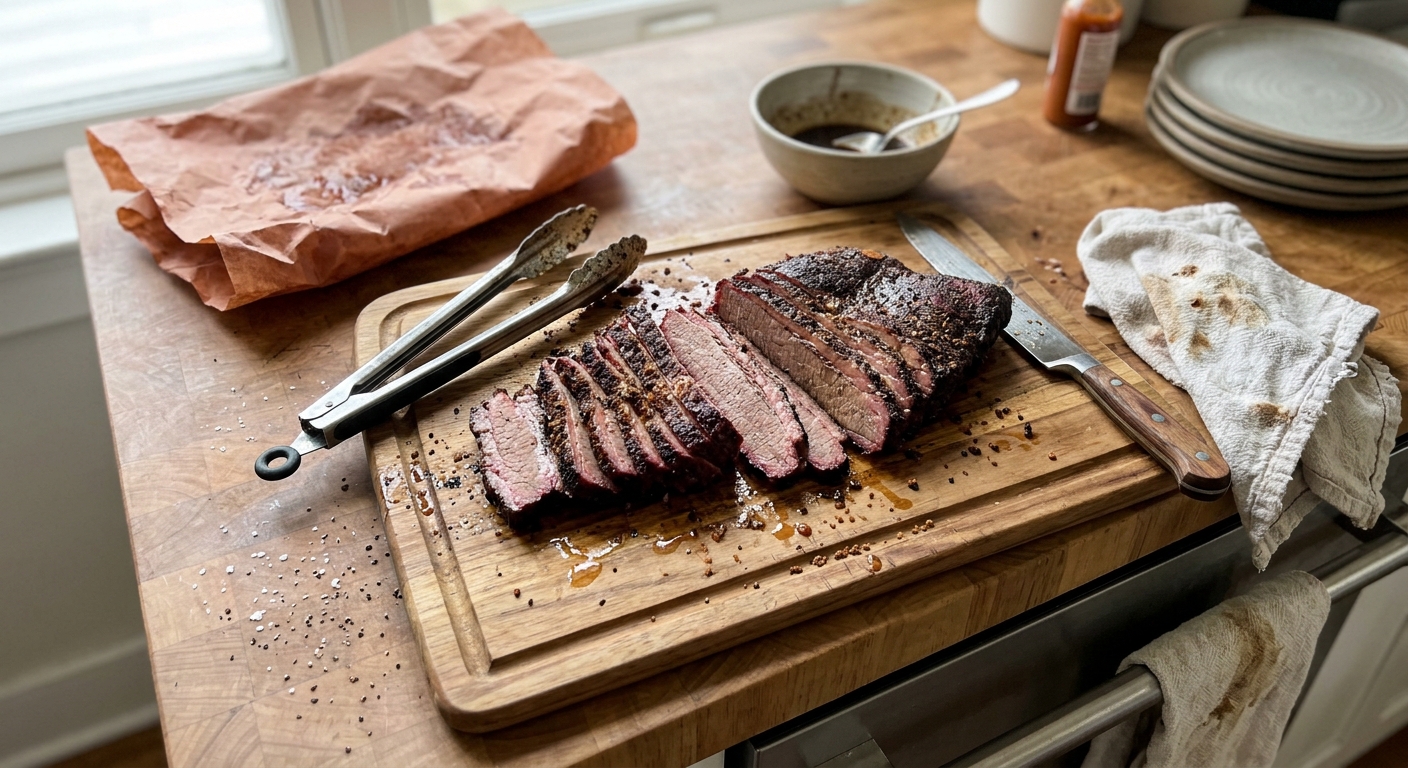
A few summers ago, my husband convinced me that our backyard patio needed an offset smoker the size of a small submarine. I grew up loving traditional Southern cookouts, but smoking a whole barbecue brisket felt like an intimidating craft reserved strictly for seasoned pitmasters. My earliest attempts resulted in meat that tasted good, but it lacked that meltingly tender texture and deep, complex flavor I craved.
I realized that classic Texas barbecue brisket relies heavily on salt, pepper, and smoke. While that purist approach has its charms, I wanted to bring something richer and more savory to my family table. I started experimenting with layered seasonings that would build a superior crust without overpowering the beef.
That was when I introduced black garlic paste into my slather. Black garlic has a naturally sweet, earthy umami profile with hints of balsamic and tamarind. Paired with Worcestershire sauce and coarse black pepper, it creates a luscious, savory base that caramelizes into a deep mahogany bark.
Now, this barbecue brisket is my signature centerpiece whenever we host friends and family for holidays and summer gatherings. It delivers rich slices with a buttery bite every single time.
Why This Barbecue Brisket Recipe Works
Barbecue brisket traces its roots back to Central Texas, where German and Czech butcher shops smoked tough, inexpensive cuts of beef over native oak wood to preserve them. Over the decades, brisket transformed from humble butcher shop fare into the undisputed king of American barbecue. Its popularity endures because a well-smoked brisket offers an unmatched eating experience with crisp, peppery bark, melting fat, and tender beef.
Traditional pitmasters swear by a simple Dalmatian rub made strictly with coarse salt and black pepper. While that produces a good crust, it can sometimes leave the interior beef tasting one-dimensional, especially on leaner flat cuts. My recipe elevates the classic technique by introducing black garlic paste blended with Worcestershire sauce as the binder.
Black garlic is fermented garlic that has lost its raw pungency and developed deep, sweet umami compounds. When brushed directly onto the meat, it acts as an adhesive for the coarse seasonings while caramelizing under low heat. This enhances the beefy savoriness and helps produce an incredible dark bark.
Furthermore, spritzing with a balanced blend of rich bone broth and crisp apple cider vinegar keeps the surface tacky so smoke adheres better. Finishing the wrapped brisket with warm, rendered beef tallow ensures the lean flat stays exceptionally juicy throughout the long cook.
Ingredients for Barbecue Brisket
Selecting the right ingredients is essential when cooking a cut of beef this large. High-quality meat with good marbling will always yield the juiciest results.
- 1 whole packer beef brisket (12 to 14 pounds), trimmed with a 1/4-inch fat cap: Look for USDA Choice or Prime grade brisket. A whole packer cut includes both the lean flat and the rich, fatty point muscle.
- 3 tablespoons black garlic paste: This is our secret weapon ingredient. It delivers a rich, molasses-like umami sweetness that creates an extraordinary bark without burning.
- 2 tablespoons Worcestershire sauce: Adds acidity, anchovy savoriness, and liquid volume to loosen the paste into a smooth slather.
- 1/3 cup 16-mesh coarse black pepper: Coarse grind is crucial here. Standard fine table pepper will make the bark pasty and overly hot, whereas 16-mesh creates the signature pebbled bark texture.
- 1/3 cup coarse kosher salt: Kosher salt crystals dissolve slowly and season large beef cuts evenly without making the bark taste harsh.
- 1 tablespoon granulated garlic: Granulated garlic provides a clean, aromatic backbone that melds into the exterior crust.
- 1 teaspoon smoked paprika: Adds subtle earthy sweetness and gives the bark a beautiful initial reddish-bronze hue.
- 1/2 cup beef bone broth: Used in the spritz bottle to keep the meat moist and provide rich beef flavor as it smokes.
- 1/2 cup unfiltered apple cider vinegar: Blended into the spritz to provide acidity, which balances the rich beef fat and tenderizes the exterior.
- 1/4 cup rendered beef tallow, melted: Smothered over the brisket during the wrapping phase to enrich the meat and lock in moisture.
Whenever possible, buy whole black garlic bulbs and mash them into paste, or purchase pure black garlic puree without added preservatives. Using quality peach butcher paper instead of foil keeps the bark crisp while the brisket finishes cooking.
Step-by-Step Instructions For Making Barbecue Brisket
Smoking brisket requires patience, attentiveness, and the right workflow. Take your time with the prep work, keep your smoker steady, and rely on feel as well as internal temperature readings.
Step 1: Prepare the Black Garlic Slather
In a small bowl, whisk together the black garlic paste and Worcestershire sauce until a smooth, spreadable mixture forms. If the paste is firm, press it against the side of the bowl with a fork until it dissolves completely into the sauce.
This slather acts as a sticky binder that holds your dry seasonings in place while infusing the surface with rich flavor.
Step 2: Mix the Dry Rub
In a separate bowl, whisk together the coarse black pepper, coarse kosher salt, granulated garlic, and smoked paprika. Stir thoroughly to ensure the salt and pepper distribute evenly.
An even distribution prevents uneven salty spots on the surface of your finished bark.
Step 3: Season and Rest the Meat
Lightly coat the entire brisket with the black garlic slather, working it into every nook and cranny. Next, sprinkle the dry rub generously across all sides of the brisket, pressing gently with your hands so the spices adhere securely.
Let the seasoned brisket sit on your counter at room temperature for about 45 minutes to draw moisture to the surface.
Step 4: Fire Up the Smoker
Preheat your smoker to 225°F (107°C) using well-seasoned wood chunks or splits such as post oak, hickory, or pecan. Ensure your fire is burning cleanly with light, thin blue smoke rather than heavy, thick white smoke.
Clean combustion prevents soot and bitterness from coating the brisket during its long stay on the grates.
Step 5: Prepare the Spritz
Combine the beef bone broth and unfiltered apple cider vinegar inside a food-safe spray bottle. Shake the bottle well before each use so the liquid remains thoroughly mixed.
Keep the bottle handy right by your smoker so you can work quickly without losing grate temperature.
Step 6: Place Brisket on Smoker
Place the brisket on the smoker grates with the fat-side up, positioning the thicker point muscle toward your smoker’s primary heat source. Close the smoker lid tightly to stabilize your cooking temperature.
Orienting the point toward the heat shields the thinner flat muscle from drying out during the early hours of cooking.
Step 7: Smoke and Spritz
Allow the brisket to smoke completely undisturbed for the first 3 hours so the rub can set firmly into a crust. After 3 hours, begin spritzing the surface lightly every 45 to 60 minutes whenever any edges look dry.
Avoid soaking the meat, as too much liquid can wash away the spices before the bark hardens.
Step 8: Check Bark and Temperature
Continue smoking the brisket until the surface develops a dark, mahogany-black bark that does not smudge when rubbed with your finger. Insert a digital probe to verify that the internal temperature has reached approximately 165°F to 170°F.
This stage usually takes between 6 to 8 hours depending on your smoker style and air flow.
Step 9: Wrap with Tallow and Butcher Paper
Tear off two wide, overlapping sheets of peach butcher paper on a sturdy table. Drizzle half of your melted beef tallow across the center of the paper, set the brisket on top, and pour the remaining tallow over the brisket.
Fold the paper tightly around the brisket, wrapping it like a neat package with minimal air pockets.
Step 10: Finish the Cook
Return the wrapped brisket to your smoker, or place it on a rimmed baking sheet inside an oven preheated to 250°F (121°C). Continue cooking until an instant-read probe glides into the thickest part of the flat with almost zero resistance.
The brisket is typically tender between 200°F and 205°F, feeling soft like warm butter.
Step 11: The Essential Rest
Remove the wrapped brisket from the smoker or oven and transfer it immediately into an insulated cooler lined with clean, dry towels. Close the lid and let the meat rest undisturbed for at least 2 to 3 hours.
Never skip this resting phase, because it allows the expanded beef muscle fibers to relax and reabsorb all the flavorful juices.
Step 12: Slice and Serve
Unwrap the brisket on a large cutting board with a juice channel. Separate the flat from the point along the natural fat seam.
Slice the lean flat against the grain into pencil-thick slices, and slice the juicy point into slightly thicker cuts or bite-sized cubes.
How To Serve Barbecue Brisket
Serving barbecue brisket is all about celebrating the contrast between the peppery, savory bark and the tender, juicy beef underneath. Carve your brisket right before your guests sit down to eat, because exposed slices dry out quickly once sliced.
I love arranging a platter with neat rows of lean flat slices on one side and glistening, thicker point cuts on the other. Add a small bowl of coarse sea salt nearby for anyone who wants an extra crunch.
Round out your meal with these classic barbecue accompaniments:
- Tangy vinegar-based coleslaw: Cuts cleanly through the rich, buttery beef fat.
- Creamy baked macaroni and cheese: Offers comfort and richness that pairs naturally with smoky brisket.
- Sweet skillet cornbread: Perfect for mopping up warm rendered tallow and meat juices.
- Quick pickled red onions and jalapeños: Provides bright acidity and a gentle crunch on every plate.
- Thick dill pickle spears: A traditional barbecue staple that refreshes your palate between bites.
For casual entertaining, lay out warm brioche buns, thin slices of sweet onion, and a bottle of barbecue sauce so guests can build their own towering sandwiches. Leftover point meat also makes an unforgettable filling for street tacos topped with cilantro and diced white onions.
How To Store & Reuse Barbecue Brisket Leftovers
If you find yourself with leftover barbecue brisket, count yourself lucky. Brisket reheats remarkably well when handled with care, staying moist and full of flavor for days after your cookout.
Always allow the meat to cool completely to room temperature before packing it away. Store leftover slices or whole chunks in an airtight container in your refrigerator for up to 4 days.
For longer storage, follow these easy steps:
- Freeze in meal-sized portions: Wrap unsliced portions tightly in plastic wrap, then place them inside heavy-duty freezer bags for up to 3 months.
- Reheat with moisture: Place chilled slices in a baking dish, splash with a little beef bone broth, cover tightly with foil, and warm at 300°F for 20 minutes.
- Use the sous-vide method: Place vacuum-sealed bags of brisket in a 160°F water bath for 45 minutes to reheat without losing any moisture.
Brisket leftovers are incredibly versatile in weekday dinners. Chop up the lean flat meat to toss into breakfast hash with crispy potatoes and fried eggs.
You can also fold chopped brisket into warm queso dip, stir it into hearty chili, or layer it between corn tortillas for decadent weeknight enchiladas.
Substitutions & Variations For Barbecue Brisket
While the combination of black garlic, coarse pepper, and post oak smoke creates an award-winning flavor profile, you can easily adjust this recipe based on your pantry or dietary needs.
If you prefer a different regional barbecue style or need to substitute ingredients, try these smart swaps:
- Slather substitute: If you cannot track down black garlic paste, combine 2 tablespoons of roasted garlic paste with 1 tablespoon of dark molasses and the Worcestershire sauce.
- Wood choice: Oak is the gold standard for beef, but pecan wood produces a lighter, nutty smoke profile that complements the black garlic sweetness wonderfully.
- Spritz variation: Swap out half of the apple cider vinegar for unsweetened tart cherry juice to impart a deeper mahogany color to your exterior crust.
- Gluten-free tweak: Use tamari or certified gluten-free Worcestershire sauce to keep the slather completely safe for gluten-sensitive diners.
- Oven finish: If your smoker runs out of fuel or the weather turns sour, move the wrapped brisket to your kitchen oven at 250°F to finish cooking without losing quality.
Feel free to experiment with these options to tailor the brisket to your family’s favorite taste preferences while preserving that essential juicy texture.
Ultimate Black Garlic Barbecue Brisket
Description: A tender, flavorful barbecue brisket featuring a deeply savory black garlic slather, coarse peppery bark, and a rich tallow butcher paper wrap.
Yield: 12-14 servings | Category: Main Course | Cuisine: American / Southern
Prep Time: 45 minutes | Cook Time: 12 hours
Ingredients
- 1 whole packer beef brisket (12 to 14 pounds), trimmed with a 1/4-inch fat cap
- 3 tablespoons black garlic paste
- 2 tablespoons Worcestershire sauce
- 1/3 cup 16-mesh coarse black pepper
- 1/3 cup coarse kosher salt
- 1 tablespoon granulated garlic
- 1 teaspoon smoked paprika
- 1/2 cup beef bone broth
- 1/2 cup unfiltered apple cider vinegar
- 1/4 cup rendered beef tallow, melted
Instructions
- Whisk together black garlic paste and Worcestershire sauce in a small bowl until smooth.
- Mix coarse black pepper, kosher salt, granulated garlic, and smoked paprika together in a separate bowl.
- Coat the brisket all over with the slather, apply the dry rub evenly, and rest at room temperature for 45 minutes.
- Preheat smoker to 225°F (107°C) using oak, hickory, or pecan wood.
- Combine beef bone broth and apple cider vinegar in a clean spray bottle.
- Place brisket on the smoker fat-side up with the point toward the heat.
- Smoke untouched for 3 hours, then lightly spritz every 45 to 60 minutes when the surface looks dry.
- Cook until a deep dark bark sets and the internal meat temperature reaches 165°F to 170°F.
- Lay out two sheets of peach butcher paper, drizzle half the melted tallow, set brisket on top, pour remaining tallow over meat, and wrap tightly.
- Return wrapped brisket to smoker or a 250°F oven until probe tender, around 200°F to 205°F.
- Rest inside a towel-lined cooler for 2 to 3 hours.
- Unwrap and slice against the grain into pencil-thick slices for serving.
Notes
Always rest the brisket for at least two full hours before carving. Slicing too early will cause valuable juices to pool on the cutting board instead of staying in the meat.
Servings: 14 servings | Calories: 620 kcal | Fat: 42 g | Carbohydrates: 2 g | Protein: 58 g
5 FAQs About Barbecue Brisket
Here are some straightforward answers to the most common questions I receive about this barbecue brisket recipe.
How do I know when my barbecue brisket is fully done?
While an instant-read thermometer is helpful for monitoring progress, probe tenderness is the true indicator of doneness for barbecue brisket. Start checking your brisket once the internal temperature registers around 200°F in the thickest section of the flat muscle.
Insert the metal thermometer probe slowly into the center of the meat. If the probe slides in and out with virtually zero resistance, feeling just like a warm knife through softened butter, your brisket is tender and ready to rest.
Should I cook barbecue brisket fat-side up or fat-side down?
The best orientation for barbecue brisket depends on the direction of your smoker’s heat source. In standard offset smokers where heat rolls across the top of the cooking chamber, cooking fat-side up helps insulate the delicate flat muscle from the draft.
However, if you are cooking on a drum smoker or vertical pellet grill where the primary heat comes directly from below, place the fat-side down. Positioning the fat layer toward the heat shields the meat from drying out.
Why does barbecue brisket stall during the cooking process?
The stall is a natural phase during low-and-slow cooking where the internal temperature of barbecue brisket plateaus, usually between 150°F and 170°F. This happens because moisture evaporates from the beef surface, creating an evaporative cooling effect that matches the smoker’s heat input.
The stall can last anywhere from one to three hours, which can test your patience. Wrapping your brisket tightly in peach butcher paper speeds past this plateau by reducing evaporation while protecting the crust.
Why is peach butcher paper better than foil for wrapping barbecue brisket?
Peach butcher paper is porous, allowing excess steam to escape while still trapping adequate heat and moisture. This balance protects the rich, crunchy bark you spent hours developing on your barbecue brisket without softening it into mush.
Aluminum foil creates a completely airtight seal that effectively braises the beef. While foil cooks faster, it can turn your crisp exterior bark wet and soggy.
How thick should I cut my barbecue brisket slices?
Proper slicing technique makes a huge difference in the mouthfeel of barbecue brisket. Always slice the leaner flat section against the grain into pencil-thick slices, roughly one-quarter of an inch wide.
If your flat slices seem a bit firm, slice them slightly thinner to make them more tender to chew. For the richer point cut, carve slices about one-third of an inch thick or chop it into bite-sized cubes for burnt ends.
Try These Recipes Next
If you loved making this show-stopping beef dinner, try one of these wonderful, comforting barbecue dishes next:
- Easy Barbecue Brisket Recipe: A simplified, fuss-free oven method that delivers tender, juicy beef brisket without firing up the smoker.
- Crockpot BBQ Beef Sandwiches: Tender shredded beef cooked low and slow in a slow cooker for easy weeknight family dinners.
- BBQ Meatloaf: A classic homemade meatloaf topped with a smoky, tangy barbecue glaze that the whole family will adore.
Fire up your smoker, grab your apron, and enjoy sharing this incredible brisket with the people you love most!