
The Secret to the Best Herb Bread Stuffing Is Brown Butter and Miso
Growing up in the South, Sunday suppers and holiday feasts always revolved around hearty casseroles. My grandmother made a classic dish of cubed white sandwich bread with dried celery salt, and while it was pure comfort, I always found myself wishing for bolder flavor and better texture. A few years ago, I decided to give traditional bread stuffing a modern upgrade in my own kitchen.
I wanted a recipe that balanced pillowy softness on the inside with a crunchy, golden crust on top. Most importantly, I wanted a deep savory backbone that did not rely on heavy canned soups. That was when I reached for a tub of white miso paste tucked into my refrigerator.
By melting sweet cream butter until it turns nutty and brown, then whisking in mild white miso, you create an extraordinary flavor base. The miso melts seamlessly into the butter, providing a rich, savory boost that elevates the entire dish. Every bite of this homemade bread stuffing carries an earthy depth that keeps everyone at the dinner table coming back for second helpings.
Whether you are setting a holiday spread or roasting a chicken on a cool autumn evening, this recipe delivers dependable results every single time. It has completely replaced the boxed mixes and plain recipes of my childhood.
Why This Bread Stuffing Recipe Works
Bread dressing and stuffing have graced American tables for centuries. Early cooks created these recipes as a thrifty way to ensure stale loaves of bread never went to waste. Over time, baking seasoned bread cubes in a casserole dish became an essential tradition for cozy family gatherings across the country.
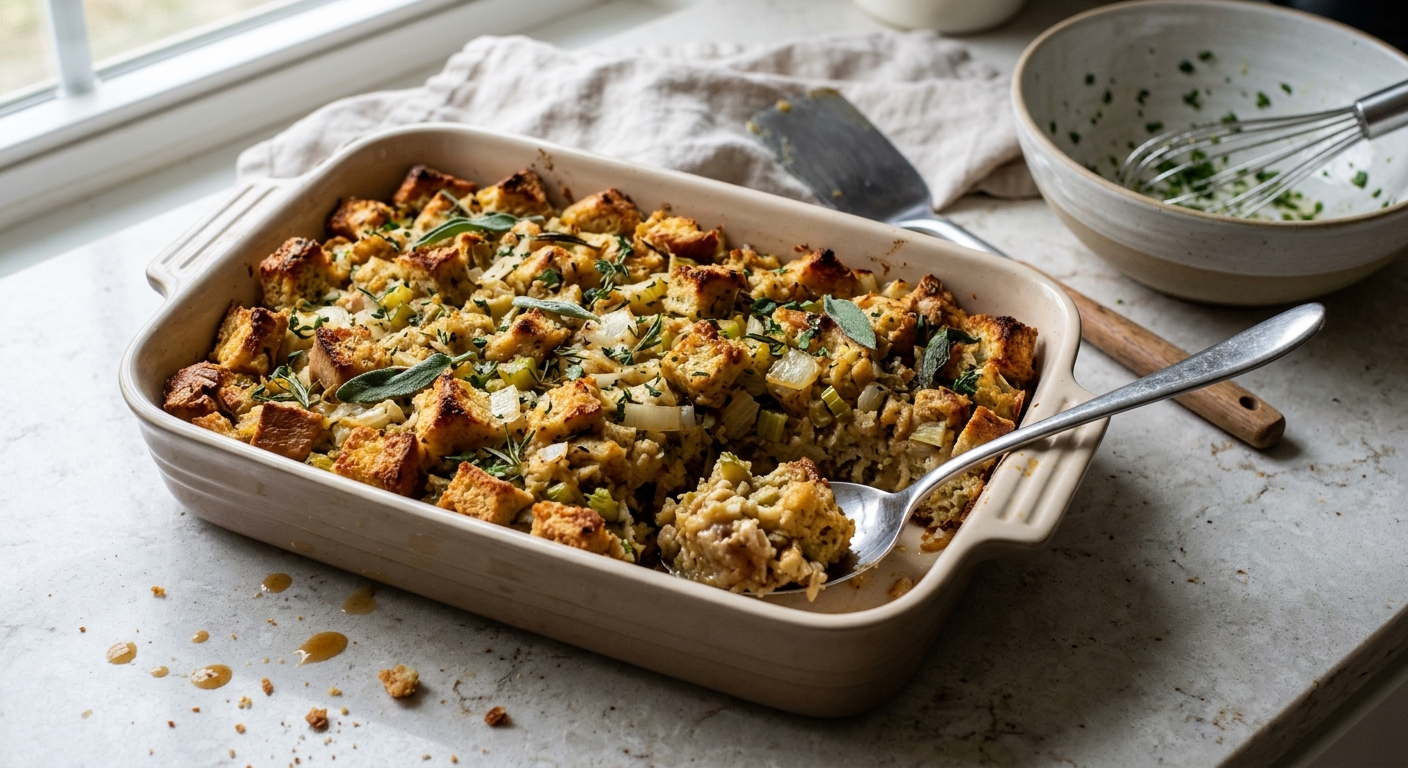
The popularity of this dish comes down to pure comfort. Sturdy bread cubes soak up rich stock and aromatic herbs, baking into a dish that is tender in the center with a crisp, crackly top. It serves as the ultimate companion to roasted poultry and rich pan gravies.
What makes this specific version shine is the secret weapon: white miso paste emulsified into browned butter. Browning the butter caramelizes the milk solids, unlocking notes of toasted hazelnuts. Whisking in the fermented white miso adds a powerful punch of natural umami.
You will not taste anything that screams fermented soybeans or Japanese cuisine. Instead, the miso acts as a natural flavor magnifier. It enhances the poultry stock, grounds the aromatic sage and thyme, and gives the bread stuffing a savory complexity that traditional recipes simply cannot match.
The result is a side dish with incredible balance. The crust stays wonderfully crunchy, the interior remains custardy without turning mushy, and every forkful delivers deep, memorable flavor.
Ingredients for Bread Stuffing
Using quality ingredients makes all the difference when preparing this comforting holiday side dish. Here is what you will need to gather on your counter:
- 1 lb rustic sourdough or country French bread, cut into 3/4-inch cubes (about 10–12 cups)
- 8 tablespoons (1 stick) unsalted butter
- 2 tablespoons white (shiro) miso paste *(the twist: adds deep, roasted umami without tasting explicitly like miso)*
- 1 large yellow onion, finely diced
- 3 stalks celery, finely diced
- 4 cloves garlic, minced
- 2 tablespoons minced fresh sage
- 1 tablespoon minced fresh thyme leaves
- 1 tablespoon minced fresh rosemary
- 1/4 cup finely chopped fresh flat-leaf parsley
- 2 to 2 1/2 cups low-sodium chicken or turkey stock, warmed
- 2 large eggs, beaten
- 3/4 teaspoon kosher salt (adjust to taste, keeping miso saltiness in mind)
- 1/2 teaspoon freshly cracked black pepper
The bread is the foundation of the dish. Avoid soft, pre-sliced sandwich bread because it breaks down into paste once liquid hits it. A crusty sourdough or artisanal country French loaf provides the open crumb and chew needed to hold its shape.
White miso paste is the star twist here. Shiro miso is milder and sweeter than darker red miso, allowing it to blend effortlessly into browned butter without overpowering the delicate herbs.
Always opt for fresh herbs rather than dried jars from the back of your spice cabinet. Fresh sage, rosemary, and thyme provide vibrant floral aromas that cut through the richness of the butter. Lastly, using low-sodium stock allows you to control the seasoning precisely, ensuring your dish never turns overly salty.
Step-by-Step Instructions For Making Bread Stuffing
Step 1: Dry Out the Bread Cubes
Preheat your oven to 300°F (150°C). Arrange your bread cubes in a single, even layer across two large rimmed baking sheets to ensure good airflow. Bake for 20 to 25 minutes, tossing them halfway through the cooking time.
You want the cubes completely dried out and slightly crisp to the touch, but not browned like croutons. Removing the moisture ensures the bread will drink in the flavorful herb broth later without turning soggy. Once dried, pour them into an extra-large mixing bowl to cool down.
Step 2: Prepare the Baking Dish and Oven
Increase your oven temperature to 375°F (190°C) so it is ready for the final bake. Lightly grease a standard 9×13-inch baking dish with a dab of softened butter. A ceramic or enameled cast iron dish works beautifully here for distributing heat evenly and creating crisp edges.
Step 3: Brown the Butter
Place a large, heavy skillet over medium heat and melt the 8 tablespoons of unsalted butter. Continue cooking the butter while swirling the pan occasionally. After 3 to 5 minutes, the butter will foam up and the milk solids will settle to the bottom, turning a fragrant, nutty golden-brown color. Watch the pan carefully during this stage, as browned butter can turn burnt very quickly.
Step 4: Whisk in the White Miso Paste
Immediately add the white miso paste directly into the hot browned butter. Use a small wire whisk to blend the paste thoroughly until the mixture looks smooth, glossy, and fully emulsified. The hot fat tames the sharp edges of the miso and blooms its roasted aroma.
Step 5: Sauté the Onions and Celery
Toss the finely diced yellow onion and celery straight into the skillet with the miso-butter. Cook over medium heat for 8 to 10 minutes, stirring now and then with a wooden spoon. You want the vegetables softened and translucent rather than browned, allowing their natural sweetness to balance the rich butter.
Step 6: Bloom the Fresh Herbs and Garlic
Add the minced garlic, sage, thyme, and rosemary to the softened vegetables. Sauté the mixture for about 60 to 90 seconds until the kitchen smells incredible. Take the skillet off the heat immediately so the garlic does not scorch.
Step 7: Combine Bread and Aromatics
Scrape the warm vegetable and herb mixture over the dried bread cubes in your large mixing bowl. Add the fresh chopped parsley, kosher salt, and freshly cracked black pepper. Toss gently with a large spoon or rubber spatula until the bread is coated in the fragrant green herbs.
Step 8: Whisk the Stock and Egg Custard
In a medium bowl or glass measuring cup, whisk together the beaten eggs and 2 cups of warm stock. Warming the stock slightly prevents the melted butter on the bread from seizing up when the liquid is introduced. The eggs act as a gentle binder, creating a tender, soufflé-like interior.
Step 9: Moisten and Fold the Bread Mixture
Pour the egg and stock mixture evenly over the seasoned bread cubes. Fold gently from the bottom up until the bread absorbs all the liquid. If the bread still feels tough or dry in the center, drizzle in up to 1/2 cup more warm stock. The bread should be moist throughout without pooling liquid in the base of the bowl.
Step 10: Transfer Loosely to the Baking Dish
Spoon the stuffing mixture into your prepared 9×13-inch baking dish. Distribute it gently across the corners without pressing or packing the bread down. Keeping the mixture loose allows hot air to circulate, resulting in a fluffy, tender texture inside.
Step 11: Bake Covered to Set
Cover the baking dish tightly with a sheet of aluminum foil to trap the steam. Slide it into your 375°F oven and bake for 30 minutes. This steam period cooks the eggs through and ensures the bread cubes fully soften into a cohesive casserole.
Step 12: Uncover for a Crisp, Golden Finish
Carefully remove the aluminum foil and return the dish to the oven uncovered for an additional 20 to 25 minutes. Bake until the exposed bread cubes on top turn deeply golden brown and crunchy, and the center feels set when gently pressed. Let the dish rest on a cooling rack for 10 minutes before serving warm.
How To Serve Bread Stuffing
This savory side dish is a natural showstopper for celebratory family meals. The golden, craggy top and buttery interior make it a natural centerpiece alongside your favorite holiday main courses. A generous drizzle of rich turkey gravy or a spoonful of tart cranberry sauce cuts through the savory richness of the miso butter.
You can also think beyond traditional holiday menus. This bread stuffing pairs wonderfully with everyday weeknight dinners and casual weekend gatherings:
- Serve it alongside thick, pan-seared pork chops finished with a warm apple cider pan sauce.
- Spoon it underneath herb-roasted chicken breasts or roasted turkey thighs to catch all the flavorful pan drippings.
- Plate it next to roasted autumn vegetables, like honey-glazed carrots or caramelized Brussels sprouts.
- Stuff it into roasted acorn squash halves for a hearty, autumn-inspired supper.
For an unexpected brunch treat, spoon leftover stuffing into small ramekins, press a hollow in the center, and crack an egg on top. Bake until the egg whites are set and the yolk is runny. The combination of runny yolk, crisp bread, and fresh herbs creates an unforgettable weekend breakfast.
How To Store & Reuse Bread Stuffing Leftovers
Leftover bread stuffing holds up remarkably well in the refrigerator or freezer, making it a dream for meal planning. Let the casserole cool completely to room temperature before packing it away, which prevents condensation from turning the bread mushy.
Transfer the leftovers to an airtight container and store in the refrigerator for up to four days. If you want to keep it longer, wrap individual portions tightly in plastic wrap and freeze them in a zip-top freezer bag for up to two months. Thaw frozen portions overnight in the refrigerator before reheating.
When you are ready to enjoy your leftovers, use these simple methods to bring back that oven-fresh texture:
- Reheat in the oven by placing stuffing in a baking dish, adding a splash of stock, covering with foil at 350°F for 15 minutes, then uncovering for 5 minutes to re-crisp the top.
- Press chilled stuffing into a preheated, greased waffle iron for five minutes to make ultra-crisp stuffing waffles.
- Pan-fry flat patties in a cast iron skillet with a pat of butter until both sides form a crunchy brown crust.
- Layer cold stuffing inside a pressed panini sandwich with sliced roast turkey, melted provolone cheese, and a spread of cranberry sauce.
Avoid heating large portions in the microwave whenever possible. Microwaving softens the bread cubes and robs the dish of its signature crunchy topping.
Substitutions & Variations For Bread Stuffing
This recipe is wonderfully adaptable to different preferences, pantry staples, and dietary requirements. You can make subtle adjustments to the aromatics or the base bread without losing the rich umami profile that makes the dish so special.
Here are several tested ways to customize this classic recipe to fit your household:
- Swap sourdough for a hearty gluten-free country loaf to accommodate guests with gluten sensitivities, keeping bake times identical.
- Use a rich vegetable broth instead of poultry stock to turn this into a satisfying vegetarian side dish.
- Substitute sweet Vidalia onions, leeks, or large French shallots for the yellow onion for a softer, sweeter aromatic base.
- Use yellow miso paste if you cannot find white miso, but reduce the added salt by half to maintain proper seasoning.
- Swap country French bread for artisanal brioche or challah if you prefer a slightly sweeter, richer bread profile.
Feel free to experiment with the ratios of fresh herbs depending on your personal taste. If you love woodsy aromas, increase the fresh rosemary slightly. If you prefer classic Thanksgiving notes, lean heavily into the garden sage.
Brown Butter & Miso Bread Stuffing
Description: A modern twist on traditional bread stuffing featuring rustic sourdough, fresh garden herbs, and a savory browned butter and white miso emulsion. Crisp on top, tender inside, and packed with deep flavor.
Yield: 8 to 10 servings | Category: Side Dish | Cuisine: American
Prep Time: 25 minutes | Cook Time: 1 hour 15 minutes
Ingredients
- 1 lb rustic sourdough or country French bread, cut into 3/4-inch cubes (about 10–12 cups)
- 8 tablespoons (1 stick) unsalted butter
- 2 tablespoons white (shiro) miso paste
- 1 large yellow onion, finely diced
- 3 stalks celery, finely diced
- 4 cloves garlic, minced
- 2 tablespoons minced fresh sage
- 1 tablespoon minced fresh thyme leaves
- 1 tablespoon minced fresh rosemary
- 1/4 cup finely chopped fresh flat-leaf parsley
- 2 to 2 1/2 cups low-sodium chicken or turkey stock, warmed
- 2 large eggs, beaten
- 3/4 teaspoon kosher salt
- 1/2 teaspoon freshly cracked black pepper
Instructions
- Preheat oven to 300°F (150°C). Spread bread cubes on two baking sheets and bake 20 to 25 minutes until dry and crisp. Transfer to a large bowl to cool.
- Increase oven to 375°F (190°C) and grease a 9×13-inch baking dish with butter.
- Melt butter in a large skillet over medium heat for 3 to 5 minutes until browned and nutty. Whisk in the white miso paste until smooth.
- Add diced onion and celery to the butter. Cook 8 to 10 minutes until soft, then stir in garlic, sage, thyme, and rosemary for 60 to 90 seconds. Remove from heat.
- Pour vegetable mixture over the dried bread. Add parsley, salt, and pepper, tossing gently to distribute.
- Whisk beaten eggs with 2 cups warm stock. Pour over bread and fold until absorbed, adding up to 1/2 cup more stock if dry.
- Transfer loosely to the baking dish. Cover tightly with foil and bake for 30 minutes.
- Remove foil and bake uncovered for 20 to 25 minutes until deep golden brown. Rest 10 minutes before serving.
Notes
Use rustic, sturdy artisanal bread rather than soft sandwich bread for the best texture. White miso paste adds deep savory flavor without tasting overtly salty or overpowering the herbs.
Servings: 10 servings | Calories: 245 kcal | Fat: 12 g | Carbohydrates: 28 g | Protein: 7 g
5 FAQs About Bread Stuffing
Here are some straightforward answers to the most common questions I receive about this bread stuffing recipe.
Can I make this bread stuffing ahead of time?
Yes, you can easily prepare this dish in advance to save precious kitchen time on busy cooking days. The simplest method is to dry the bread cubes two or three days early and keep them sealed in an airtight container at room temperature. You can also cook the vegetable, herb, and miso-butter mixture a day ahead and store it in the refrigerator.
If you want to assemble the entire casserole in advance, combine all ingredients in the baking dish, cover tightly with foil, and chill for up to 24 hours. When you are ready to bake, pull the dish out of the refrigerator 30 minutes before baking to take off the chill. Add an extra 5 to 10 minutes to the covered bake time to ensure the center gets piping hot.
Why is my bread stuffing dry or soggy?
The balance of moisture is the key factor in getting the perfect stuffing texture. A dry casserole usually happens when the bread cubes were either not soaked with enough stock, or the bread was left uncovered in the oven for too long. Sourdough loaves vary in density, so always feel the bread before baking. It should feel like a damp sponge without pooling liquid at the bottom of the bowl.
A soggy dish occurs when cooks skip the oven-drying step or pack the bread down tight into the baking dish. If you use soft, fresh bread right out of the bag, it will collapse into mush when stock hits it. Always dry the bread thoroughly in a low oven, and spoon the mixture loosely into the pan so the steam can escape evenly.
Can I bake this bread stuffing inside a turkey?
While you can technically cook stuffing inside a turkey, I strongly recommend baking it separately in a casserole dish. Cooking stuffing inside the poultry cavity requires the core of the stuffing to reach 165°F for food safety reasons. By the time the interior gets that hot, the breast meat of the bird is often severely overcooked and dried out.
Baking this recipe in a 9×13-inch pan gives you complete control over both food safety and texture. You get those irresistible crunchy top edges and a tender, moist center. If you want authentic roasted bird flavor, simply spoon a few tablespoons of turkey drippings over the top of the casserole before uncovering it in the oven.
What is the best type of bread to use for bread stuffing?
Sturdy, artisanal loaves with an open crumb make the absolute best foundation for homemade dressing. Rustic country French bread, sourdough, or Italian ciabatta hold their structure exceptionally well under warm stock and melted butter. Sourdough brings a very gentle tang that complements the sweet butter and earthy herbs.
Steer clear of soft sandwich breads, burger buns, or pre-cut sandwich bread from the store shelf. Those breads have very little structural integrity and dissolve into a paste once mixed with beaten eggs and broth. Buying an unsliced artisan boule from the bakery and cubing it yourself yields far superior texture.
Does the miso in this bread stuffing make it taste like soup?
Not at all. White miso paste has a mild, sweet, and lightly salty profile that blends right into the browned butter. When combined with traditional aromatics like sage, celery, onion, and chicken stock, the miso recedes into the background.
Instead of standing out with an obvious fermented flavor, it amplifies the natural savory qualities of the poultry stock and herbs. Your dinner guests will notice an incredible richness and savory depth, but they will never guess that a spoonful of miso paste is the secret behind the flavor.
Try These Recipes Next
If you love cozy holiday side dishes that bring warmth and comfort to your dinner table, you will adore these other reader-favorite recipes from the kitchen.
- Best Bread Stuffing Recipe for Thanksgiving: A timeless holiday classic packed with sweet onions, crisp celery, and poultry herbs that pairs with any holiday bird.
- Apple and Sausage Stuffing Recipe: A savory and sweet variation loaded with browned pork sausage, tart honeycrisp apples, and rich sage butter.
- The Best Cornbread Sausage Stuffing with Hot Honey: A bold Southern spin featuring sweet skillet cornbread, savory sausage crumbles, and a kick of spicy hot honey.
Give one of these delicious sides a spot on your holiday menu this season, and watch how quickly your family cleans their plates.