
Rich and Savory Sourdough Oyster Stuffing with Bacon, Fennel, and Sherry
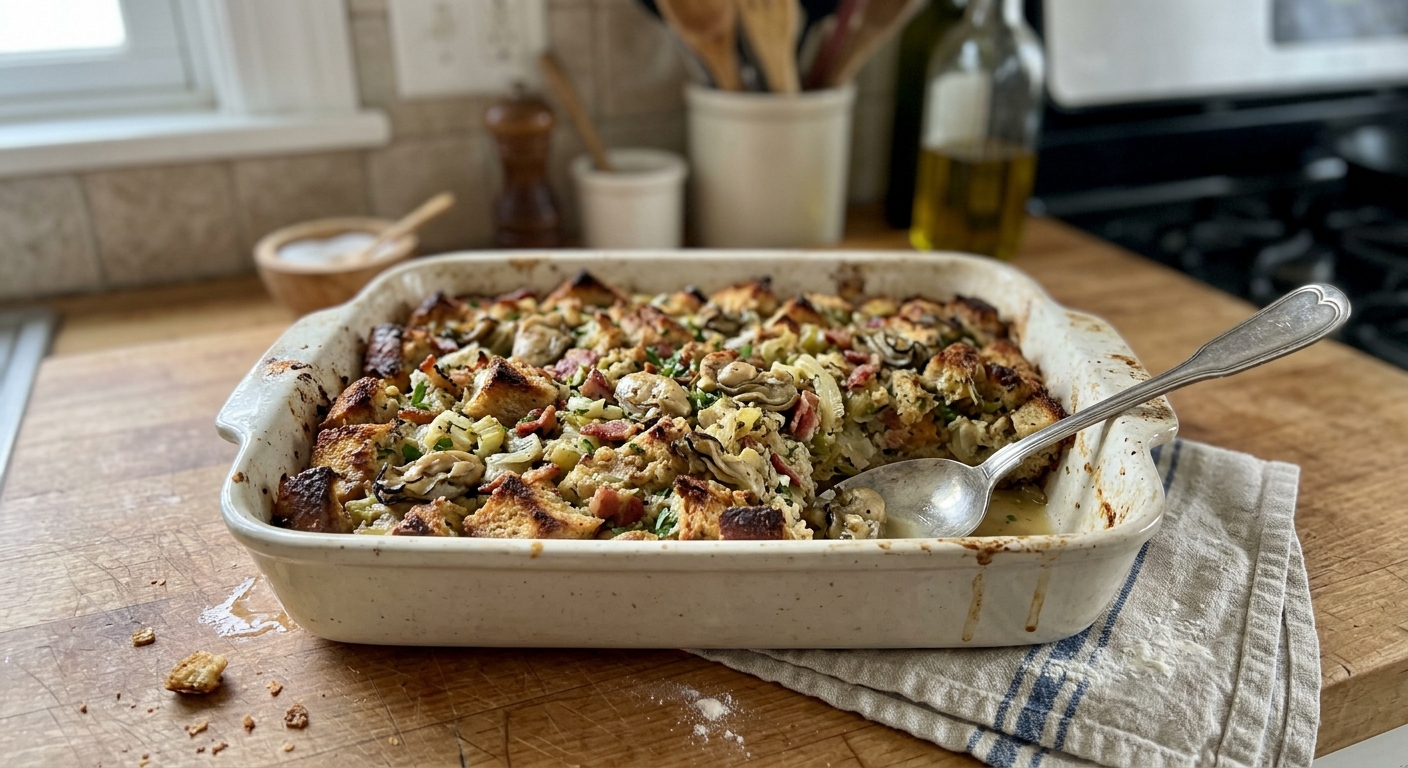
The first time I tasted true coastal holiday cooking, I was sitting at a crowded dinner table in Savannah. My hostess passed a steaming casserole dish full of rich, golden-brown bread, butter, and seafood aromatics. That very first bite of savory oyster stuffing made me an immediate convert. It was tender in the center, crispy on the edges, and layered with deep ocean flavor.
Traditional versions, however, can sometimes lean a little heavy or overly salty. Old-school recipes tend to rely on mounds of limp celery and plain white bread that quickly turn into mush. I knew I could honor that historic Southern staple while giving it a crisp, vibrant upgrade that wakes up every taste bud.
My kitchen twist came down to two strategic choices. First, I swapped out a portion of standard celery for finely diced fresh fennel bulb. Fennel softens into a mild, delicate sweetness that rounds out the natural brine of fresh oysters.
Second, I splash dry Amontillado sherry into the pan right after browning the bacon. The sherry lifts all those browned savory bits and leaves behind a nutty, sophisticated finish. The result is a holiday side dish that leaves everyone asking for your secret.
Why This Oyster Stuffing Recipe Works
Oyster stuffing has a storied heritage across the American South and coastal Mid-Atlantic, stretching back well into the nineteenth century. Waterfront communities in places like the Chesapeake Bay and the Gulf Coast had easy access to pristine bivalves. Folding these plump shellfish into humble holiday bread dressings quickly became a beloved tradition on Thanksgiving and Christmas tables.
The enduring popularity comes down to contrast. When done right, this dish brings together earthy herbs, salty pork, rich butter, and pure marine brininess. The bread acts as an edible sponge that locks all those savory juices in place.
Too often, family recipes end up tasting flat, greasy, or overwhelmingly fishy. That is where our twist ingredients come to the rescue. The finely diced fennel bulb melts down into the aromatics, offering an aromatic licorice note that neutralizes harsh fishiness and brightens the palate.
Meanwhile, deglazing your hot skillet with dry sherry provides crucial acidity. That splash of fortified wine cuts right through the richness of rendered bacon fat and creamery butter. It bridges the gap between sea and land, giving you an elegant dressing with balanced flavors and craveable golden edges.
Ingredients for Oyster Stuffing
Building an unforgettable dressing starts with choosing ingredients that hold their structural integrity in the oven. A sturdy, artisan bread is vital because soft sandwich loaves dissolve into paste when soaked in broth. Select freshly shucked raw oysters sold in jars at your local seafood counter rather than canned varieties, as fresh liquor provides the true soul of the dish.
- 1 lb crusty sourdough or French bread: Cut into 3/4-inch cubes (about 10 cups) and dried overnight, or baked at 300°F until dry and crisp.
- 1 pint (16 oz) fresh shucked standard oysters in liquor: Liquor strained and reserved, oysters coarsely chopped.
- 6 tablespoons unsalted butter: Divided, plus extra for greasing the baking dish.
- 4 oz thick-cut smoked bacon: Diced into small pieces.
- 1 small fennel bulb: Trimmed and finely diced. This twist ingredient replaces typical excess celery to impart a sweet, aromatic licorice note that cuts through the briny richness.
- 1 medium yellow onion: Finely chopped.
- 2 ribs celery: Finely chopped.
- 3 cloves garlic: Minced.
- 1/4 cup dry Amontillado or Oloroso sherry: Our second twist ingredient, used to deglaze the skillet and add nutty complexity along with bright acidity.
- 1/4 cup finely chopped fresh flat-leaf parsley: For a pop of color and freshness.
- 1 tablespoon chopped fresh sage: Fresh herbs provide classic holiday warmth.
- 1 tablespoon chopped fresh thyme leaves: Earthy and floral.
- 2 large eggs: Lightly beaten to bind the bread cubes together.
- 1 to 1 1/4 cups low-sodium chicken or turkey stock: Kept warm to hydrate the stuffing.
- 3/4 teaspoon kosher salt: Adjust to taste based on the natural salinity of your oyster liquor.
- 1/2 teaspoon freshly cracked black pepper: For gentle heat.
- 1/4 teaspoon cayenne pepper: A tiny kick that balances out the rich dairy and pork fat.
Quality matters tremendously when dealing with oyster liquor. Taste a tiny drop of the liquid before seasoning your eggs and broth. If your seafood monger provided very salty oysters, scale back slightly on added kosher salt to keep the finished casserole perfectly seasoned.
Step-by-Step Instructions For Making Oyster Stuffing
Step 1: Prep the Oven and Baking Dish
Preheat your oven to 375°F (190°C). Generously grease a 9×13-inch ceramic or glass baking dish with soft butter. Buttering the dish creates a slick surface that helps develop golden, caramelized edges along the bottom.
Step 2: Dry and Place the Bread
Transfer your dried bread cubes into an extra-large mixing bowl. Make sure your bowl has ample room so you can toss the wet and dry ingredients easily later without crushing the bread.
Step 3: Crisp the Bacon
Set a heavy skillet, preferably cast iron, over medium heat. Add your diced bacon and render until crisp, about 6 to 8 minutes. Use a slotted spoon to transfer the bacon to the bread bowl, leaving the hot drippings in the skillet.
Step 4: Sauté the Aromatics
Melt 4 tablespoons of butter directly into the hot bacon fat over medium heat. Add the diced fennel, onion, and celery. Cook until the vegetables turn soft and translucent, which takes roughly 8 to 10 minutes.
Step 5: Bloom the Seasonings
Stir the minced garlic, sage, thyme, black pepper, and cayenne pepper into the skillet. Cook for about 1 minute until fragrant. Keep the heat controlled so the garlic turns tender without scorching.
Step 6: Deglaze with Dry Sherry
Pour in your dry sherry, scraping the bottom of the skillet to lift all the browned bits. Allow the liquid to simmer until reduced by half, about 2 minutes. Pull the skillet off the burner.
Step 7: Combine Vegetables, Herbs, and Oysters
Scrape the warm vegetable mixture into the bowl with the bread and crisp bacon. Add your chopped fresh flat-leaf parsley and the chopped raw oysters. Leave the bowl unmixed for just a moment while you assemble the wet ingredients.
Step 8: Whisk the Liquid Base
In a separate bowl, whisk together the reserved oyster liquor, beaten eggs, kosher salt, and 1 cup of chicken stock. Whisking the eggs thoroughly ensures they distribute evenly through the bread rather than scrambling in pockets.
Step 9: Fold and Hydrate
Pour the liquid mixture over the bread cubes. Gently fold everything together with a wide rubber spatula until the liquid is absorbed and the oysters are spread throughout. If the bread still looks parched, fold in the remaining 1/4 cup of stock, then let the bowl rest for 10 minutes.
Step 10: Fill the Baking Pan
Spoon the stuffing loosely into your prepared 9×13-inch baking dish without packing it down. Cut the remaining 2 tablespoons of butter into small cubes and scatter them across the top surface to encourage browning.
Step 11: Bake Covered
Tightly cover the dish with a sheet of heavy-duty aluminum foil. Slide the pan into the oven and bake for 30 minutes, allowing the eggs to set and the oysters to steam gently inside the bread.
Step 12: Brown and Crisp
Remove the foil and continue baking uncovered for 20 to 25 minutes. You want the top cubes to turn crisp and golden brown, and an instant-read thermometer inserted into the center must read at least 165°F (74°C). Let the stuffing rest for 10 minutes before bringing it to the table.
How To Serve Oyster Stuffing
This dish is an absolute showstopper on any holiday table, but it deserves careful pairing so its distinct flavors can shine. Because it brings together rich pork, briny shellfish, and tender bread, it plays well with proteins that enjoy a savory, herbal companion.
When planning your dinner menu, think about dishes that welcome a hit of savory coastal decadence:
- Herb-Roasted Turkey: The classic Thanksgiving pairing, where the poultry pan gravy brings out the butter and sage in the bread.
- Pan-Seared Pork Chops: Pork and oysters are an old-school Southern match made in culinary heaven.
- Prime Rib Roast: The savory, peppery bread cubes balance the deep, beefy richness of roasted red meat.
- Bright Winter Salads: A crisp salad loaded with peppery arugula, sliced apples, and a sharp apple cider vinaigrette cuts through the dressing’s buttery profile.
For a casual entertaining twist, you can also bake individual portions in buttered ramekins. This gives every single guest their own personal dish featuring those coveted crispy top edges.
How To Store & Reuse Oyster Stuffing Leftovers
Because this recipe contains fresh seafood and eggs, food safety is top priority. Never let your casserole sit out on the buffet table for longer than two hours after baking. Cool any leftovers promptly, transfer them to a shallow airtight glass container, and store them in the refrigerator for up to 3 days.
Reheating requires gentle heat so the oysters remain tender instead of becoming rubbery:
- Oven Warming: Place the leftover stuffing in a buttered baking dish, splash a tablespoon of warm chicken stock over the surface, cover with foil, and warm at 350°F for 15 to 20 minutes until heated through.
- Skillet Crisping: Melt a pat of butter in a cast-iron skillet over medium-low heat, press leftover scoops flat like small patties, and sear until the underside forms a crunchy crust.
- The Day-After Waffle: Pack the cold stuffing firmly into a preheated, greased waffle iron and cook until crispy. Top with a fried egg and hot sauce for the ultimate holiday brunch.
I do not recommend freezing baked oyster stuffing. Freezing breaks down the delicate texture of the oysters and causes the soaked bread cubes to turn spongy and watery once thawed.
Substitutions & Variations For Oyster Stuffing
While this recipe strikes an ideal balance of flavors, you can easily tweak a few elements based on what you have in your pantry or your family’s personal preferences. The foundation relies on good bread, fat, aromatics, and seafood, which leaves room for creative adjustments.
Here are several fantastic ways to modify the recipe without compromising the final texture:
- Cornbread Base: Swap half of the sourdough bread cubes for dried, crumbled day-old buttermilk cornbread to lean into deep Southern coastal tradition.
- Sausage Swap: Trade the diced bacon for browned bulk mild country pork sausage or spicy andouille for a Cajun-inspired kick.
- Citrus and White Wine: If you cannot find dry sherry, substitute a crisp, dry white wine like Sauvignon Blanc and add a teaspoon of fresh lemon zest to the sautéed vegetables.
- Gluten-Free Adaptation: Use a hearty, crusty gluten-free artisan loaf cut into cubes and fully dried in the oven to ensure it does not crumble into dust.
Always remember that whenever you adjust the salty additions like bacon or sausage, you should taste your broth mixture before salting. Balancing the seasoning ensures your bivalves remain the star of the show.
Savory Coastal Oyster Stuffing with Fennel and Sherry
Description: A modern twist on traditional coastal oyster stuffing featuring crusty sourdough, fresh shucked oysters, sweet aromatic fennel, smoky bacon, and a deglaze of nutty dry sherry.
Yield: 10 to 12 servings | Category: Side Dish | Cuisine: Southern American
Prep Time: 25 minutes | Cook Time: 55 minutes
Ingredients
- 1 lb crusty sourdough or French bread, cut into 3/4-inch cubes (about 10 cups) and dried overnight (or baked at 300°F until dry and crisp)
- 1 pint (16 oz) fresh shucked standard oysters in liquor, liquor strained and reserved, oysters coarsely chopped
- 6 tablespoons unsalted butter, divided (plus extra for greasing the dish)
- 4 oz thick-cut smoked bacon, diced
- 1 small fennel bulb, trimmed and finely diced
- 1 medium yellow onion, finely chopped
- 2 ribs celery, finely chopped
- 3 cloves garlic, minced
- 1/4 cup dry Amontillado or Oloroso sherry
- 1/4 cup finely chopped fresh flat-leaf parsley
- 1 tablespoon chopped fresh sage
- 1 tablespoon chopped fresh thyme leaves
- 2 large eggs, lightly beaten
- 1 to 1 1/4 cups low-sodium chicken or turkey stock
- 3/4 teaspoon kosher salt (adjust to taste)
- 1/2 teaspoon freshly cracked black pepper
- 1/4 teaspoon cayenne pepper
Instructions
- Preheat oven to 375°F (190°C) and butter a 9×13-inch baking dish. Place dried bread in an extra-large mixing bowl.
- Cook diced bacon in a skillet until crisp, then transfer to the bread bowl with a slotted spoon.
- Melt 4 tablespoons butter in the bacon fat over medium heat; sauté diced fennel, onion, and celery for 8 to 10 minutes until tender.
- Add garlic, sage, thyme, black pepper, and cayenne; cook 1 minute until fragrant.
- Pour in dry sherry, simmer for 2 minutes until reduced by half, then scrape the skillet contents into the bread bowl.
- Add fresh parsley and chopped raw oysters to the bowl.
- In a separate bowl, whisk reserved oyster liquor, beaten eggs, kosher salt, and 1 cup chicken stock.
- Pour liquid over bread, fold gently to combine, and rest for 10 minutes to absorb (fold in remaining 1/4 cup stock if dry).
- Spoon mixture into the prepared dish, dot with remaining 2 tablespoons butter, and cover with foil.
- Bake covered for 30 minutes, uncover, and bake 20 to 25 minutes more until golden and internal temperature reaches 165°F (74°C). Rest 10 minutes before serving.
Notes
Make sure your bread is completely dried out before mixing so it absorbs the broth without getting mushy. Always check your oysters for stray bits of shell before chopping.
Servings: 10 | Calories: 295 kcal | Fat: 13g | Carbohydrates: 32g | Protein: 11g
5 FAQs About Oyster Stuffing
Here are some straightforward answers to the most common questions I receive about this oyster stuffing recipe.
Can I make oyster stuffing ahead of time for Thanksgiving?
You can complete most of the prep work the day before, but you should not mix the wet raw oysters and eggs with the bread too far in advance. If raw oysters sit in moist bread overnight, the texture of the bread will break down into a soggy slurry. The raw seafood can also make advance assembly a food safety hazard.
To get ahead, cube and toast your bread up to two days in advance and keep it in an airtight container at room temperature. You can also cook the bacon, sauté your aromatics with the sherry and herbs, and store that mixture in the fridge overnight. On the day of your feast, simply rewarm the vegetable mix slightly, fold everything together with the fresh oysters and liquid, and slide it straight into the oven.
What type of oysters should I buy for oyster stuffing?
Look for fresh shucked raw oysters sold in pint-sized plastic containers in the seafood department of your grocery store. These are usually labeled as standard or select oysters. They come packed raw in their natural juices, which gives you the flavorful oyster liquor required for the dressing liquid.
Avoid buying canned, shelf-stable oysters for this recipe. Canned versions are already pre-cooked, overly soft, and packed in plain water or oil that lacks the fresh ocean flavor you need. If you only have access to whole, live oysters in the shell, you can certainly shuck them yourself at home, just be sure to catch every single drop of liquor in a bowl underneath your shucking knife.
Does oyster stuffing taste overly fishy?
When made with fresh ingredients, oyster stuffing does not taste unpleasantly fishy at all. Instead, it offers a clean, savory, mildly briny flavor reminiscent of fresh sea air, balanced by rich butter and herbs. The bacon adds smoky depth, while the fresh fennel bulb and dry sherry bring a touch of sweetness and acidity that keeps the seafood notes mellow.
If you have dinner guests who are on the fence about shellfish, this is usually the recipe that wins them over. The oysters shrink slightly during baking and blend harmoniously into the bread texture. You get the taste of complex dressing rather than a mouthful of strong fish.
Can I use canned oysters instead of fresh in oyster stuffing?
While you technically can use canned oysters in an absolute emergency, I strongly advise against it. Canned oysters are typically heavily processed and have a much mushier texture that completely breaks apart into gray threads during the baking process. They also lack the vibrant, naturally salty liquor that gives the bread its distinct coastal identity.
If fresh shucked oysters are unavailable at your market, frozen raw shucked oysters are a far better alternative than canned goods. Thaw the frozen oysters slowly in your refrigerator overnight, keeping all the melted liquor in the container. Then drain, chop, and proceed with the recipe as written.
How do I know when my oyster stuffing is fully cooked?
The safest and most reliable way to tell that your oyster stuffing is completely cooked is by using an instant-read digital food thermometer. Insert the probe into the dead center of the casserole dish. It should read at least 165°F (74°C) before you pull it out of the oven.
Visual cues will also guide you toward perfection. The edges around the baking dish should be bubbling vigorously, and the exposed bread cubes on top should be a deep, toasted golden brown with a firm, crunchy feel. If the top is getting too dark before the center reaches 165°F, loosely tent the dish with foil for the final few minutes of baking.
Try These Recipes Next
If you love serving incredible homemade dressings and savory holiday sides, you are going to fall head over heels for these companion recipes from the blog:
- Classic Southern Oyster Stuffing: A nostalgic, comforting holiday side packed with traditional coastal flavors and tender bread.
- The Best Bread Stuffing Recipe for Thanksgiving: A foolproof, herb-packed classic dressing that delivers golden crispy corners and a pillowy center every single time.
- Savory Apple and Sausage Stuffing: The perfect sweet-and-savory balance featuring spiced pork sausage and tart fall apples tucked into warm herbs.
Pull out your favorite baking pan, gather your ingredients, and enjoy creating a memorable feast for the people you love most.