
Next-Level Tuna Casserole with Sharp Cheddar and a Savory Miso Twist
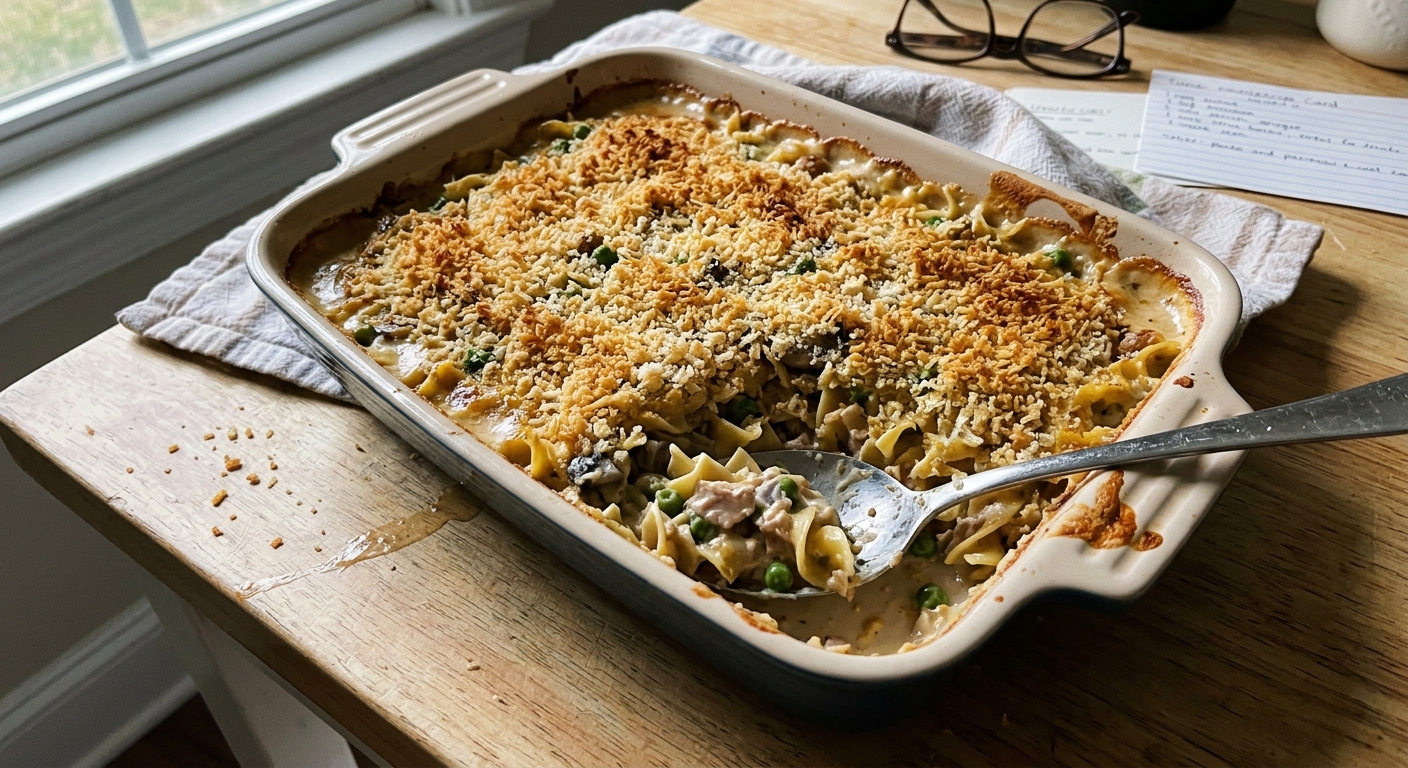
Growing up, tuna casserole made a frequent appearance on our family dinner table. It was the quintessential busy weeknight meal, usually scooped straight from a dated glass dish where condensed soup and crushed potato chips did all the heavy lifting. While it was comforting in its own nostalgic way, it often felt heavy, flat, and a little one-dimensional.
When I started cooking for my own family, I wanted to capture that warm, cozy nostalgia without relying on canned soup. I started building a velvety homemade cream sauce, throwing in earthy cremini mushrooms, and finishing it with a buttery, crisp panko topping. The results were good, but they were not quite magical yet.
Then came the game changer, white miso paste. Whisking just two tablespoons of sweet, mellow miso into the sauce alongside a kiss of lemon zest added an incredible depth of savory umami that made everyone at the table stop and ask what made it so good. This elevated twist transforms a humble pantry bake into something truly unforgettable.
Why This Tuna Casserole Recipe Works
Tuna casserole became an American staple during the mid-twentieth century, largely popularized as an economical way to feed a hungry household. Canned fish, dried noodles, and processed canned soups allowed home cooks to stretch their grocery budgets during challenging economic times. Over the decades, it cemented itself as the ultimate retro comfort food, beloved for its simplicity and warmth.
However, traditional versions often suffer from a lack of acidity and nuance, leaving them feeling dense and heavy. That is where our secret weapon, white miso paste, completely shifts the narrative. White miso, or shiro miso, is naturally fermented, sweet, and lightly salty, providing a rich foundation of glutamate without tasting like soy sauce or overpowering the seafood.
Instead of masking the fish, the miso melds into the scratch-made roux, enhancing the savory qualities of the olive-oil-packed albacore tuna and sharp cheddar cheese. Pair that with a splash of fresh lemon juice and fragrant lemon zest, and suddenly the entire skillet feels vibrant and balanced. You get all the hearty comfort of the classic bake, but with a complex, restaurant-quality flavor profile that appeals to modern palates.
Ingredients for Tuna Casserole
Quality ingredients make a world of difference when you are building a casserole completely from scratch. Using high-grade canned fish and fresh dairy creates a luscious sauce that clings to every noodle without turning greasy or bland.
- 12 ounces wide egg noodles: The classic vehicle for baked casseroles, offering a tender bite and plenty of surface area to hold the sauce.
- 4 tablespoons unsalted butter, divided: Used to sauté the aromatics and bind the crispy topping.
- 8 ounces cremini mushrooms, sliced: Also known as baby bellas, these add a deeper, earthier note than standard white button mushrooms.
- 1 medium shallot, finely diced: Brings a delicate, sweet onion flavor that softens nicely into the background.
- 2 cloves garlic, minced: Adds essential warmth and aromatic depth to the vegetable base.
- 3 tablespoons all-purpose flour: Forms the foundation of our roux to thicken the sauce naturally.
- 2 cups whole milk, warm: Whole milk yields a rich, velvety texture that keeps the dish from drying out in the oven.
- 1 cup low-sodium chicken broth, warm: Balances the richness of the dairy while providing savory moisture.
- 2 tablespoons white miso paste (twist ingredient): The secret umami powerhouse that gives this dish its incredible savory depth.
- 1 teaspoon Dijon mustard: Offers a slight tang that cuts through the creaminess.
- 1/2 teaspoon freshly ground black pepper: Freshly cracked pepper provides subtle, woodsy heat.
- 1/4 teaspoon kosher salt (adjust to taste): Miso and broth both contain sodium, so keep the added salt light until you taste the finished sauce.
- 6 ounces sharp white cheddar cheese, freshly shredded (about 1 1/2 cups): Shred your own block for the smoothest melt, as pre-bagged cheeses contain anti-caking starches.
- 2 cans (5 ounces each) solid white albacore tuna packed in olive oil, drained and flaked into large chunks: Oil-packed albacore offers tender, moist flakes and rich flavor that far surpasses tuna packed in water.
- 1 cup frozen sweet peas, thawed: Adds bright sweetness and a lovely pop of green color.
- 1 tablespoon fresh lemon juice: Essential acid to cut through the richness of the cheddar and butter.
- 1 teaspoon fresh lemon zest: Floral and bright, waking up the entire dish.
- 2 tablespoons chopped fresh flat-leaf parsley or dill: Adds a pop of herbal freshness right before baking.
- 1 cup panko breadcrumbs: Japanese-style breadcrumbs guarantee a light, exceptionally crunchy topping.
- 1/4 cup finely grated Parmesan cheese: Blended into the panko for a salty, golden crust.
Pay close attention to your choice of tuna. Canned solid white albacore packed in pure olive oil has a firm, steak-like texture and retains its moisture during baking, whereas water-packed chunk light tuna tends to break down into mush.
Step-by-Step Instructions For Making Tuna Casserole
Making this dish on the stovetop before baking ensures that every element is cooked perfectly and the sauce is completely lump-free. A large enameled cast-iron Dutch oven or deep skillet is the best piece of cookware for this, as it conducts heat evenly and holds the entire volume of ingredients before transferring to the baking dish.
Step 1: Prep the Oven and Baking Dish
Preheat your oven to 375°F (190°C). Lightly grease a standard 9×13-inch ceramic or glass baking dish with a thin swipe of butter or nonstick cooking spray, then set it aside near your stovetop workstation.
Step 2: Cook the Egg Noodles
Bring a large pot of generously salted water to a rolling boil over high heat. Drop in the wide egg noodles and cook them for approximately 5 to 6 minutes, which is roughly 1 to 2 minutes shy of al dente according to package instructions.
Drain the noodles thoroughly in a colander. Keeping them slightly undercooked is crucial because they will continue to absorb moisture and soften as the casserole bakes in the oven.
Step 3: Brown the Cremini Mushrooms
Place your deep skillet or Dutch oven over medium-high heat and melt 2 tablespoons of the unsalted butter. Scatter the sliced cremini mushrooms across the pan in a single layer and let them cook undisturbed for 3 minutes.
Once they begin to develop a golden crust, stir them and continue cooking for another 4 minutes until they are beautifully browned and tender. Letting them sit undisturbed initially prevents them from steaming in their own juices.
Step 4: Sauté the Aromatics
Turn the burner down to medium heat. Toss the diced shallot into the pan with the mushrooms and cook for about 2 minutes until soft and translucent.
Stir in the minced garlic and let it cook for just 30 seconds until fragrant. Keep your spatula moving so the delicate minced garlic does not scorch against the hot surface of the pan.
Step 5: Cook the Roux
Sprinkle the all-purpose flour evenly over the vegetables in the pan. Use a wooden spoon or silicone spatula to stir everything continuously for a full 60 seconds.
This coats the mushrooms and shallots in the flour while cooking out the raw, pasty flour taste. Make sure the heat is not too high to prevent the flour from burning.
Step 6: Dissolve the Miso and Mustard
Pour 1/2 cup of the warm chicken broth into a heat-safe measuring cup or small bowl. Add the white miso paste and Dijon mustard, then whisk vigorously until the mixture is completely smooth and free of any miso clumps.
Dissolving the miso in warm liquid beforehand is an essential technique. Adding thick miso directly to the roux-coated pan makes it nearly impossible to distribute evenly throughout the cream sauce.
Step 7: Whisk and Simmer the Sauce
Gradually pour the remaining warm chicken broth and the warm whole milk into the skillet, whisking constantly to create a silky, lump-free base. Pour in the dissolved miso mixture, along with the freshly ground black pepper and kosher salt.
Bring the liquid up to a gentle simmer over medium heat. Whisk frequently for 3 to 4 minutes until the sauce thickens enough to coat the back of a wooden spoon smoothly.
Step 8: Melt in the Cheese
Pull the pan off the heat entirely to keep the dairy from separating. Add the freshly shredded sharp white cheddar cheese in two handfuls, stirring well after each addition until the cheese is completely melted and the sauce is glossy.
Step 9: Fold the Filling Ingredients
Gently fold the par-cooked egg noodles, flaked tuna, thawed sweet peas, fresh lemon juice, lemon zest, and chopped herbs into the warm cheese sauce. Use a broad spatula to fold everything together carefully.
A gentle touch is key here. You want to maintain large, satisfying flakes of albacore tuna throughout the mixture rather than breaking the fish down into tiny, shredded fibers.
Step 10: Assemble in the Baking Dish
Pour the noodle and tuna mixture into your prepared 9×13-inch baking dish. Use the back of your spatula to gently level the top so the dish bakes and browns uniformly.
Step 11: Top with Parmesan Panko
Melt the remaining 2 tablespoons of butter in a small microwave-safe bowl. Add the panko breadcrumbs and finely grated Parmesan cheese, tossing with a fork until the crumbs are evenly coated with the butter.
Scatter the breadcrumb mixture evenly across the surface of the casserole, covering from edge to edge so every portion gets a crunchy crown.
Step 12: Bake to Golden Perfection
Slide the baking dish onto the center rack of your preheated 375°F oven. Bake uncovered for 20 to 25 minutes until the edges are vigorously bubbling and the crumb topping has turned a deep, crispy golden brown.
Step 13: Rest and Serve
Remove the casserole from the oven and set it on a wire cooling rack. Allow it to rest for 5 minutes before serving so the sauce can settle slightly, ensuring neat, saucy portions that hold together on the plate.
How To Serve Tuna Casserole
Because this modernized bake is rich, savory, and packed with complex umami notes, the best side dishes offer a bright, fresh contrast. Balancing the hearty noodles and creamy cheddar sauce with crisp textures and bright vinaigrettes makes for a well-rounded dinner.
A few complementary side ideas can turn this casual weeknight casserole into a lovely spread suitable for company:
- A Crisp Garden Salad: Toss bitter greens like arugula, radicchio, or romaine with thin radish slices and a sharp lemon-dill vinaigrette to slice right through the richness of the cheese sauce.
- Roasted Asparagus or Broccolini: Lightly charred green vegetables tossed with olive oil, sea salt, and a squeeze of fresh lemon provide a great textural foil to tender noodles.
- Warm Garlic Bread or Buttered Biscuits: Flaky buttermilk biscuits or crusty sourdough bread make excellent tools for catching every drop of the miso cream sauce on your plate.
- Quick Pickled Cucumbers: Thinly sliced English cucumbers pickled with red onion, white wine vinegar, and fresh dill offer a clean, acidic bite that complements the tuna.
For an everyday family dinner, simply scoop generous portions into wide pasta bowls. Garnish each serving with an extra pinch of fresh chopped herbs and a crack of fresh black pepper to bring visual appeal right to the dinner table.
How To Store & Reuse Tuna Casserole Leftovers
One of the best qualities of this dish is how nicely it holds up for future lunches and dinners. If you find yourself with leftovers, let the casserole cool down to room temperature before packing it away, which prevents condensation from turning the crispy topping soggy.
Proper storage ensures the flavors remain clean and the pasta does not dry out over time:
- Refrigerator Storage: Transfer leftovers to an airtight container or cover your baking dish tightly with aluminum foil. Store in the refrigerator for up to 3 to 4 days.
- Oven Reheating: The best way to restore the original texture is to reheat portions in an oven preheated to 350°F (175°C). Cover loosely with foil for 15 minutes, then uncover for 5 minutes to re-crisp the panko crust.
- Microwave Reheating: For a quick lunch, microwave individual servings in 45-second increments at 70% power. Add a small splash of milk or broth to the bowl to refresh the creamy consistency.
- Freezer Method: You can freeze the baked casserole tightly wrapped in double layers of plastic wrap and foil for up to 2 months. Thaw overnight in the refrigerator before reheating in the oven.
If you want to repurpose leftover portions creatively, try spooning the cold casserole mixture into halved bell peppers, topping them with a little extra cheese, and baking until tender. It also makes a wonderful filling for a hot, griddled tuna melt sandwich pressed between two slices of hearty sourdough bread.
Substitutions & Variations For Tuna Casserole
While the base recipe is carefully balanced, you can easily adapt the ingredients to fit dietary needs or raid your pantry without sacrificing flavor. Swapping certain elements allows you to customize the dish to your family’s preferences while keeping the essential cooking method intact.
Here are several practical swaps and flavor variations to try:
- Gluten-Free Option: Swap the wide egg noodles for sturdy gluten-free rotini or penne, replace the all-purpose flour with a 1-to-1 gluten-free baking blend, and use gluten-free panko breadcrumbs for the topping.
- Alternative Cheeses: Sharp white cheddar is fantastic, but Gruyère, Fontina, or mild Swiss cheese pair exceptionally well with the earthy mushrooms and white miso.
- Herb Variations: Swap the flat-leaf parsley for fresh dill, tarragon, or chives to give the casserole a distinctive French or Scandinavian garden twist.
- Pantry Veggie Additions: Sauté finely diced celery with the shallots for extra crunch, or stir in chopped marinated artichoke hearts alongside the sweet peas for a Mediterranean flair.
Feel free to experiment with the topping as well. While seasoned panko provides an incredible airy crunch, crushed buttery crackers or kettle-cooked potato chips can be mixed with the Parmesan if you are craving that classic mid-century comfort food feel.
Savory Miso Tuna Casserole
Description: A modernized, from-scratch classic featuring tender egg noodles, olive oil-packed albacore tuna, and earthy mushrooms tossed in a creamy, miso-infused cheddar sauce under a crispy Parmesan panko crust.
Yield: 6 to 8 servings | Category: Main Dish | Cuisine: American Comfort Food
Prep Time: 20 minutes | Cook Time: 35 minutes
Ingredients
- 12 ounces wide egg noodles
- 4 tablespoons unsalted butter, divided
- 8 ounces cremini mushrooms, sliced
- 1 medium shallot, finely diced
- 2 cloves garlic, minced
- 3 tablespoons all-purpose flour
- 2 cups whole milk, warm
- 1 cup low-sodium chicken broth, warm
- 2 tablespoons white miso paste (twist ingredient)
- 1 teaspoon Dijon mustard
- 1/2 teaspoon freshly ground black pepper
- 1/4 teaspoon kosher salt (adjust to taste)
- 6 ounces sharp white cheddar cheese, freshly shredded (about 1 1/2 cups)
- 2 cans (5 ounces each) solid white albacore tuna packed in olive oil, drained and flaked into large chunks
- 1 cup frozen sweet peas, thawed
- 1 tablespoon fresh lemon juice
- 1 teaspoon fresh lemon zest
- 2 tablespoons chopped fresh flat-leaf parsley or dill
- 1 cup panko breadcrumbs
- 1/4 cup finely grated Parmesan cheese
Instructions
- Preheat oven to 375°F (190°C) and lightly grease a 9×13-inch baking dish.
- Boil egg noodles in salted water until 1 to 2 minutes shy of al dente (about 5 to 6 minutes), drain, and set aside.
- Melt 2 tablespoons butter in a deep skillet over medium-high heat; cook sliced mushrooms undisturbed for 3 minutes, then stir until browned, about 4 minutes more.
- Reduce heat to medium, cook diced shallot for 2 minutes, then add minced garlic and cook for 30 seconds.
- Sprinkle flour over vegetables and stir continuously for 1 minute to cook the roux.
- Whisk white miso paste and Dijon mustard into 1/2 cup warm chicken broth until completely smooth.
- Gradually whisk remaining warm broth and milk into skillet, add miso mixture, salt, and pepper, and simmer 3 to 4 minutes until thickened.
- Remove from heat, stir in shredded cheddar cheese until smooth, then gently fold in cooked noodles, flaked tuna, sweet peas, lemon juice, lemon zest, and herbs.
- Spread the mixture into the prepared baking dish.
- Toss panko and Parmesan with remaining 2 tablespoons melted butter, scatter over the noodles, and bake uncovered for 20 to 25 minutes until golden and bubbly. Let cool 5 minutes before serving.
Notes
Shred cheese fresh from a block for smooth melting. Cook egg noodles slightly underdone so they do not turn soft during baking. White miso adds deep umami without overpowering the delicate fish.
Servings: 6 servings | Calories: 520 kcal | Fat: 22 g | Carbohydrates: 54 g | Protein: 28 g
5 FAQs About Tuna Casserole
Here are some straightforward answers to the most common questions I receive about this tuna casserole recipe.
Can I make tuna casserole ahead of time?
Yes, you can easily assemble this tuna casserole up to 24 hours in advance. Prepare the filling, transfer it into your greased baking dish, and let it cool completely to room temperature. Once cooled, cover the dish tightly with foil and place it in the refrigerator.
Keep the buttered panko and Parmesan topping stored separately in a small sealed container or zip-top bag in the fridge. When you are ready to cook, scatter the crumbs over the cold casserole and bake at 375°F. You will need to add about 8 to 10 minutes to the total baking time to ensure the chilled center gets piping hot and bubbly.
What type of canned tuna is best for tuna casserole?
Solid white albacore tuna packed in pure olive oil produces the absolute best results for this tuna casserole. Oil-packed tuna retains a luxurious, moist flake and rich flavor that stays intact during the baking process, preventing the casserole from tasting dry or metallic.
If you only have tuna packed in water available in your pantry, drain it thoroughly before flaking it into large chunks. Avoid chunk light tuna if possible, as it is composed of smaller scraps that break down into fine, pasty shreds when stirred into the warm noodles and sauce.
Why did my tuna casserole turn out dry?
The most common culprit behind a dry tuna casserole is overcooking the pasta before it ever goes into the oven. If egg noodles are boiled to full tenderness on the stovetop, they act like little sponges during baking, soaking up all the cream sauce and leaving the bake dry and heavy.
Always boil your noodles 1 to 2 minutes shy of al dente so they have just enough firmness left to finish cooking in the oven sauce. Additionally, make sure your sauce simmers just until it coats the back of a spoon rather than boiling down into a stiff paste on the stove.
Can I freeze tuna casserole before or after baking?
You can freeze this tuna casserole either fully baked or unbaked, though freezing it before baking yields the best texture upon thawing. To freeze an unbaked casserole, assemble the filling in a freezer-safe dish, leave off the breadcrumbs, wrap tightly with plastic wrap and aluminum foil, and freeze for up to 2 months.
When you are ready to bake, thaw the dish completely in your refrigerator for 24 hours. Prepare the fresh buttered panko topping, spread it over the top of the dish, and bake according to the standard recipe instructions. If freezing leftovers that are already baked, portion them into airtight containers for quick individual meals.
How do I keep the panko breadcrumbs from burning?
The secret to achieving a deeply golden, crisp crumb topping without scorching is tossing the panko in melted butter before scattering it over your tuna casserole. The melted butter acts as a heat conductor, gently frying the dry breadcrumbs in the oven heat rather than allowing them to dry out and burn.
Baking on the center rack of your oven at 375°F provides the ideal balance of ambient heat to bubble the sauce and brown the crust evenly. If your oven tends to run hot on top, you can loosely tent a sheet of aluminum foil over the baking dish for the first 12 minutes of baking, then remove it for the final 10 minutes.
Try These Recipes Next
If you love warm, comforting meals that celebrate delicious seafood, here are three fantastic dishes to add to your weekly meal plan:
- The Best Tuna Casserole Recipe: A traditional take on the beloved retro dinner bake featuring classic creamy flavors and egg noodles.
- Easy Tuna Cakes (Gluten-Free, Paleo): Crisp, pan-seared patties seasoned with herbs and citrus that make a quick, protein-packed lunch or dinner.
- Easy Tuna Salad Recipe: A crunchy, refreshing staple loaded with celery, red onion, and a tangy dressing perfect for sandwiches or lettuce wraps.
Fire up your oven tonight and give this cozy, modern skillet bake a try for a meal the entire family will request again soon!